
Business
This IIT Mumbai grad said no to Zuckerberg’s millions. Here’s why

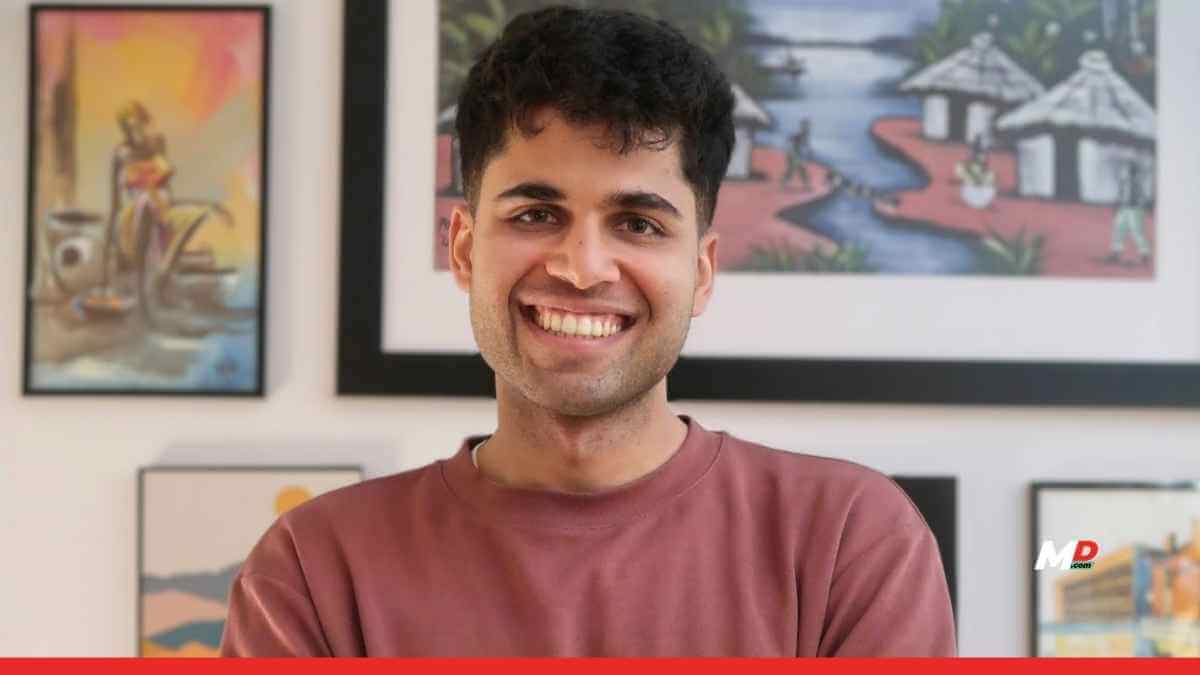
When Mark Zuckerberg went shopping for AI talent last year, he was not being subtle about it. Meta’s superintelligence hiring spree came with some of the largest individual compensation packages the industry had ever seen, and reports at the time put several offers in the tens of millions of dollars. Somewhere in that mix was Rishabh Agarwal, an IIT Mumbai graduate with an All India Rank of 33 in JEE, a PhD from Mila under AI heavyweights Aaron Courville and Marc Bellemare, and stints at Google Brain, Google DeepMind and Waymo already behind him.
Agarwal joined Meta Superintelligence Labs in April 2025. Five months later, he left.
The man who left Meta behind
The story resurfaced this week after an X user claimed Agarwal had turned down a Meta offer worth around $1 million, over Rs 8.5 crore. Agarwal himself corrected the record. Meta’s offer, he wrote, was an order of magnitude higher than $1 million, letting the number do the talking without stating it outright.
If the size of the offer was not the deciding factor, what was? Agarwal’s own explanation, posted when he announced his exit, points to something less about the numbers and more about appetite. It was a tough decision not to continue with the new Superintelligence TBD lab, he wrote, especially given the talent and compute density on offer. But after seven and a half years across Google Brain, DeepMind and Meta, he felt the pull to take on a different kind of risk.
He then turned Zuckerberg’s own words back on the decision, quoting the Meta CEO’s line that in a world changing this fast, the biggest risk you can take is not taking any risk at all. It is a neat bit of irony, the advice of the man writing the cheque being used to justify walking away from it.
The shift to Periodic Labs
Agarwal’s next stop is Periodic Labs, where he has come on board as a founding member. The startup is building what it calls an AI scientist, a system designed to generate hypotheses for real world experiments across materials science, medicine and physics. It is an unglamorous sounding mission dressed in ambitious clothing. But is operates on a critical premise: aimed at speeding up how discoveries get made in the first place. The company already counts Nvidia and Jeff Bezos among its backers, which suggests the industry sees more here than a researcher’s side project.
There is a familiar shape to this story; the brilliant engineer who could have taken the safe, staggering pay cheque and chose the harder, less certain path instead. What makes Agarwal’s version worth paying attention to is the credentials behind it. This is a researcher with a NeurIPS Outstanding Paper Award and contributions to Google’s Gemma and Gemini models, betting that building something new is a better use of his next decade than optimising someone else’s superintelligence lab, however well compensated.