

Politics
Mini Setu Centers to be Established across 22 Remote Villages in Gadchiroli

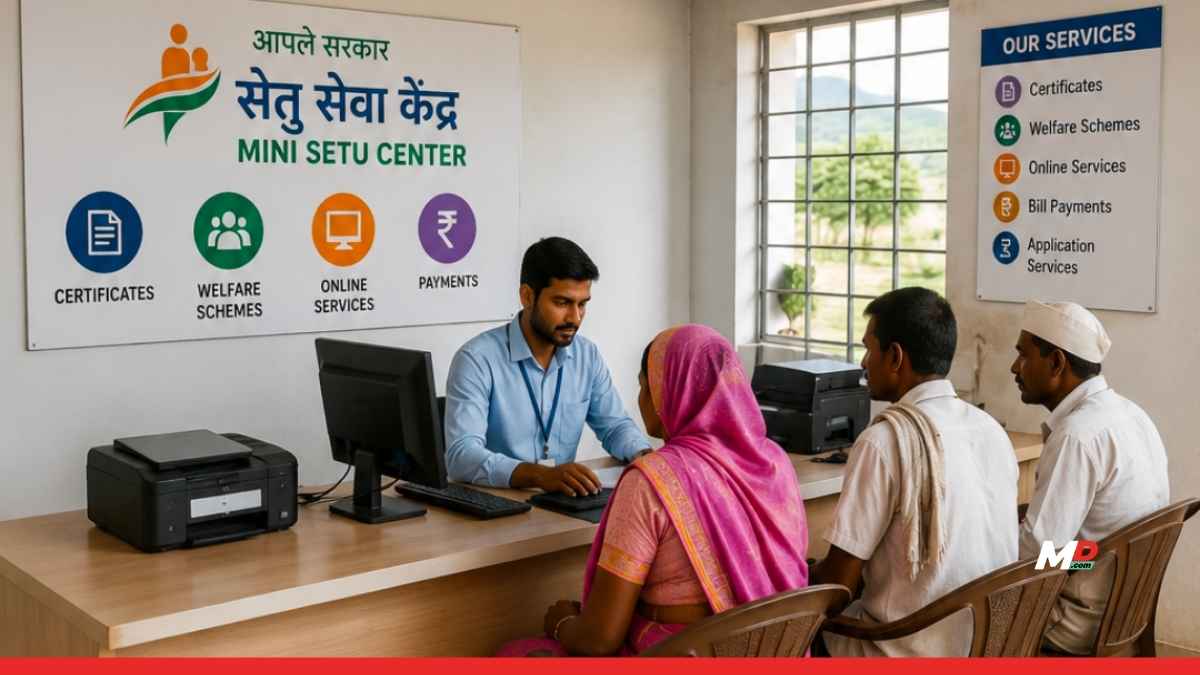
- Infrastructure of existing Dadalora Khidki and Adi Seva Centers to be utilized.
- Initiative aims to accelerate digital inclusion, saving citizens time, labor, and money.
MUMBAI, July 16
In a significant move to ensure the seamless delivery of government welfare schemes to citizens in the highly remote, hilly, and dense forest terrains of the Gadchiroli district, the State Government of Maharashtra has taken a major stride. The Department of Electronics, Information Technology, and Artificial Intelligence has officially sanctioned the establishment of 22 ‘Mini Setu Centers’ (Aaple Sarkar Seva Kendras) in the district’s most inaccessible pockets.
Eliminating Long Commutes for Local Citizens
Residents in several far-flung and formerly Naxal-affected zones of Gadchiroli particularly tribal, economically weaker, and underprivileged communities previously had to trek dozens of kilometers to taluka or district headquarters just to secure basic official certificates or submit online applications. This logistical challenge resulted in a massive drain on their time, money, and physical labor. To alleviate this hardship, the government is repurposing the infrastructure of 13 Dadalora Khidki Centers and 9 Adi Seva Centers already operational in the district to roll out these 22 new Mini Setu Centers at the grassroots level.
Operational Logistics and Infrastructure Support
The recruitment of operators responsible for running these centers will be managed directly at the District Collector’s level. Furthermore, to equip these hubs with essential hardware including computers, printers, scanners, and furniture—necessary funds will be disbursed to the District Collector via the State Setu Society.
Financial Incentives for Center Operators
Given the highly remote and sensitive nature of these regions, ensuring operational stability and uninterrupted services is paramount. As an exceptional measure, the government has approved a monthly operational assistance of ₹8,000 for the selected operators during the first year of functioning. Following this initial one-year transition period, the operators will be expected to run the centers sustainably on a self-reliant basis.
This collaborative framework involving the Gadchiroli District Collector, the Directorate of Information Technology, and MahaIT is poised to bridge the rural-urban digital divide and significantly enhance the efficiency of public service delivery.