Politics
HISTORIC DEBT RELIEF: MAHARASHTRA TO WAIVE 48,000 CRORE IN OUTSTANDING POWER BILLS FOR FARMERS

- Chief Minister Devendra Fadnavis Announces Massive Financial Relief at Farmers’ Felicitation Ceremony
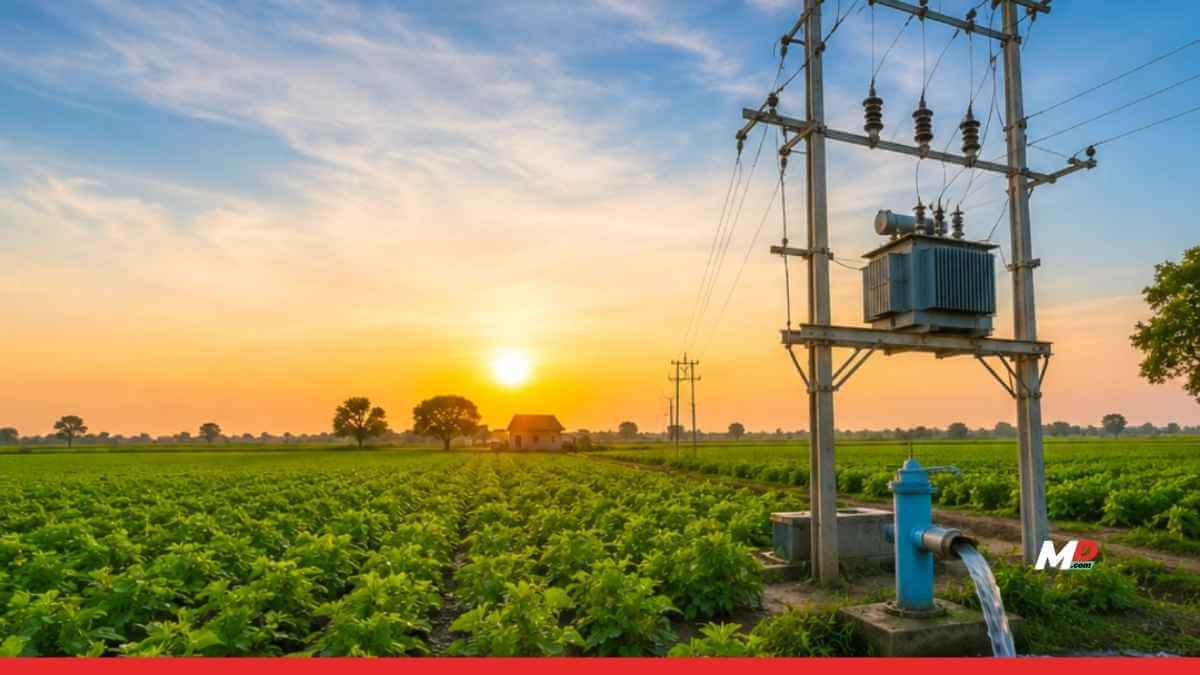
- Solar Schemes to Ensure 100% Day-Time Electricity for All Farmers by Year-End
Mumbai, July 15
In a major announcement aimed at providing extensive economic relief to the agrarian sector, Chief Minister Devendra Fadnavis declared on Wednesday that the state government will completely waive 48,000 crore in outstanding electricity bill arrears accumulated by farmers. Addressing a massive gathering of farmers who welcomed the announcement with spontaneous applause and the traditional sounding of tutaris, the Chief Minister emphasized that the decision is designed to “wipe the slate clean” for the state’s farmers, enabling them to write a new chapter of agricultural prosperity.
The announcement was made during a grand felicitation and gratitude ceremony organized by the Bharatiya Janata Party (BJP) Kisan Morcha at the Yashwantrao Chavan Pratishthan auditorium. The event was held on behalf of the state’s farming community to express gratitude to the Chief Minister for the recently declared farmer debt relief scheme. Accepting the honor on behalf of his entire cabinet, Chief Minister Fadnavis utilized the platform to present a comprehensive master plan for the structural transformation of Maharashtra’s agricultural sector.
The Chief Minister asserted that beyond direct debt relief, the state is currently providing 95,000 crore in various forms of support to farmers, with both the Central and State governments working in close alignment to make agriculture viable and sustainable. However, he noted that loan waivers are not a permanent solution. He explained that recurring debt waivers are a symptom of deep-rooted systemic distress, meaning the only viable path forward is to lower input costs and improve productivity through technological innovation and capital investment.
Reflecting on policies since 2014, Fadnavis highlighted that schemes like Magel Tyala Shettale (farm ponds on demand) and the Jalyukt Shivar water conservation initiative have empowered farmers to cultivate up to three crops a year. He urged cultivators to adopt group farming (Gat Sheti) and value-added allied businesses to tap into global markets collectively. To directly reduce input costs, the state is already absorbing 25,000 crore annually in power subsidies. Furthermore, through solar pumps and the solar agricultural feeder network, 76% of farmers now receive daytime electricity a figure the Chief Minister promised would reach 100% by the end of the year.
Addressing political critics, Fadnavis pointed out that the government took the monumental decision to waive loans without any upcoming elections in sight, keeping a promise made during the previous election campaign. He added that the ruling alliance would never play politics with farmer welfare.
To fund these massive welfare measures, the Chief Minister detailed a strategic macroeconomic model: by attracting heavy industrial and service-sector investments into Maharashtra, the state generates substantial tax revenues that can be directly channeled into agricultural infrastructure. He projected that this investment-led model would make the agricultural sector entirely self-sufficient within the next decade.
Addressing irrigation, Fadnavis outlined mega-engineering projects designed to permanently drought-proof the state. Despite 52% of Maharashtra being drought-prone, billions of cubic feet of monsoon runoff currently flow unutilized into the sea. Under comprehensive river-linking and diversion networks like the Wainganga-Nalganga project, the government is executing plans to lift excess water, construct 24 new dams, and increase the height of 16 existing reservoirs to eliminate drought in Vidarbha. Similar diversion projects aim to channel 200 TMC of floodwater from Western Maharashtra to Marathwada, and lift nearly 275 TMC of water from the Ulhas basin to drought-proof North Maharashtra and Marathwada.
Concluding his address, the Chief Minister stated that the government has planned an additional 6 lakh crore worth of infrastructure works. Once completed, these initiatives will ensure that future generations in Maharashtra never have to experience drought, cementing a legacy of agricultural transformation over political rhetoric.