
Politics
Pakistan to Honour Two Mumbai Doctors Who Kept Jinnah’s Terminal Illness Secret

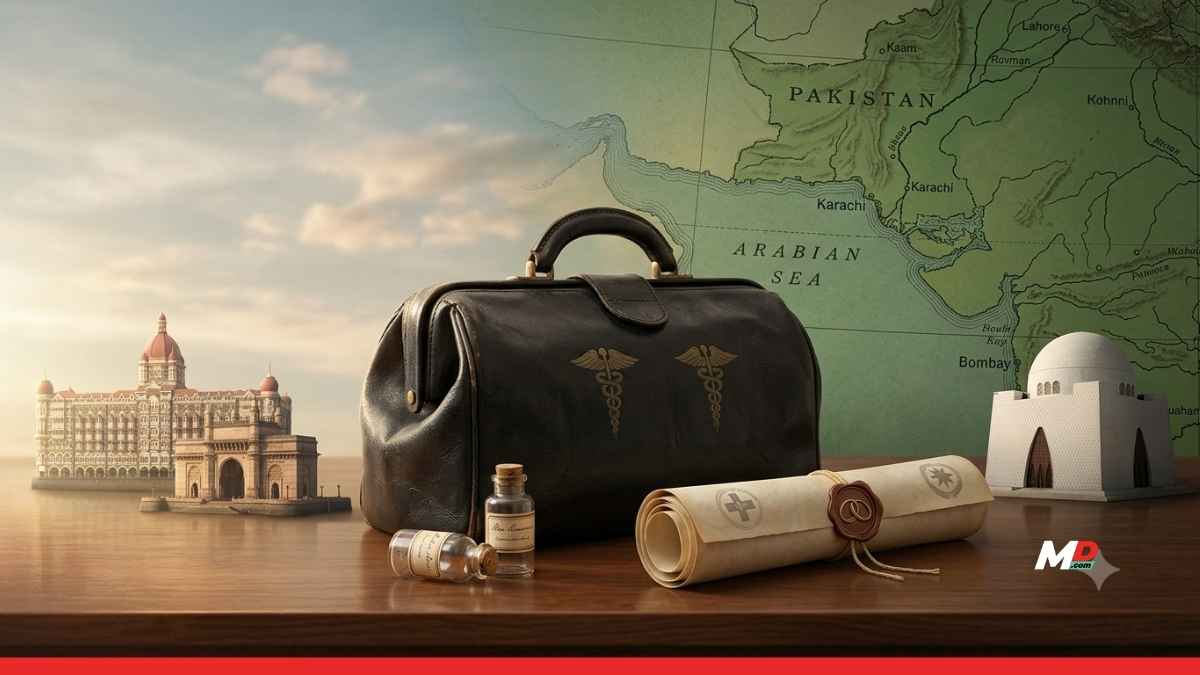
MUMBAI, AUGUST 20: Nearly eight decades after the Partition of India, Pakistan is set to honour two Mumbai-based Parsi doctors for maintaining the confidentiality of Muhammad Ali Jinnah’s serious illness at a crucial moment in the country’s history.
Physician Dr Jal Ratanji Patel and radiologist Dr Jal Dhaybho-Koo are set to receive Pakistan’s highest civilian honour, the Nishan-e-Imtiaz, posthumously. The award recognises their role in keeping Jinnah’s terminal illness confidential during the politically sensitive period leading up to the Partition in 1947.
According to accounts cited in recent reports, the two doctors examined Jinnah’s X-ray in 1946 and concluded that he was suffering from advanced tuberculosis. Their assessment reportedly indicated that his condition was extremely serious and that he might have only a year or two to live. Despite the gravity of the diagnosis, the doctors maintained strict confidentiality regarding his medical condition.
Jinnah’s deteriorating health was reportedly known only to a small circle of people close to him. He continued to play a central role in the political negotiations that eventually led to the creation of Pakistan, even as his health was worsening. Historical accounts have suggested that knowledge of the severity of Jinnah’s illness among British and Indian political leaders might have influenced the timing and course of the Partition negotiations.
The secrecy surrounding Jinnah’s health has remained a subject of historical discussion for decades. Some accounts have suggested that if British authorities, including Lord Mountbatten, had been fully aware of the extent of Jinnah’s illness, political decisions surrounding Partition might have unfolded differently. However, historians continue to debate the extent to which his health actually influenced the political outcome.
Jinnah survived the creation of Pakistan by only about a year. His health deteriorated sharply in 1948, and he died in Karachi on September 11, 1948, at the age of 71. His long battle with tuberculosis had been closely guarded during much of his political career.
The decision by Pakistan to honour the two Mumbai doctors nearly 79 years after the events has once again brought attention to the little-known medical and personal history surrounding one of the most consequential political figures of the Indian subcontinent.
The Nishan-e-Imtiaz recognition is therefore being viewed not merely as an honour for two medical professionals, but also as an acknowledgement of the extraordinary confidentiality they maintained during one of the most sensitive periods in South Asian history.