
Auto
Lamborghini kills the Lanzador EV, and gearheads cheer on

Some things in life are sacrosanct. A promise made to a child. Friday EOD work deadlines. Playtime with a puppy that has eyes for you and only you. And it seems that the Italian’s commitment to automotive nirvana is one of them.
Earlier this week, Lamborghini made the quiet decision to pull the plug on its planned fully electric fourth model, what was dubbed as the ‘Lanzador’. In a moment where the automotive industry has spent the better part of a decade telling performance enthusiasts to sit down and accept the inevitable, Sant’Agata Bolognese has looked at the data, looked at its customers, and done something refreshingly uncommon: it listened. Who would have thought of that as an option?
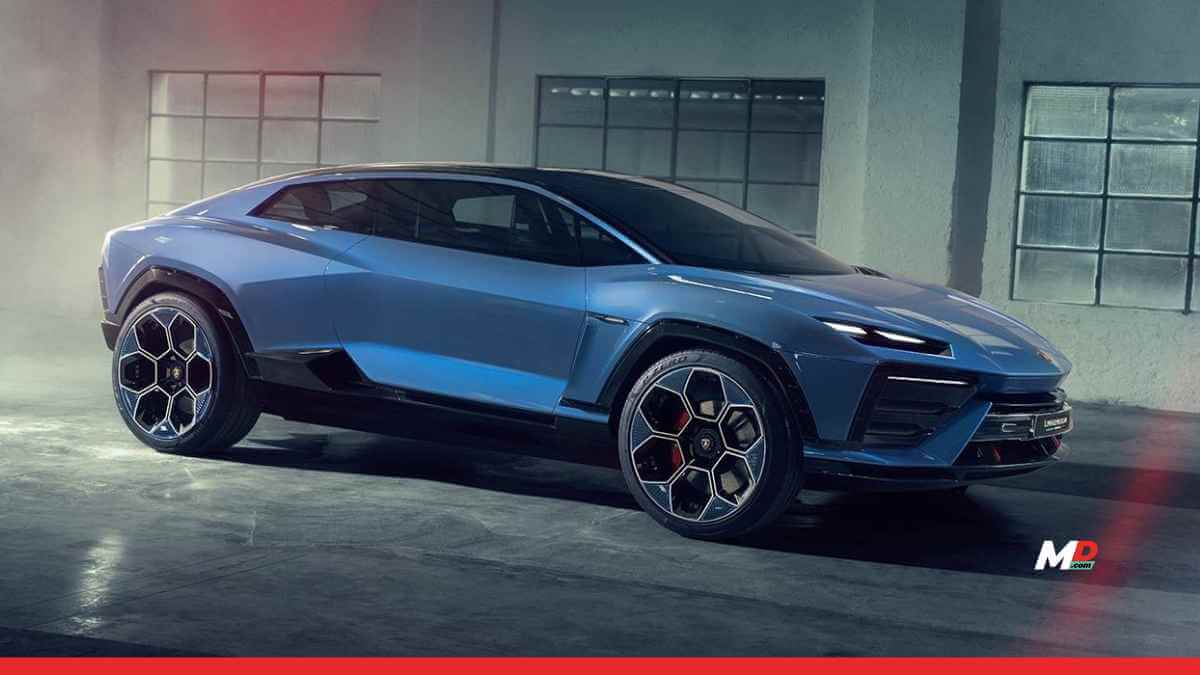
The Lamborghini Lanzador had debuted as a concept at Monterey Car Week over two years ago, positioned as a raised 2+2 grand tourer promising over 1,000 horsepower from electric motors. It was a striking machine on paper. But paper, it turns out, is where it will remain, at least in its original, fully electric form.
CEO Stephan Winkelmann explained that when Lamborghini first planned the electric fourth model, those plans were built on the assumption that EV acceptance among high-end performance buyers would keep climbing. Instead, demand levelled off, and in some cases, dropped. The brand ran customer clinics. It gathered dealer feedback. It studied the market. And what it found was not the upward curve it had anticipated.
But the decision runs deeper than demand curves. Winkelmann framed the issue in openly emotive terms: people buy Lamborghinis for the drama; the design, the speed, the theatre, the sense of occasion. “It’s never about mobility,” he said. That is a statement worth sitting with. A Lamborghini has never been about getting from A to B. It is about what happens to you, emotionally, viscerally, existentially, on the way. The beastly howl of a naturally aspirated V10 climbing to redline is the entire point of jousting with a raging bull.
Lamborghini’s product boss Stefano Cossalter was more pointed still. While declining to comment directly on rivals, he said the brand believed its hybrid strategy was “the right one,” adding that battery technology simply was not yet mature enough to deliver the kind of emotion a Lamborghini electric car would need to provide. “You can really make a beautifully controlled car and make it a lot of fun,” he said. “But we need to deliver emotions, as well as proper performance, for this car.”
This is the crux of it, and it is not a uniquely Lamborghini problem. Across the performance and luxury segment, the EV experiment has run into the same wall: electric cars can be fast, but fast is not the same as feeling. The Italian marques, in particular, have always understood that their cars are objects of desire, not just objects of performance. Ferrari, Lamborghini, Maserati; these are brands that trade in mythology as much as engineering. Electrification, for all its torque-figure wizardry, has not yet found a convincing way to bottle that myth.
Ferrari’s own first modern EV, the €550,000 Luce, saw the company’s share price drop six per cent in a single week, with analysts and enthusiasts alike panning its design, particularly the decision to hand styling duties to LoveFrom, the agency of former Apple design chief Jony Ive. Lamborghini, watching from the wings, clearly drew its own conclusions.
The broader trend is impossible to ignore. Porsche has softened its EV timelines. Volume manufacturers across Europe have pushed back electrification targets as consumer uptake fails to match the mandates. What looked like inevitability in 2021 looks considerably more negotiable in 2026.
Lamborghini’s fourth model will now arrive as a plug-in hybrid, likely combining electrification with a V8 or V12, and is expected closer to 2030 rather than 2028. The legendary V12 will live on beyond 2030. That is a covenant that will likely draw the faithful to its doors.
There are decisions that define a brand, and then there are decisions that remind a brand of what it already was. For Lamborghini, this is the latter. The bull, as ever, charges on its own terms.