

Entertainment
Imtiaz Ali and Diljit Dosanjh deliver a beautiful tale of love, memory and longing in ‘Main Vaapas Aaunga’


There are filmmakers who create stories, but Imtiaz Ali tells his audience how to feel those stories. Through his film ‘Main Vaapas Aaunga’, Imtiaz returns to the familiar territory of love, loss, desire, memory and belonging; only this time he does it with a greater maturity and emotional depth than before, which makes the film resonate long after it ends.
The backdrop of Partition is not just a love story but also a story of home, loss, identity, and the wounds that time can never fully heal. The characters are affected by one of history’s most significant events, and even though the story bears the weight of its tragic history, it does not diminish the personal feelings that are present in the characters’ portrayal.
Imtiaz Ali is unique as he finds beauty and poetry in the mundane; he has greater knowledge of people’s emotions than any other filmmaker, and is again proving to the world that audiences are drawn to his style of telling a story. Ali’s characters are all imperfect, are all vulnerable, and are all human beings. Some of the scenes in this film feel more like memories than cinema.
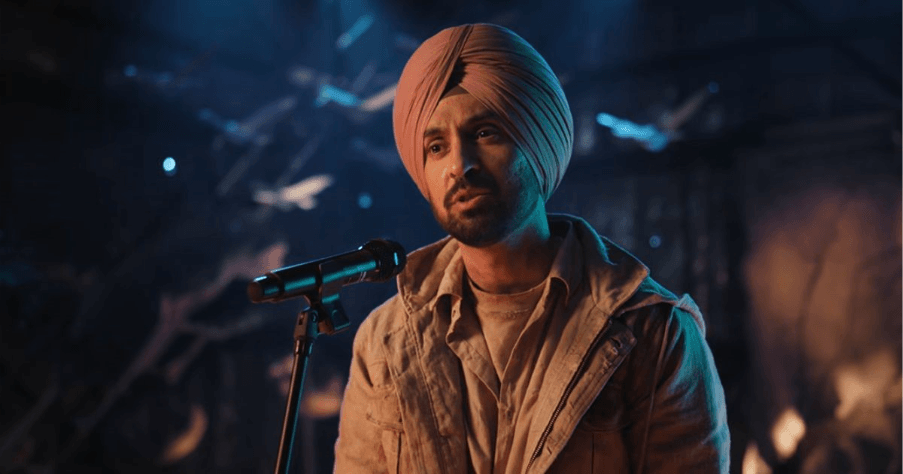
Unquestionably, performances stand out as one of the many strengths of the film.
Diljit Dosanjh exhibits yet another unforgettable performance. There is a quiet sincerity in his portrayal that makes every emotion feel genuine. He makes it easy for viewers to relate to him on an emotional level through his portrayal of love, heartbreak, and longing. He is warm and true to life on screen through all of these expressions. Diljit never plays a moment for effect; the way he underplays the character works superbly. And the relationship he shares with his grandfather, Naseeruddin Shah, is so beautifully portrayed that you would want to go and hug a family member after watching the film.
Naseeruddin Shah is tremendous, and in a film with numerous other outstanding performances, he still finds a way to be outstanding, even though his character is in bed the entire time. His performance is nuanced, heartbreaking, and incredibly emotional. Many of the film’s emotional high points belong to him alone, but he reminds us yet again of why he is one of the very best actors in the history of Indian cinema.
Vedang Raina continues to show us that he is much more than a promising newcomer. He exudes charm, innocence, and emotional authenticity throughout his performance. He is very impressive on screen; also, he shares incredible chemistry with his fellow cast members. Through his sincerity, you will want him to succeed throughout the course of the film.
In what is likely the most mature performance of her career, Sharvari shows her character as both strong and vulnerable, making her appear real and relatable. Her emotional scenes land effectively, and she holds her own alongside some incredibly experienced performers.
The supporting cast also should be recognized for an excellent job in their performances. Banita Sandhu provides an impactful performance despite limited screen time. Both Danish Pandor and all the ensemble members understand the universe created by Imtiaz, and each actor plays his or her role with great sincerity and skill. No performance seems forced; collectively, they add to the authenticity of the film’s emotional landscape.
Visually, Main Vaapas Aaunga is exquisite. Special recognition must be given to Sylvester Fonseca’s cinematography. Each shot is breathtakingly beautiful and showcases both the closeness of the love story along with the vastness of a historical backdrop. Many of the visuals throughout the film appear like works of art and are enhanced by the use of light, landscapes, and close-ups. The camera does not just look at the characters but appears to relate to them as well. Some of the angles and transitions of the camera are so cleverly conceived that they add a sense of importance to some of the more subtle scenes in the film.
Another bright spot is the movie’s musical score. Once again, A.R. Rahman and Irshad Kamil have proved why they are such an incredible combination in Bollywood. The songs feel naturally part of the story; they don’t break the flow of the film. Most importantly, the music stays with you. After watching the movie, it’s likely you will catch yourself humming many songs or thinking about lyrics for days afterward. The soundtrack is one of the key elements that define how the movie feels and how to create an emotional connection to the film.
If there was anything that dragged the film down, it would be slow pacing. There are several times throughout the film that the story seems to take too long to get to its next point, making you lose some focus on what you were watching. However, there are also numerous moments when there is an emotional moment or a plot twist, which brings you back to the story in the right direction and makes you appreciate your experiences as you continue watching the film. While the journey is a little long sometimes, the end of the experience makes waiting worthwhile.
Main Vaapas Aaunga may not be Imtiaz Ali’s most flawless film, but it is undoubtedly one of his most heartfelt. It’s a film about love separated by borders but connected by memories, and sometimes, that’s exactly the kind of story we need.
Rating: 3.5/5