

Leadership
Hero MotoCorp announces Srihari Mulgund as Chief Strategy Officer

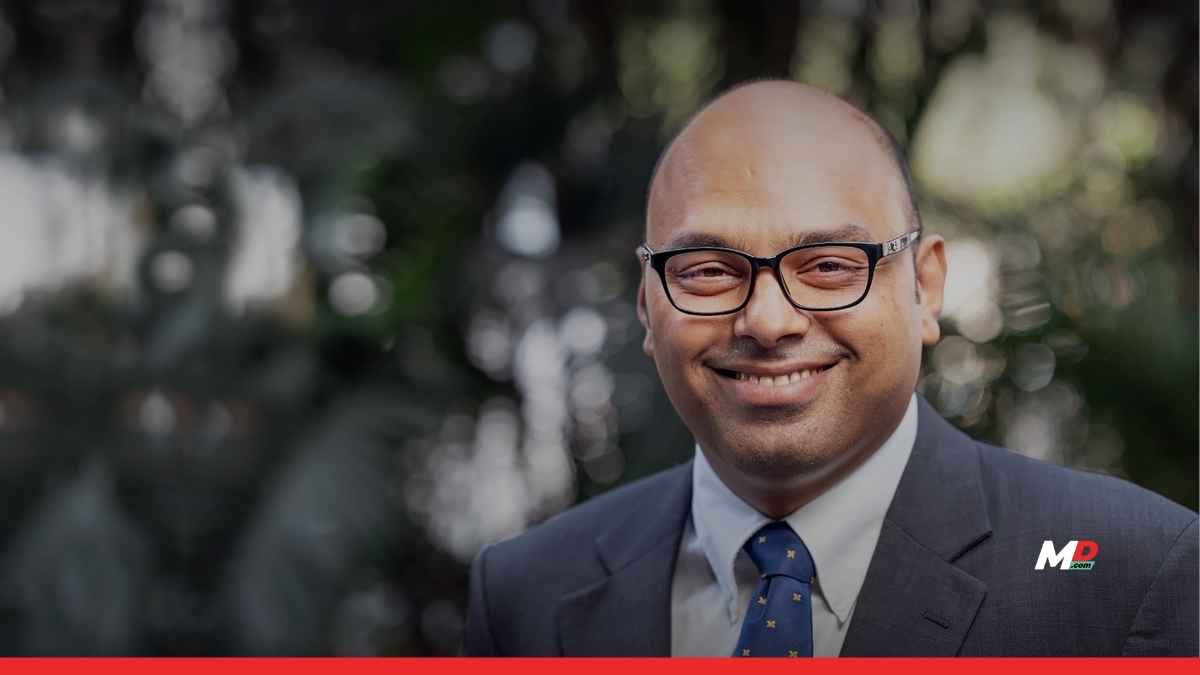
For a company as large as Hero MotoCorp, strategy is rarely about deciding what to do next. More often, it is about deciding what the company must become next.
That makes the appointment of Srihari Mulgund as Chief Strategy Officer, effective August 17, an interesting move. On the surface, it is another senior leadership appointment. Look a little deeper, however, and it fits neatly into a larger transformation underway at India’s largest two-wheeler manufacturer.
New leadership for a new era
Hero has spent decades perfecting the business of scale. Its dominance in commuter motorcycles was built on an extraordinary combination of affordability, reliability, distribution and consumer trust. But the two-wheeler industry is changing, and the areas offering the most attractive future growth are not necessarily the areas where Hero has historically been strongest.
Premium motorcycles are growing in importance. Scooters represent a significant opportunity. Electric mobility is reshaping the competitive landscape. International markets offer another avenue for expansion, while parts, accessories and connected technologies can potentially create businesses beyond the traditional vehicle sale. Hero itself has identified scooters, premium motorcycles, EVs, global markets and parts and accessories as key pillars of its next growth phase.
That creates a rather different strategic problem. The question is no longer simply how Hero can sell more motorcycles. It is how Hero can build several engines of growth without weakening the enormous engine that got it here.
Powering the next growth engine
This is where Mulgund’s background becomes particularly relevant. An automotive professional with more than two decades of experience spanning engineering, product development and management consulting, he has worked across the US, Japan, China and India. At EY-Parthenon, he focused extensively on new-age mobility and advised automotive companies, suppliers and investors on strategic questions. His career has effectively straddled the worlds of technology and corporate strategy.
That combination could prove valuable at Hero.
The company’s challenge is increasingly one of portfolio orchestration. How much should it invest in premium motorcycles? How quickly should it scale EVs? Where should it compete globally? Which technologies should it develop internally, and where should it partner? How should its enormous distribution and manufacturing strengths be leveraged in businesses that did not exist when the company’s traditional playbook was written?
These are not questions that can be answered by product teams alone. They require a strategic view of where mobility is heading, where Hero has the right to win and, perhaps most importantly, where it should deliberately choose not to compete.
There are already signs that Hero is becoming more ambitious on several of these fronts. VIDA has been expanding rapidly, while Hero has increased its global footprint and continued to push into premium products. Its investment in Euler Motors has also reinforced its interest in electric and last-mile mobility.
The timing is therefore significant. Hero has a formidable core business, but its next decade cannot simply be an extension of its previous three. The company needs to move from being overwhelmingly defined by leadership in volume to being defined by the breadth and quality of its growth.
Mulgund’s appointment suggests that Hero understands the difference. A Chief Strategy Officer does not, by definition, create strategy alone. The more important role is often to connect the dots: between technology and product, India and international markets, today’s profitable businesses and tomorrow’s opportunities.
For Hero MotoCorp, that may ultimately be the real job ahead. Not finding the next Splendor, but instead finding out what Hero looks like when it no longer needs one product, one segment or even one business model to define its future.