
Business
Zepto’s blockbuster IPO is a big bet on its growth story

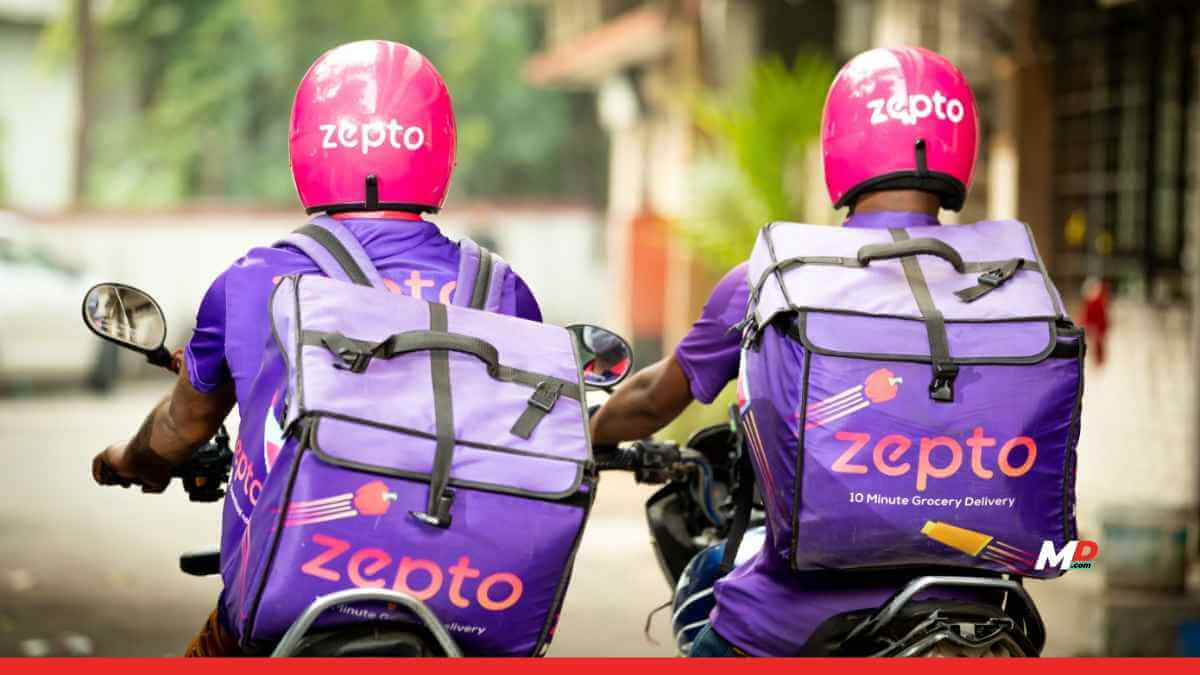
India’s quick commerce space has always run on audacity. The promise of groceries at your door in ten minutes was laughed off as operationally impossible not too long ago. Zepto wasn’t listening. Founded in 2021 by two Stanford dropouts, Aadit Palicha and Kaivalya Vohra, the company turned that promise into a business and then into one of India’s most-watched IPO stories of 2026.
The numbers make for a compelling headline. Revenue surged 149 per cent to Rs 11,110 crore in FY25, a trajectory that has few parallels in Indian startup history. The company now operates over 1,000 dark stores and employs nearly 17,000 people. At its last pre-IPO fundraising round, Zepto recorded close to 1.7 million orders per day, with CEO Palicha noting that a majority of its stores had turned profitable. The pitch to public market investors, in short, is one of relentless momentum.
But momentum and profitability are different things, and the market knows it. Net losses ballooned 177 per cent to Rs 3,367 crore in FY24, up from Rs 1,214 crore the previous year. Growth came fast, but the bottom line didn’t follow. Zepto is pitching a roadmap to full-year post-tax profitability by FY2028-29 and EBITDA breakeven by FY2028, a timeline that asks investors to hold their breath for at least two more years. For public market investors, the IPO presents a familiar new-age technology dilemma: the company has demonstrated an ability to scale rapidly and capture consumer demand, but profitability remains elusive.
The valuation question adds another layer of complexity. Zepto last raised $450 million in October 2025 at a $7 billion valuation, but investors suggest this may now appear stretched given current public market conditions and weaker performance of listed peers. Stocks of companies such as Swiggy and Blinkit’s parent, Eternal, have declined this year, making IPO pricing more challenging.
Then there is the regulatory overhang. Zepto disclosed in its revised Draft Red Herring Prospectus that co-founders Palicha and Vohra were issued notice by the Enforcement Directorate under FEMA ahead of the IPO filing. The ED asked for information related to foreign and overseas investments, shareholding patterns, and details of the company’s re-domiciling to India. Both founders appeared before the agency on multiple occasions in April and May and submitted the requested documents. Zepto has categorised the matter as a risk factor in its prospectus, and neither founder is expected to face personal liability, but the timing is awkward.
What makes the Zepto story genuinely interesting is not just the business metrics. At 24, Palicha is already on India’s self-made billionaires list, and if the IPO goes through as planned, he will become the youngest Managing Director and CEO of a publicly listed Indian company. That is a milestone that speaks to a generational shift in who builds India’s biggest companies and how fast they get there.
The proposed IPO consists of a fresh equity issuance of Rs 8,010 crore alongside an offer for sale from early backers, with the company targeting a listing by July 2026. The co-founders are not selling a single share in the OFS, a signal of conviction that will not go unnoticed by the market.
The real question, as always with high-growth, loss-making businesses going public, is whether the story is compelling enough to carry the stock beyond listing day. Zepto has proven it can grow. Whether it can turn a profit is the chapter that still needs writing.