

Business
Subhash Chandra’s ₹22,000 Crore debt is settled at Rs 6.5 Crore, revealing India’s debt double standard

There is an old joke about India’s banking system that gets less funny every time something like this happens: If you borrow a crore, the bank is your problem…if you borrow 10,000 crores, you are the bank’s problem.
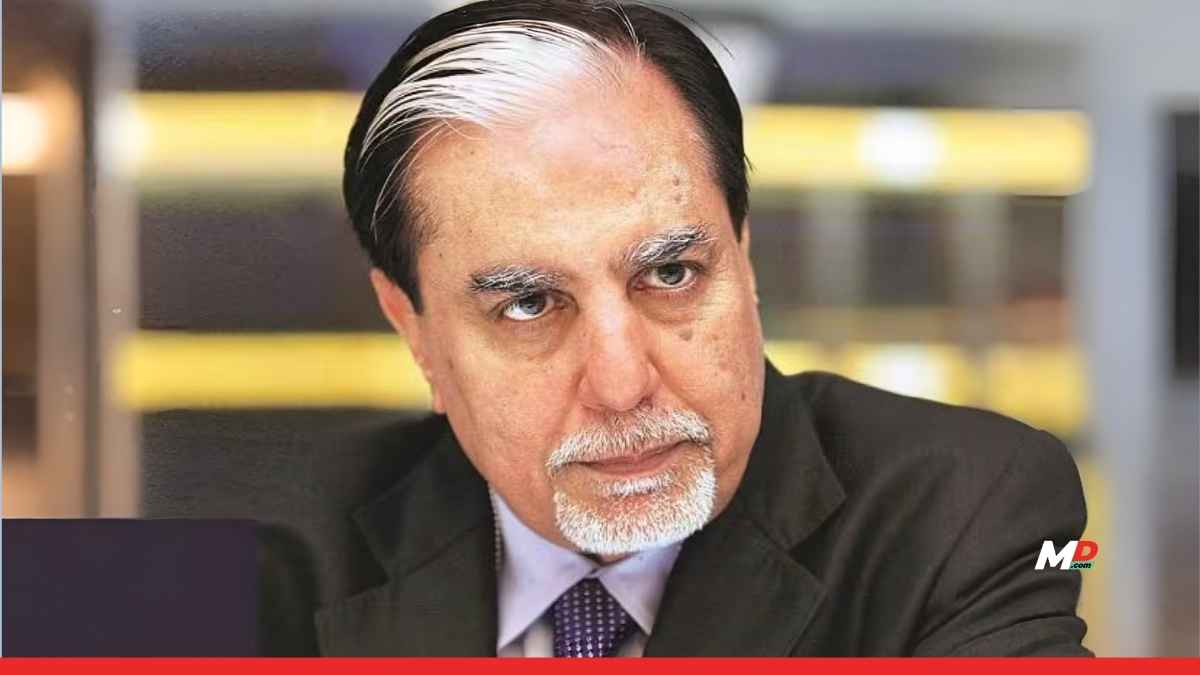
The latest reason for that cynicism is the National Company Law Tribunal’s approval of a repayment plan for Zee Group founder Subhash Chandra. Against admitted creditor claims of approximately ₹22,006.57 crore, creditors are set to receive just ₹6.5 crore, a recovery of roughly 0.03%, translating into a staggering 99.97% haircut.
Before reaching for the pitchforks, there is an important qualification. This is not a case of the NCLT arbitrarily wiping out a debt. The plan received the backing of creditors holding 80.81% of the voting share. The tribunal also noted that the resolution professional’s valuation indicated that Chandra’s personal estate was worth significantly less than the amount offered, and that forcing bankruptcy might leave creditors worse off.
Legally, then, the machinery has a rationale. Morally, however, the optics are extraordinary.
India’s debt double standard
Imagine explaining this to a middle-class borrower whose ₹10 lakh home loan has gone into arrears. The bank will not ask whether paying 0.03% of the outstanding amount would be more convenient. It will not convene a committee of creditors. It will not spend years debating whether a haircut is commercially sensible. There will be calls, notices, penalties, credit-score damage, recovery proceedings, and, eventually, the possibility of losing the asset securing the loan.
For the ordinary borrower, debt is personal. For the very large borrower, debt can become institutional. And that is the real problem.
India needs an insolvency framework. Businesses fail, investments go bad, and creditors sometimes recover more by accepting less. A haircut is not inherently a scandal. In fact, recovering something can be preferable to recovering nothing.
But a 99.97% haircut on ₹22,006 crore forces a much bigger question: how did the system get to a point where an obligation of this magnitude can be resolved for a sum that is almost comically small relative to the original claim?
The uncomfortable history is hardly limited to Chandra.
One standard for thee, another for me
The Anil Ambani saga has produced multiple cases involving enormous banking exposures. In the Yes Bank matter, the CBI alleged that investments involving Ambani-group financial companies resulted in a loss of ₹2,796.77 crore to the bank. Those are allegations in an ongoing legal process, not a conviction, but they illustrate the scale at which corporate credit problems can become consequential.
Then there is Vijay Mallya, whose Kingfisher Airlines collapse left banks pursuing thousands of crores, followed by years of litigation and asset recovery. Banks have also spent years pursuing the likes of Nirav Modi and Mehul Choksi. The government has recovered substantial sums in those cases, but only after extraordinary legal and enforcement efforts.
None of this means every rich borrower is a villain. Nor does it mean every corporate loan should be recovered to the last rupee regardless of circumstances. It means something simpler. The larger the borrower, the more complicated the consequences become. And sometimes, seemingly, the softer the landing.
Banks are quite happy to tell the small borrower that a loan is a contract. They should remember that it is a contract with the large borrower, too. Because banks lend depositors’ money, not their own.
And if the little guy is expected to surrender every last rupee, while the biggest borrowers can negotiate away thousands of crores, the public is entitled to ask a very uncomfortable question: Is India’s credit system designed to protect lenders – or merely to decide which borrowers have enough money and influence to negotiate with them?