

Entertainment
Nana Patekar, actor who could make silences echo, dies at 75

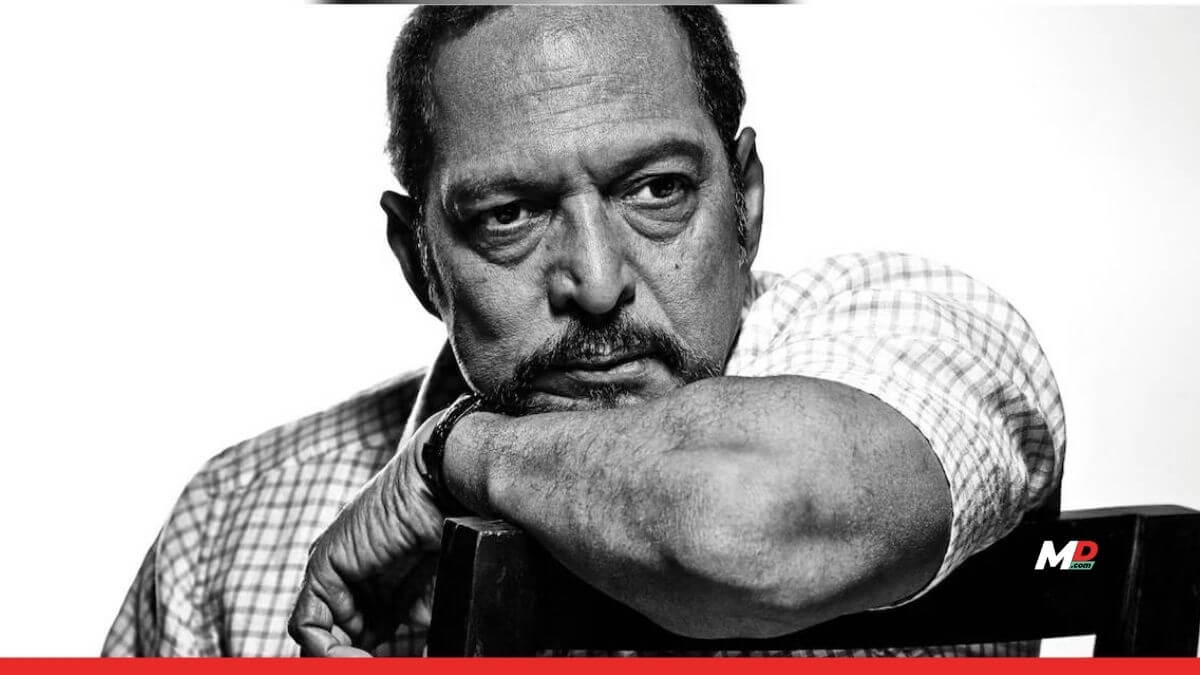
Nana Patekar did not need to raise his voice to dominate a scene. Often, he only had to look at someone.
There was something almost unsettling about his presence on screen. His face could appear worn, ordinary, even slightly weary, and then a line would arrive in that unmistakable voice, delivered with a mixture of menace, irritation, tenderness or fury, and the scene would belong to him.
Patekar, one of Indian cinema’s most distinctive actors, died in Goa on Thursday at the age of 75. He was found unconscious at his residence and was taken to hospital, where doctors tried to revive him for about 45 minutes. He was declared dead at about 5:20 a.m. His son, Malhar Patekar, confirmed the death and said it was from natural causes; reports identified a severe cardiac arrest.
For almost five decades, Patekar occupied an unusual place in Indian cinema. He could be a leading man, a villain, a policeman, a soldier, a politician, a gangster, a comedian, or a broken old theatre actor. He was rarely conventional in any of them, and straddled all roles with consummate ease.
Born Vishwanath Patekar in Maharashtra in 1951, he came to cinema through theatre and made his screen debut in the 1978 film Gaman. His early years were marked by character parts, but his career changed decisively with Salaam Bombay! and, especially, Parinda in 1989. As Anna, a gangster whose violence seemed inseparable from his loneliness, Patekar gave Indian cinema one of its defining crime-film performances. The role won him the National Film Award and the Filmfare Award for Best Supporting Actor.
The 1990s established the range that would become his signature. He played a soldier in Prahaar: The Final Attack, which he also directed, and appeared in films including Raju Ban Gaya Gentleman, Angaar and Tirangaa. Then came Krantiveer in 1994, in which he played Pratap Narayan Tilak, an alcoholic and disillusioned man who rediscovers his political conscience. His performance earned him the National Film Award for Best Actor and the Filmfare Award in the same category.
There were few actors who could move so naturally between darkness and melodrama. In Agni Sakshi, Patekar played a deeply troubled husband, earning another National Film Award for Best Supporting Actor. He brought similar intensity to Khamoshi: The Musical, Shakti: The Power, Ab Tak Chhappan and Apaharan. In Ab Tak Chhappan, he played a Mumbai police officer whose professional ruthlessness gradually becomes inseparable from personal damage. It was a performance built less on theatrics than on accumulated fatigue.
And then there was Uday Shetty.
In Welcome in 2007, Patekar did something that actors with reputations for intensity do not always manage: he became genuinely funny. As the hot-tempered but oddly vulnerable gangster Uday Shetty, he turned irritation, timing and sheer disbelief into comedy. The performance introduced him to a younger generation and became one of the most enduring comic characters in mainstream Hindi cinema. He reprised the role in Welcome Back.
His later career returned him repeatedly to serious territory. He appeared in Raajneeti, Kaala and other films, while Marathi cinema gave him some of his most deeply felt work. In Natsamrat in 2016, he played Ganpat Belwalkar, a celebrated stage actor confronting old age, estrangement and the collapse of the world he had built around theatre. The performance earned him the Filmfare Marathi Award for Best Actor.
Patekar’s achievements were substantial: three National Film Awards, several Filmfare honours and the Padma Shri, awarded in 2013 for his contribution to cinema and the arts. But awards only partly explain his stature. His real distinction was harder to quantify.
He had a way of making characters feel as though they existed before the camera arrived and would continue to exist after it left. His anger seemed to have a history. His silences had weight. Even his comic characters carried traces of the same impatience and humanity that defined his dramatic work.
Indian cinema has produced more polished stars, more technically perfect performers, and certainly more predictable screen personalities. It produced very few Nana Patekars.
For audiences who grew up watching him, the voice will probably be the last thing to disappear: gravelly, impatient, intimate, sometimes explosive. A voice that could turn an ordinary line into an event. And then, after the line, a gaze that would burn as bright as a thousand suns. Just like that, the scene would belong to him again. Rest in peace, Nana Patekar. There might never be another like you again.