

Business
7-Eleven’s India exit shows just how hard convenience retail really is

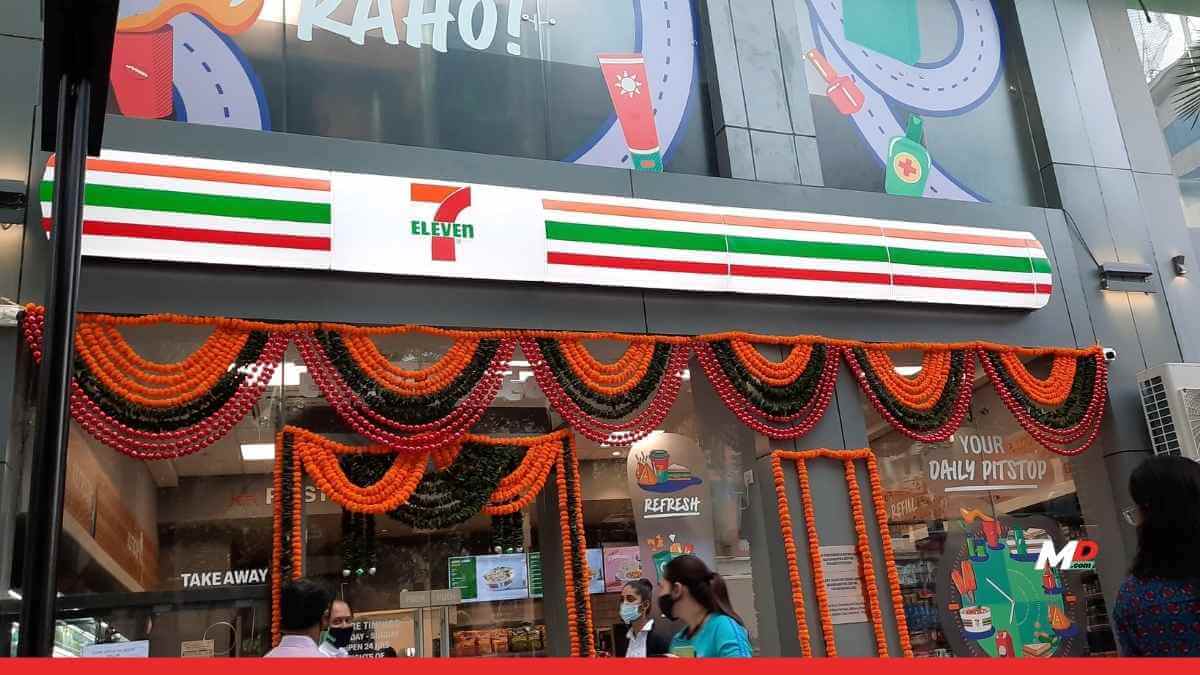
When 7-Eleven arrived in India in October 2021, the proposition seemed almost impossible to get wrong.
The world’s best-known convenience-store brand was partnering with Reliance Retail, India’s largest retailer, to bring the familiar 7-Eleven formula to one of the world’s fastest-growing consumer markets. The first store opened in Andheri East, Mumbai, with promises of beverages, snacks, ready-to-eat food, everyday essentials, and, crucially, convenience.
Five years later, the experiment is effectively over.
Seven & i Holdings has confirmed that all 31 remaining 7-Eleven stores in India were closed by September 30. The chain had once expanded to around 60 outlets. Reliance Retail and 7-Eleven are ending their franchise arrangement after the business struggled to become profitable. For the year ended March 2026, the 7-India Convenience Retail venture reported revenue of about ₹92 crore and a net loss of nearly ₹90 crore.
It is tempting to call this a failure of the 7-Eleven model. India, however, may simply have been an exceptionally difficult place to make that model work.
India’s unique challenges
The first problem is that India already had convenience retail. It just didn’t look like a 7-Eleven.
The neighbourhood kirana has spent decades perfecting the art of being convenient. It is usually closer to home, deeply embedded in the community, familiar with customers, willing to sell tiny quantities, and often willing to extend informal credit. It also doesn’t need a glossy storefront, sophisticated refrigeration, or a large salaried workforce to deliver its proposition.
Then came India’s second convenience revolution: quick commerce.
Blinkit, Zepto, Swiggy Instamart and others effectively turned convenience into a promise of delivery rather than proximity. If a consumer can have milk, chips, cold drinks, toothpaste and a late-night snack delivered to the door in minutes, walking to a convenience store suddenly makes a lot less sense.
India has therefore created an unusually brutal sandwich for organised convenience retail. On one side is the kirana. On the other is quick commerce. In the middle sits the physical convenience store, carrying relatively high costs for rent, staff, inventory, refrigeration and logistics. The math just doesn’t add up.
A question of poor timing and taste
Another point to consider is that 7-Eleven may simply have arrived too late.
The brand entered India in 2021, at precisely the point when the country’s digital commerce ecosystem was accelerating dramatically. A decade earlier, a well-located, clean, air-conditioned neighbourhood store with international branding might have felt revolutionary. By 2021, Indian consumers had already become accustomed to getting many of the same products through modern supermarkets, delivery apps, cafés, malls and increasingly sophisticated local retailers.
There was another weakness, perhaps less measurable but more important: the food game was too weak.
That may sound like a slightly flippant criticism of a multinational retailer. In reality, food is central to why 7-Eleven works spectacularly well in some Asian markets.
Take Thailand. A Thai 7-Eleven is not simply somewhere you go when you need a bottle of water at 11.30 pm. It can be breakfast, lunch, dinner, snack stop, coffee shop and emergency meal solution rolled into one. For those on a budget, or just looking for a quick snack, it is the de facto option.
Thailand’s operator, CP All, has built an enormous network of almost 15,000 stores, with a particularly strong focus on ready-to-eat and ready-to-drink products. Food accounts for more than 70% of turnover, according to a KPMG case study on the business.
That is the crucial difference. Thailand’s 7-Eleven doesn’t sell convenience as much as it sells food convenience. Ready-to-eat meals, sandwiches, toasties, snacks, drinks, coffee and localised products give customers a reason to physically walk into the store. The proposition becomes experiential as well as functional.
Ready-to-eat food accounts for roughly 28-30% of 7-Eleven’s quarterly sales in Thailand, according to analysts cited by The Business Times. CP All has effectively positioned the chain as a food destination, using local tastes, product innovation and high-margin ready-to-eat products to differentiate its stores.
And the cultural penetration is remarkable. Thailand’s 7-Eleven has become something of a tourist attraction in its own right, with visitors seeking out everything from toasties to quirky drinks (this writer is particularly partial to a tall glass of Cold Milo) and snacks. The store is cheap, predictable, accessible and, importantly, fun, with something for everyone.
India needed something similar, but there was no compelling reason for anyone to visit a 7-Eleven in the country. Why visit when everything can be home delivered for a comparable price, or less? And with a weak menu, customers simply stayed away and, ironically, chose convenience.
The store needed killer sandwiches, excellent value-for-money coffee, genuinely good Indian food, interesting international products, an irresistible late-night menu, or some combination of these. It needed to become the place where you grab something you actually want, rather than the place where you reluctantly stumbled in and bought something you forgot.
An imbalance of scale
There was also a scale problem. Convenience retail is fundamentally a density game. The economics become more attractive when stores are close enough together to support efficient distribution, procurement, brand familiarity, and high customer frequency. Thailand’s enormous network creates that flywheel. India’s 7-Eleven footprint remained tiny by comparison, limiting the advantages that scale could have delivered.
None of this means India cannot support convenience stores. It means the Indian version probably has to be distinctly Indian. The next successful convenience retailer may need to combine the kirana‘s proximity, the quick-commerce player’s speed, the café’s food appeal, the supermarket’s assortment, and the convenience store’s operating discipline.
Reading that back, it is not lost on this writer that this represents a significantly more challenging proposition than simply importing a successful global format.
And that may ultimately be the lesson of 7-Eleven’s India experiment. Global retail brands can bring powerful systems, procurement muscle, and enormous brand recognition. But convenience is intensely local. In Thailand, 7-Eleven became part of everyday life. In India, it remained an afterthought. For convenience retail, that difference proved fatal.