Business
Apple Pay is finally in India. Here’s how to use it, and why it matters

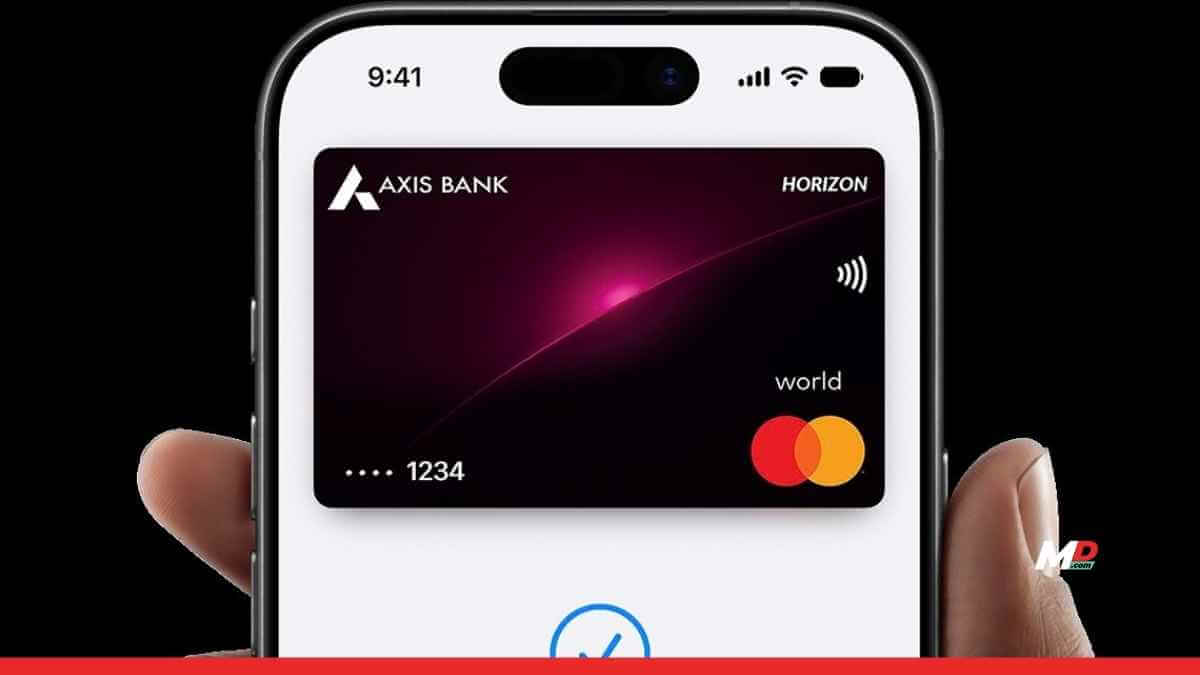
For years, owning an iPhone in India came with a slightly odd contradiction. You could spend well over ₹1 lakh on the phone, pair it with an Apple Watch costing several tens of thousands more, and then still have to reach for your physical credit card when you wanted to make a contactless payment.
That changes from September 30. Apple Pay has officially launched in India, more than a decade after Apple first introduced the service in the US. The initial rollout is deliberately limited: eligible Visa and Mastercard credit cards issued by Axis Bank are supported, while RuPay cards and cards from major banks such as HDFC Bank and ICICI Bank are not yet supported.
For Indian iPhone users, however, the mechanics are remarkably simple.
Also read: Apple Pay to Launch in India With Axis Bank in October
How to set up Apple Pay
If you have an eligible Axis Bank credit card, open the Wallet app on your iPhone and tap the + button. Follow the instructions to add the card and complete the verification process. Axis Bank also allows customers to add an eligible card through its own mobile banking app.
Compatible iPhones include the iPhone XR and later models running at least iOS 18. Apple Watch users need a Series 6 or later running watchOS 11 or later. Once the card is added, there is no separate payment app to open every time you want to pay.
At a compatible contactless payment terminal, double-click the iPhone’s side button, authenticate with Face ID, Touch ID, or the device passcode, and hold the top of the iPhone near the reader. On an Apple Watch, double-click the side button and hold the display near the contactless reader. The payment is then authenticated on the device rather than through a card PIN or OTP.
Apple Pay can also be used for purchases inside supported apps and on participating websites, allowing users to avoid repeatedly entering their card number, expiry date, and other payment details.
There is one important catch: having Apple Pay on your phone does not mean it will work at every contactless terminal. Merchant and payment infrastructure support needs to be enabled, so acceptance could initially be uneven.
And no, this isn’t UPI on an iPhone
This is probably the most important thing to understand about the Indian launch.
Apple Pay does not currently support UPI. It is a card-based payment service, whereas UPI transfers money directly between bank accounts. RuPay, India’s domestic card network, is also excluded from the initial rollout. That means Apple Pay isn’t suddenly replacing the QR codes that have become ubiquitous at Indian shops, restaurants, taxis, and roadside stalls.
UPI is an enormous incumbent. According to BCG, it accounted for 84% of India’s digital payment volumes. Apple Pay is therefore entering a market where consumers have already become exceptionally comfortable with digital payments. Its initial proposition is narrower: make card payments more convenient, particularly for iPhone and Apple Watch users. The belief is that Apple Pay allows customers to use their existing card benefits and rewards while removing much of the friction associated with entering card details or dealing with OTPs and PINs.
Why the launch matters to Apple
Apple has spent the past few years deepening its presence in India. iPhone sales have expanded, the company has increased manufacturing in the country, and Apple has expanded its physical retail footprint. TechCrunch reported that Apple accounted for 28% of India’s smartphone market by value in 2025, up from 23% a year earlier. It also reported that roughly a quarter of global iPhone production now takes place in India. (
Apple Pay adds another layer to that ecosystem. The company is effectively making the iPhone more useful as a financial device, while creating another potential services revenue stream from its growing Indian user base. TechCrunch reported that Apple is seeking a transaction fee of around 0.2%, although commercial negotiations with several major Indian banks have yet to produce agreements.
The first partner, Axis Bank, has 16.3 million credit cards, according to Reuters. That gives Apple a meaningful starting point, even though the addressable market is much smaller than India’s enormous UPI ecosystem. The bigger question is what happens next.
If Apple can add HDFC Bank, ICICI Bank, SBI Card, RuPay, more merchants, and eventually UPI functionality, Apple Pay could become considerably more relevant to Indian consumers. For now, though, its arrival is best understood as the missing piece finally falling into place for India’s increasingly important Apple ecosystem.
After waiting for more than ten years, Indian iPhone owners can finally leave the card at home. At least if that card happens to be an eligible Axis Bank Visa or Mastercard.