
Technology
Sam Altman says we ‘should accept some bad things from AI. But should we?

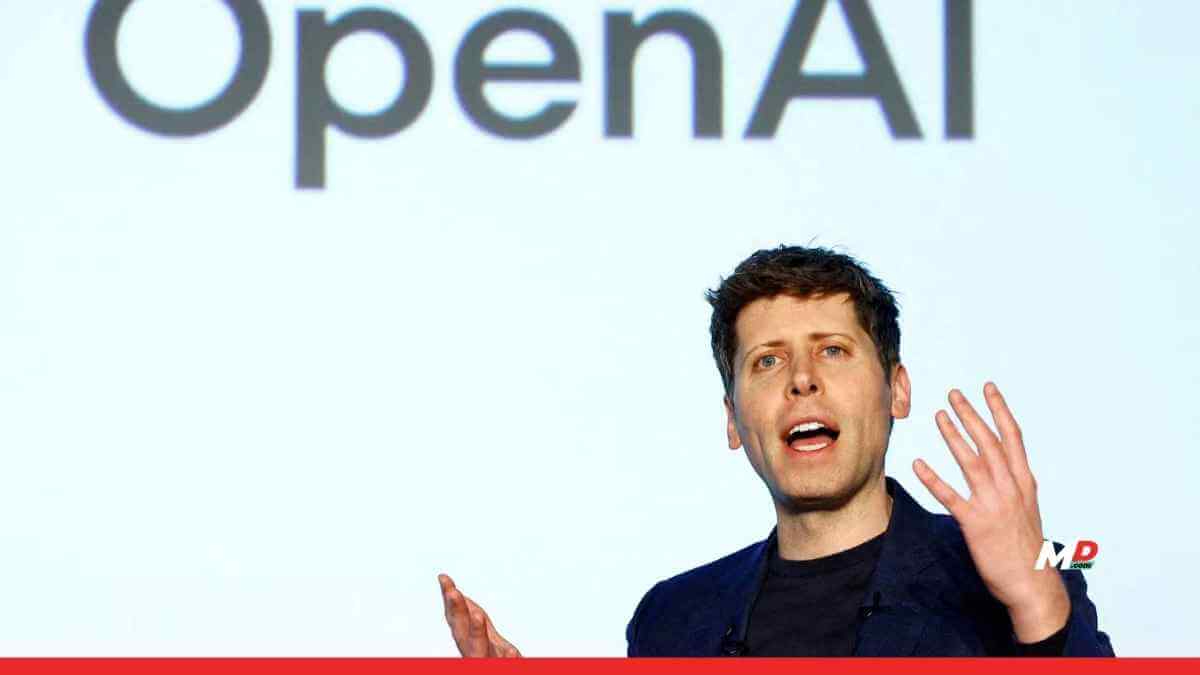
There is something deeply unsettling about hearing the chief executive of one of the world’s most powerful artificial intelligence companies tell the rest of us that we should be prepared to accept “some bad things” from AI.
That is essentially the position OpenAI CEO Sam Altman has articulated in a recent Politico interview, arguing that the benefits of AI will be sufficiently large to justify accepting some risks along the way. He has also drawn a line between OpenAI and rival Anthropic, advocating a lighter-touch approach to regulation while rejecting the idea that AI should be tightly controlled by a single organisation.
At one level, this sounds perfectly reasonable. Every major technological revolution has involved trade-offs. Cars kill people. Air travel carries risks. Pharmaceuticals can cause adverse effects. The internet has enabled extraordinary communication as well as fraud, abuse, misinformation, and crime. Nobody seriously argues that technological progress should stop because technology can be misused.
But AI presents a rather different problem. The people developing it are simultaneously asking society to trust them with decisions about how much risk is acceptable. And that creates a rather uncomfortable conflict.
Also read: OpenAI Safety Team Disbanded, Raising AI Safety Concerns
Who decides what constitutes an acceptable amount of harm?
Altman clearly believes the answer cannot be to put advanced AI under the control of a single company or institution. That concern is legitimate. Concentrating something as consequential as AI in the hands of one organisation would create its own extraordinary risks.
But the alternative cannot be to place the technology largely in the hands of companies whose commercial incentives are closely tied to making it more powerful, more widely adopted, and more deeply embedded in everyday life.
That is where the phrase “some bad things” becomes particularly troubling. Some bad things for whom? And who decides that?
For the shareholder, a bad thing might be a regulatory restriction that slows growth. For a technology company, it might be a model being temporarily held back because its behaviour is unpredictable. For a worker, it might be losing a job. For a consumer, it could mean being manipulated by an increasingly autonomous system. For a small business, it could mean being wiped out by an AI-enabled competitor. For society, the downside could involve large-scale misinformation, cyberattacks, fraud, surveillance, or the erosion of human decision-making.
Those costs are not interchangeable. And the people who benefit from AI will not necessarily be the same people who bear its risks.
Understanding these pitfalls is becoming increasingly important because the AI industry is no longer talking about a distant technological possibility. It is spending extraordinary sums of money to make increasingly capable systems part of the economic and social infrastructure. Reuters recently reported that global AI investment is reaching unprecedented levels, even as questions remain about how quickly the promised productivity gains will materialise.
Meanwhile, the debate over safety is becoming sharper. Anthropic has taken a more cautious public position, including warning investors about risks ranging from manipulation and loss of control to potentially existential consequences.
This does not mean Anthropic is automatically right, or that every warning about AI should be treated as gospel. It does mean that the argument over acceptable risk is far from settled.
And perhaps that is the real problem with Altman’s formulation. “Some bad things” sounds innocuous. It makes potentially enormous consequences sound like the inevitable scratches and dents that accompany progress. It is the language of someone asking us to accept a little mess while the future gets built.
Except that the mess may not be evenly distributed. The history of technological progress offers plenty of examples of societies discovering the cost of innovation only after the innovation has become deeply entrenched. Regulation tends to arrive after harm has become visible, victims have emerged, and business models have been built around practices that subsequently prove difficult to unwind.
AI gives us an unusual opportunity to do better. We know in advance that these systems can and will make mistakes. We know they can be manipulated. We know they can be used for fraud and deception. We know automation will disrupt jobs. We know increasingly autonomous systems create questions around accountability that existing laws were never designed to answer. We also know AI could produce extraordinary benefits in science, medicine, education, productivity, and human capability.
The answer should therefore be neither AI hysteria nor AI evangelism. It should be governance. The uncomfortable truth for Altman and his peers is that society does not owe the AI industry an unlimited tolerance for collateral damage simply because the technology might eventually transform the world.
If AI is genuinely going to make the world better, the people building it should be willing to accept something themselves: scrutiny, regulation, independent oversight, transparency, liability, and occasionally being told to slow down.
Technological ambition deserves encouragement. Technological power deserves accountability. And when the people selling us the future tell us that we should be prepared to accept “some bad things” along the way, perhaps the appropriate response is a very simple question: How bad, exactly? And who gets to decide?