Business
Piyush Pandey given Padma Bhushan post-humously

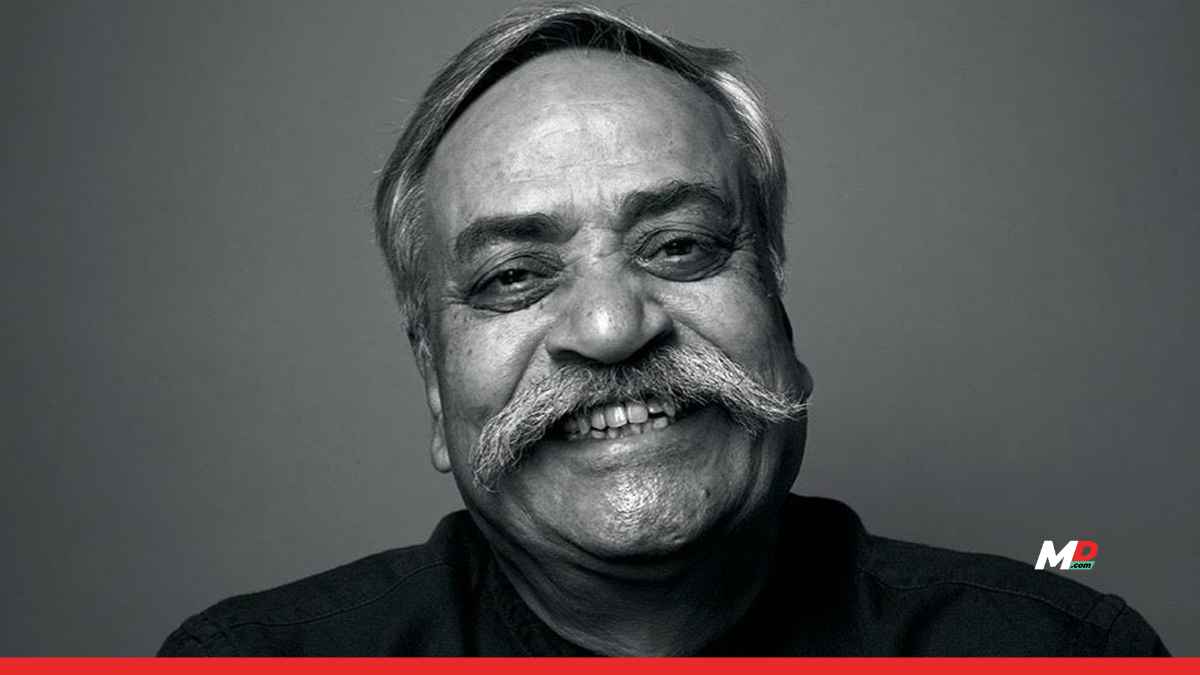
On May 25, at the Civil Investiture Ceremony at Rashtrapati Bhavan, President Droupadi Murmu conferred the Padma Bhushan on one of the most consequential figures in the history of Indian advertising. The honour was received by his wife, Neeta Joshi, on behalf of Piyush Pandey, who passed away last year  — but the legacy it recognises has never felt more alive.
When Pandey joined Ogilvy in 1982, Indian advertising largely spoke in borrowed accents. Campaigns were polished, aspirational, and often in English, aimed at urban audiences, while the rest of the country remained an afterthought.  Pandey dismantled that logic with quiet, radical conviction. He believed that India was a story to be told in its own language, with its own humour and its own emotional register.
What followed was a body of work that rewrote the rules of the craft. Over a career spanning more than four decades, he created some of the country’s most iconic campaigns; Fevicol commercials that became cultural shorthand for unbreakable bonds, Cadbury’s “Kuch Khaas Hai” that turned chocolate into an emotion, Asian Paints’ “Har Ghar Kuch Kehta Hai” that found poetry in the ordinary Indian home, the Pulse Polio campaign featuring Amitabh Bachchan, and the national integration anthem Mile Sur Mera Tumhara.  These were not merely advertisements. They were mirrors that India held up to itself and smiled back at.
The Fevicol campaign, in particular, became a masterclass in the power of rural wit and understated storytelling. Rather than chasing global aesthetics, Pandey leaned into the absurd, the local and the warm; and in doing so, built one of advertising’s most enduring brand personalities. His instinct was simple but profound: respect your audience, understand their world, and speak to them as equals.
That instinct earned global recognition too. In 2004, Pandey became the first Asian to serve as jury president at the Cannes Lions International Festival of Creativity.  The Clio Lifetime Achievement Award and the LIA Legend Award followed , alongside the Padma Shri in 2016, making him the first advertising professional to receive a national civilian honour from the Indian government.
The government citation for the Padma Bhushan described Pandey as a transformative figure whose influence extended beyond creative storytelling to strategic leadership, industry-building and shaping communication rooted in India’s cultural identity. 
That is precisely right. Piyush Pandey did not just make great ads. He gave Indian advertising a spine, a soul and a voice it did not know it had.