
Business
“The best decisions come from proximity, not altitude”


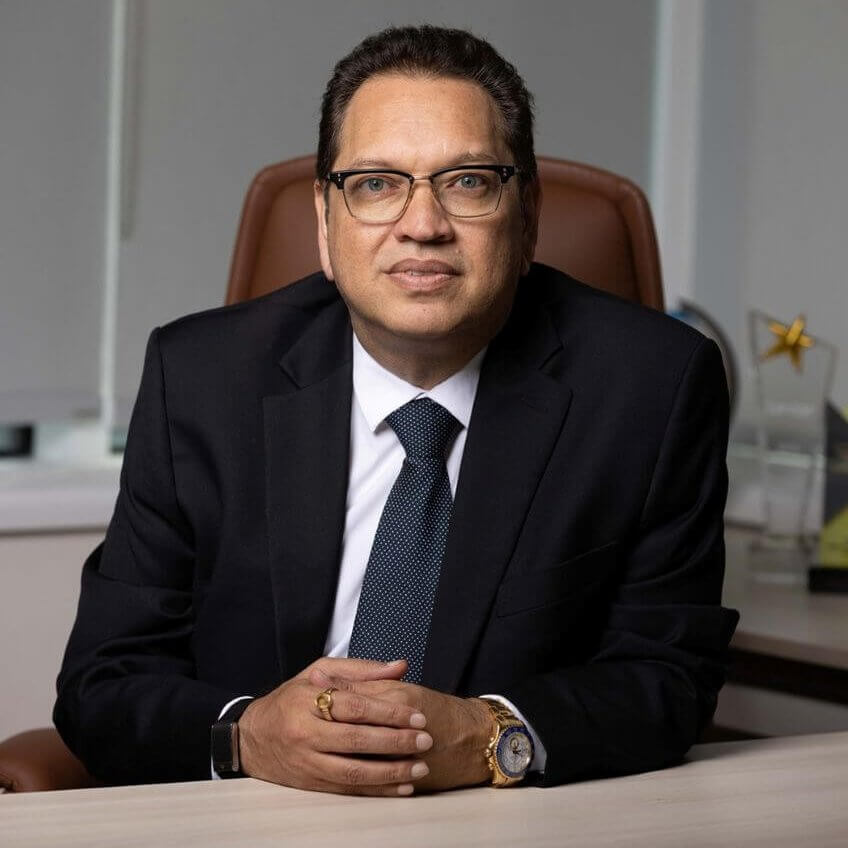
Ambition, at times, does not announce itself loudly. It is certainly so with Jagat Shah, Chairman and CEO of MITSUMI Group, one of the Middle East and Africa’s most influential technology distribution businesses. And he did so by keeping things simple, not by chasing scale or speed, but by consistently solving key market pain points. Now, as MITSUMI enters India, that instinct is being tested at a new level of complexity. Extracts below from our conversation with him.
MITSUMI began as a computer reseller and has grown into a value-added distributor operating across the Middle East and Africa. Looking back, what was the single most pivotal decision that changed the trajectory of the business, and what did it teach you about knowing when to reinvent yourself?
When I look back, I wouldn’t say there was a single decision that changed the trajectory of MITSUMI Distribution. Rather, it was a fundamental conviction that the role of a distributor had to evolve from simply moving products to enabling business outcomes. We recognised early on that the traditional reseller model had inherent limitations. Margins were becoming increasingly compressed, products were getting commoditised, and customer loyalty could disappear the moment a lower price point entered the market.
That realisation prompted us to rethink our purpose and invest in building capabilities that went far beyond distribution. We made a conscious shift towards becoming a value-added partner by strengthening our technical pre-sales expertise, post-sales support infrastructure, and partner enablement programs. This was not the obvious path at the time, and it required us to invest in people, skills, and services well before the market explicitly demanded them. It was a decision driven more by conviction than consensus.
In many ways, that transformation became the defining inflection point for MITSUMI Distribution. It taught us that reinvention rarely arrives as a dramatic, make-or-break moment. More often, the signals emerge gradually. The challenge for leaders is recognising those signals early and acting before urgency forces change upon them. The organisations that shape the future are usually the ones willing to evolve while they are still successful, rather than waiting until disruption leaves them with no choice. For us, knowing when to reinvent is ultimately about recognising when your current business model is solving yesterday’s problem. The moment that happens, it’s time to start building for tomorrow.
Entering India is a significant strategic move, and the timing matters as much as the decision itself. What is it about this particular moment that made India the right market to prioritise, and how do you think about building in a geography that is competitive, fast-moving, and still evolving in how it values distribution?
India was never a new idea for MITSUMI Distribution; it was always a considered and sequenced decision. The question for us was never if we would enter the market, but when. What made this the right moment is the convergence of three powerful forces: India’s accelerating investment in digital infrastructure, the government’s strong push towards AI adoption and sovereign technology capabilities, and a distribution landscape that is still maturing in how it values added expertise over price.
The scale of opportunity across the enterprise, SMB, and public sectors aligns closely with our strengths in AI, cloud, cybersecurity, and infrastructure. We see tremendous potential to contribute meaningfully to India’s digital transformation journey.
India is undoubtedly a competitive and fast-moving market, but competitive markets reward differentiation, not duplication. We are not entering to replicate what already exists. We are bringing a model refined across 36 markets – one that prioritises partner success, ecosystem development, and long-term value creation.
While there are risks associated with entering a rapidly evolving market, the greater risk is waiting for perfect conditions and allowing the market to be shaped by others. For us, building in India is a long-term commitment. It requires patience, local intelligence, and a deep understanding of customer and partner needs. Distribution, at its core, is a trust business, and trust is built over time through consistency, capability, and shared success.
The conventional image of a distributor is logistical, moving product from A to B. MITSUMI seems to be operating from a very different premise, one centred on enablement and ecosystem thinking. In practical terms, what does that shift demand of your people, your partners, and your own leadership style?
The shift from logistics to enablement requires a different organisational identity, where people think like consultants rather than fulfilment agents. For our teams, that means continuously investing in technical depth, solution literacy, and the ability to speak the customer’s language, not just the product specification.
For our partners, it means moving beyond transactional engagements towards genuine co-investment through shared pipelines, joint training, and collaborative account strategies.
This philosophy is reflected in our 2026 theme, ‘Connecting Intelligence’. It is not simply about connecting products to markets; it is about connecting capabilities, insights, technologies, and relationships to drive meaningful business outcomes.
As a leader, this shift also changes how you lead. It is less about directing and more about enabling, creating the right environment, empowering people and partners with the tools and support they need, and then giving them the freedom to succeed. Ultimately, ecosystem thinking is built on the belief that your success is inseparable from the success of those around you. That is not just a business strategy; it is a cultural commitment that shapes how we operate every day.
You have built and scaled a business across some of the world’s most dynamic and diverse markets. When you reflect on the leaders who navigate change well versus those who struggle, what separates them, and what is the piece of advice you find yourself returning to most often?
In my experience, the leaders who navigate change successfully are those who are comfortable with ambiguity. They do not need the full picture before they move; they act on informed conviction and course correct as they go. What also sets them apart is curiosity. Rather than viewing disruption as a threat, they see it as valuable information that can help them adapt, innovate, and stay ahead of the market.
Another defining characteristic is their ability to build relationships and trust long before they need them. Whether with customers, partners, or teams, these networks of trust become the real infrastructure that supports a business through periods of change and uncertainty. At the same time, effective leaders understand the difference between what should remain constant and what must evolve. Values, integrity, and commitment to people should never change. Business models, market strategies, and operating methods, however, must continually adapt to new realities.
The advice I return to most often is to stay close to the ground. The further leaders move away from customers, partners, and frontline teams, the more they begin leading based on assumptions rather than reality. The best decisions come from proximity, not altitude.
Finally, surround yourself with people who are willing to challenge your thinking. A leadership team built solely on agreement can quickly lose perspective. Healthy debate, diverse viewpoints, and constructive challenge are essential for staying relevant and making better decisions.