Technology
Meta’s trial could change Big Tech forever

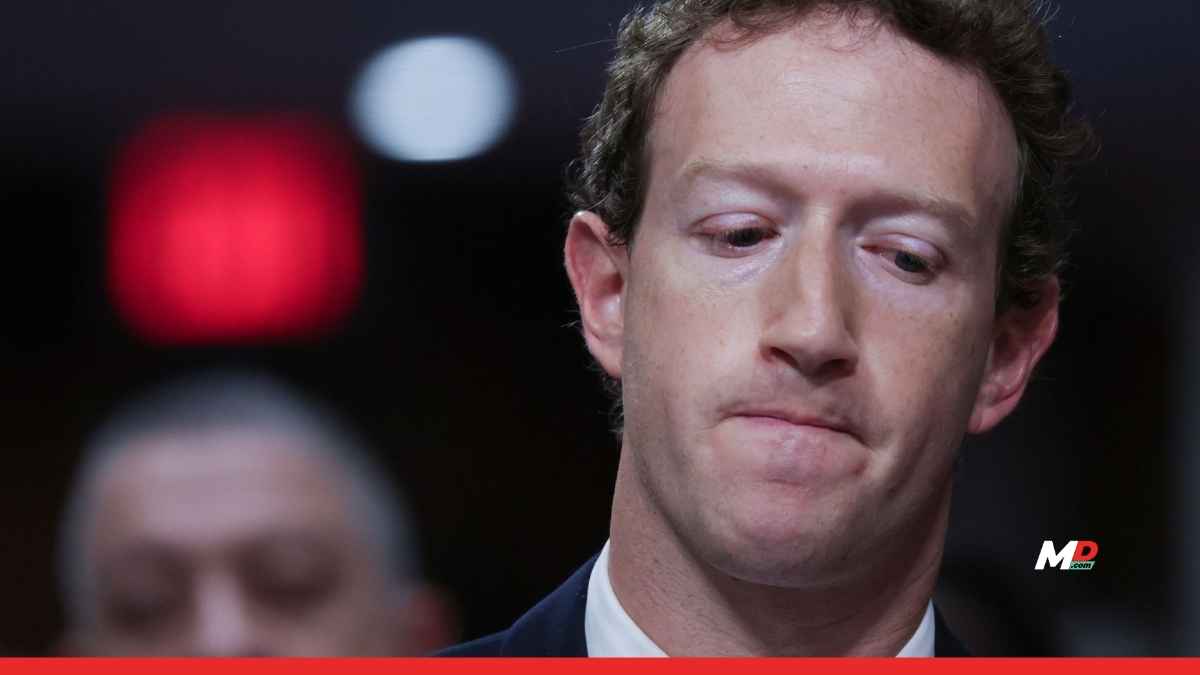
For Meta, the timing could hardly be more cinematic. As Hollywood prepares to revisit the origins and darker chapters of Facebook in The Social Reckoning, the company is facing its own reckoning in a federal courtroom in Oakland, California.
A landmark trial pitting Meta against a coalition of US states began this week, with prosecutors accusing the owner of Facebook and Instagram of deliberately designing its platforms to keep children and teenagers hooked, while concealing what it knew about the potential harms. The case has already drawn comparisons with Big Tobacco, and the financial stakes are extraordinary.
California, Colorado, Kentucky and New Jersey are leading the case, which involves a broader coalition of 29 states. At its heart is an allegation that Meta did not merely create platforms that happened to be addictive. Prosecutors argue that the company actively developed features designed to maximise engagement among young users, including infinite scrolling, notifications, algorithmic recommendations and other mechanisms that encourage users to keep coming back.
That is where the tobacco comparison becomes more than courtroom rhetoric.
Fighting an addiction
Big Tobacco spent decades fighting claims that its products were addictive and harmful, before a combination of lawsuits, internal documents and regulatory pressure transformed the industry’s relationship with government and consumers. California’s attorney-general has described Meta’s case as the company’s “tobacco moment”, suggesting that the central question is not simply whether social media can cause harm, but whether the company knew more than it admitted.
Meta, unsurprisingly, rejects the comparison.
Its lawyers argue that the tobacco analogy is wildly inappropriate and that the states are attempting to turn a narrowly defined consumer-protection case into a referendum on social media itself. The company maintains that Facebook and Instagram provide meaningful benefits to young people and that there is no simple causal relationship between using social media and mental-health problems.
There is also the awkward question of why Meta is being singled out when teenagers spend substantial amounts of time on YouTube and TikTok as well. Google and TikTok’s parent company, ByteDance, face their own legal challenges over youth safety.
But Meta’s problem is that the case does not necessarily require prosecutors to prove that Instagram or Facebook caused every instance of anxiety, depression or other mental-health problems among young people.
The more consequential question is whether Meta deceived consumers and regulators about the risks associated with its products and violated laws protecting children’s privacy. That could make internal company documents and whistle-blower testimony particularly important. Former Meta engineer Arturo Béjar, who previously raised concerns about child safety inside the company, has already emerged as a significant figure in the litigation.
And then there is the money.
Follow the money
Meta has said the four states are seeking penalties that could reach $1.4 trillion under one calculation. More recently, the potential figure discussed by prosecutors has moved closer to $200 billion. Either number is enormous. The latter alone would be roughly comparable with Meta’s annual revenue and would represent an extraordinary financial blow if imposed anywhere near that scale.
Yet investors are not behaving as though Meta is on the brink of collapse. That is partly because markets tend to discount headline-grabbing legal claims when the probability of the maximum penalty being imposed is low. Meta also has avenues for appeal, including arguments surrounding Section 230 of the Communications Act, although its attempt to use that defence to halt the trial was rejected as premature.
More importantly, investors may be more concerned about what happens to Meta’s products than what happens to its balance sheet.
If prosecutors prevail, they could seek changes to some of the very design features that underpin social-media economics. Infinite scroll, autoplay, notifications and recommendation systems are not incidental pieces of interface design. They are part of the machinery that keeps users engaged, which in turn creates more opportunities to serve advertising.
The implications for Big Tech
Remove the engagement, and you potentially remove the advertising. That is why the implications extend well beyond Meta. A significant ruling could establish a template for lawsuits and regulation targeting the broader technology industry, including Google, TikTok and other platforms. It could also force Silicon Valley to reconsider a fundamental assumption of the digital economy: that more engagement is almost always better.
There is another reason this case matters. Public sentiment has shifted considerably. Parents, educators and lawmakers are increasingly uncomfortable with the idea that children are effectively participating in a vast, algorithmically optimised experiment whose commercial incentives reward prolonged attention.
But history also offers a warning against expecting one courtroom victory to transform an entire industry. The tobacco settlements of the 1990s produced enormous financial payouts but did not eliminate tobacco consumption or the harms associated with it. As legal scholar Matthew Lawrence has argued, America has proved considerably better at mitigating the harms of industries built around addictive products than eliminating those harms altogether.
Meta may therefore survive even a bruising defeat. The bigger question is whether it emerges fundamentally changed. If the court finds that Meta knowingly misled the public about the risks of its products, the consequences could extend far beyond a cheque. They could challenge the design philosophy that has governed social media for nearly two decades.
For investors, that may be the real Meta “tobacco moment”. Not the day the company writes a giant cheque, but the day the business discovers that keeping people hooked can no longer be treated as an unqualified virtue.