

Politics
India’s Monsoon Faces a Fresh Threat as Rainfall Deficit Hits 13%

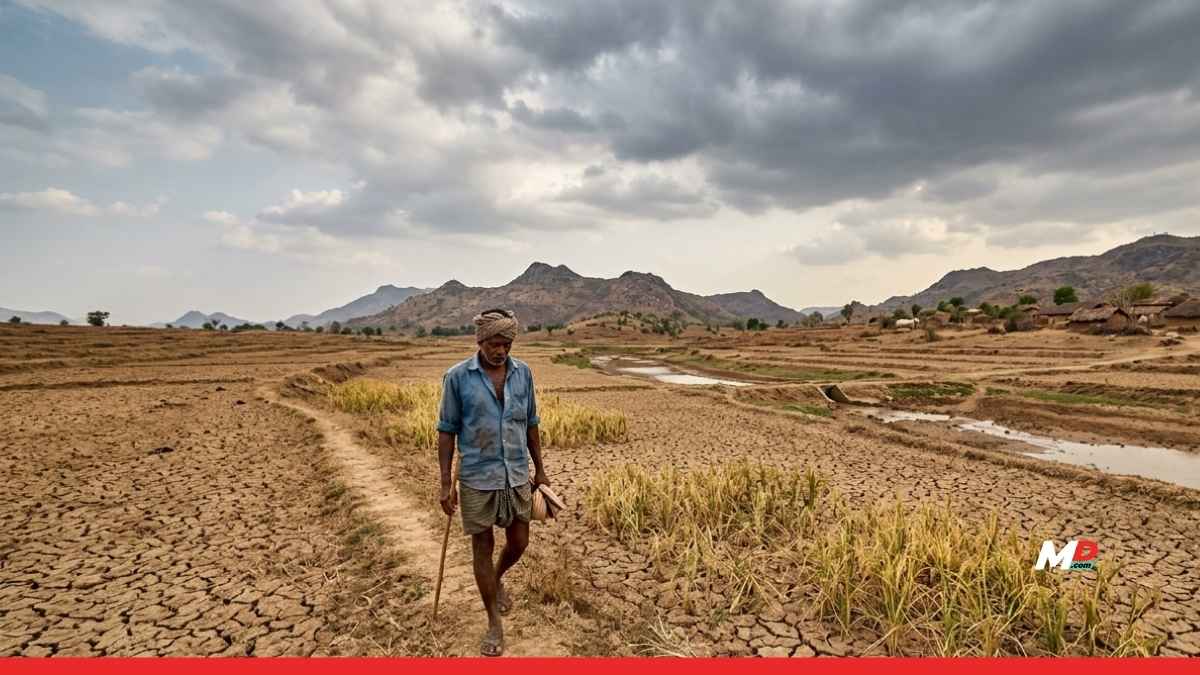
El Niño raises concerns over a weaker August-September spell, putting Maharashtra’s farmers on alert
MUMBAI, AUGUST 18: India’s southwest monsoon is showing signs of renewed weakness, with the country recording a 13 per cent rainfall deficit, raising concerns over agricultural conditions and water availability in several regions. The developing weather pattern has assumed greater significance as the India Meteorological Department (IMD) warns of below-normal rainfall during the latter part of the monsoon season.
The situation is particularly worrying for Maharashtra, where several districts continue to experience rainfall shortages despite heavy showers in parts of the state during July. While a number of major reservoirs received substantial inflows and some dams reached full capacity, large areas remain dependent on further rainfall to sustain standing kharif crops.
El Nino adds to monsoon uncertainty
The emerging influence of El Nino is adding another layer of uncertainty to India’s rainfall outlook. Recent weather assessments indicate that the phenomenon could weaken monsoon activity over parts of the country, particularly during August and September. Reuters reported earlier this month that India’s seasonal rainfall was around 12 per cent below average and that an intensifying El Nino could further increase the shortfall and push temperatures higher.
The IMD’s broader August-September outlook has also pointed towards below-normal rainfall across many parts of India. The agency has forecast rainfall below 94 per cent of the Long Period Average for August, although some parts of central and peninsular India may receive normal to above-normal rainfall.
Maharashtra faces a mixed monsoon picture
Maharashtra presents a sharply contrasting rainfall pattern. Heavy rain during July helped replenish several reservoirs, but the distribution of rainfall has remained uneven. Parts of Marathwada and Vidarbha continue to face significant rainfall shortages, with farmers increasingly dependent on a sustained spell of rain during the crucial crop-growth period.
In several areas, crops sown at the beginning of the monsoon are now entering a critical growth stage. A prolonged dry spell could therefore affect crop development and increase the financial pressure on farmers.
September rainfall now crucial
With August rainfall remaining subdued in several parts of Maharashtra, September has emerged as a crucial month for the state’s agricultural economy. A failure of the monsoon to revive could intensify concerns over crop yields, soil moisture and water availability, particularly in rain-dependent farming regions.
The IMD has, however, cautioned that rainfall patterns can vary significantly between regions. Its latest monsoon information shows that weather systems continue to influence rainfall activity across different parts of the country, making short-term regional forecasts particularly important.
For Maharashtra, therefore, the immediate challenge is not simply the total volume of rainfall but its timing and geographical distribution. After a season marked by both intense downpours and prolonged dry spells, farmers and policymakers are now closely watching the skies for a meaningful September revival.
The coming weeks could prove decisive for the state’s kharif crops and for India’s broader monsoon-dependent agricultural economy.