
Leadership
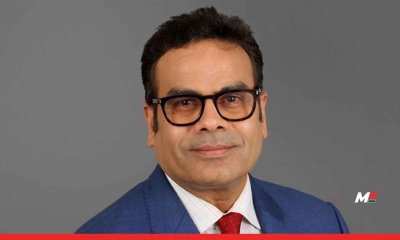
From Jodhpur to Mumbai: Suresh Gandhi’s Legacy, Built on Concrete and Compassion


Jodhpur. A city of forts, history, and royal pride. But also the city where a young boy named Suresh Gandhi was born into a simple middle-class family.
The story of Suresh Gandhi, Founder of the Essgee Group, is a tapestry woven from the quiet traditions of Jodhpur and the dynamic ambition of Mumbai. It is a narrative that spans five decades, charting a course from humble beginnings to the creation of a diversified enterprise and an enduring philanthropic legacy. His life proves that the measure of a man is not personal achievement alone, but the magnitude of what one gives back to the world.
Born into a middle-class family in Jodhpur, where his father served as a teacher and later a professor, Gandhi inherited early lessons in knowledge, humility, and perseverance. These foundational values would quietly underpin his eventual transformation into a celebrated business leader. His initial career steps were marked by quiet determination, culminating in his completion of a commerce degree in 1969, followed by his qualification as a Chartered Accountant in Mumbai in 1972. That same year, a new chapter began both personally and professionally: he married and embarked on his career with Kalpataru, under the mentorship of Shri Mofat Raj Ji Munot.
What began as a salaried role quickly evolved into a trusted partnership, immersing Gandhi in operations across India, the Middle East, and Russia. This deep immersion in infrastructure and global management laid the groundwork for his future independent ventures.
A pivotal moment came in 1983 when the group acquired Caprihans India Ltd., a company struggling with losses. Taking on the role of Managing Director, Gandhi applied his disciplined approach to operations and strategy, orchestrating a remarkable turnaround that swiftly transformed Caprihans into a profitable and respected industry name.
His strategic strength was soon recognized across the sector; he was one of the promoters of Kalpataru Power and actively oversaw its management and operations. His growing influence culminated in his appointment as Chairman of the Plastic Export Promotion Council in 1994 and Vice Chairman of the Plast India Foundation in 1995, solidifying his reputation as a formidable force in Indian industry.
The year 2000 marked a significant turning point: the genesis of the Essgee Group. After nearly three decades of distinguished service at Kalpataru, Gandhi founded Essgee Realty and Essgee Power, launching his own independent journey.
His inaugural real estate projects in Mumbai—Yash Residency, VIP Plaza, and Yash Heights—were foundational successes that established the Essgee brand’s commitment to quality and execution. Since its founding, Essgee has delivered over 2 million square feet across Mumbai and Jodhpur, creating communities where more than 2,000 families now live and operate businesses. The company’s growth is sustained by its Ventures division and a rapidly expanding energy portfolio, with Essgee Power currently operating 20 megawatts of capacity and planning a significant expansion of 70 megawatts.
In 2003, however, the professional journey took a deeply personal turn when Gandhi’s heart drew him back to his roots in Jodhpur. There, he conceived and brought to life the Umaid Heritage Project, a venture that was as much a commercial development as it was a deeply symbolic tribute to his hometown. The project’s inception was blessed with the presence of esteemed figures, including Maharaja Gaj Singh Ji of Marwar, cricketing legend Sunil Gavaskar, Deepak Parekh, Chairman of HDFC Ltd., and C. L. Raheja, Chairman of the Raheja Group. From this revered beginning rose a 130-acre integrated township featuring 550 villas, 550 apartments, and elegant row houses.
Umaid Heritage quickly gained national acclaim, receiving the CNBC Award in Singapore as India’s best integrated township. What truly set the project apart was its soul: at its center, Gandhi established a traditional baawdi stepwell capable of storing 20 million liters of rainwater, a profound statement on sustainability and respect for local tradition. Within the township’s peaceful grounds, he also created twin temples, one Jain and one Shiv, built not for any commercial reason but as powerful symbols of harmony, devotion, and gratitude.
Today, the Essgee Group continues to shape skylines with landmark projects like Fortune Terraces and Essgee Options One in Mumbai—the latter a recipient of the Times Iconic Commercial Project Award. Future destinations include Essgee Samaya at Hughes Road, Essgee Marine Crown at Opera House, and Essgee Vana at Alibaug, a 30-acre forest-themed villa community blending luxury living with nature.
Carrying this legacy forward is Gaurav Gandhi, Director of Essgee Group. An MBA with experience at Citibank N.A. and HDFC Real Estate Fund, he joined the Group in 2008 and brings strong financial acumen and strategic vision to Essgee’s growth story.
Yet, as the Essgee Group celebrates its twenty-fifth year, its founder’s most profound legacy is not etched in steel and concrete but in the communities he rebuilt and the lives he uplifted. Gandhi’s commitment to social responsibility is vast and deeply personal. He established Netra Vikas Sansthan, a school and hostel dedicated to differently-abled children, and founded Navjyoti Manovikas Kendra, a B.Ed. college to train specialized teachers for mentally challenged students. His compassion extended to the provision of mobility aids through Mahaveer Viklang Sahayata Samiti, which gives away free artificial limbs, tricycles, wheelchairs, and physiotherapy, restoring dignity and movement to countless individuals.
Perhaps his most moving philanthropic endeavor is Naari Apna Ghar in Jodhpur, a safe home for abandoned women. This center, affectionately caring for nearly 120 residents, whom he calls “Prabhu Jis,” is where dignity and a sense of family are restored through love and respect.
Gandhi’s devotion to service continues through various trusts and organizations. He serves as a trustee of Kalyan Ji Permanaand Ji Pedi, which manages several revered Jain temples, including the world heritage Dilwara Temples. Demonstrating his dedication to education in challenging terrains, he also built a school in the remote Kupwara district of Kashmir, which is managed by the Indian Army. Through his active role as a Past President of the Rotary Club of Bombay North and an Arch Klumph Society member, he continues to inspire by example, proving that leadership transcends the boundaries of business.
The journey of Suresh Gandhi from the modest lanes of Jodhpur to the pinnacle of industry and the heart of humanitarian service is a powerful testament to vision, humility, and compassion. It is a life that demonstrates that building a business is merely the start, and that creating a lasting legacy means building enduring communities.