
Entertainment
Why Ananya Panday’s Chand Mera Dil dance backlash is really about the death of the Bollywood all-rounder

In the past, actors in Hindi films were required by the industry to provide a comprehensive performance, which included the ability to deliver all the required skill sets. This included the ability to dance, to deliver an expressive performance, to speak in flawless Hindi, to be an amazing stage performer, and to carry the weight of a song sequence on sheer charisma and technical precision. The biggest stars weren’t merely celebrities; they were performers shaped by years of discipline before the camera ever found them.
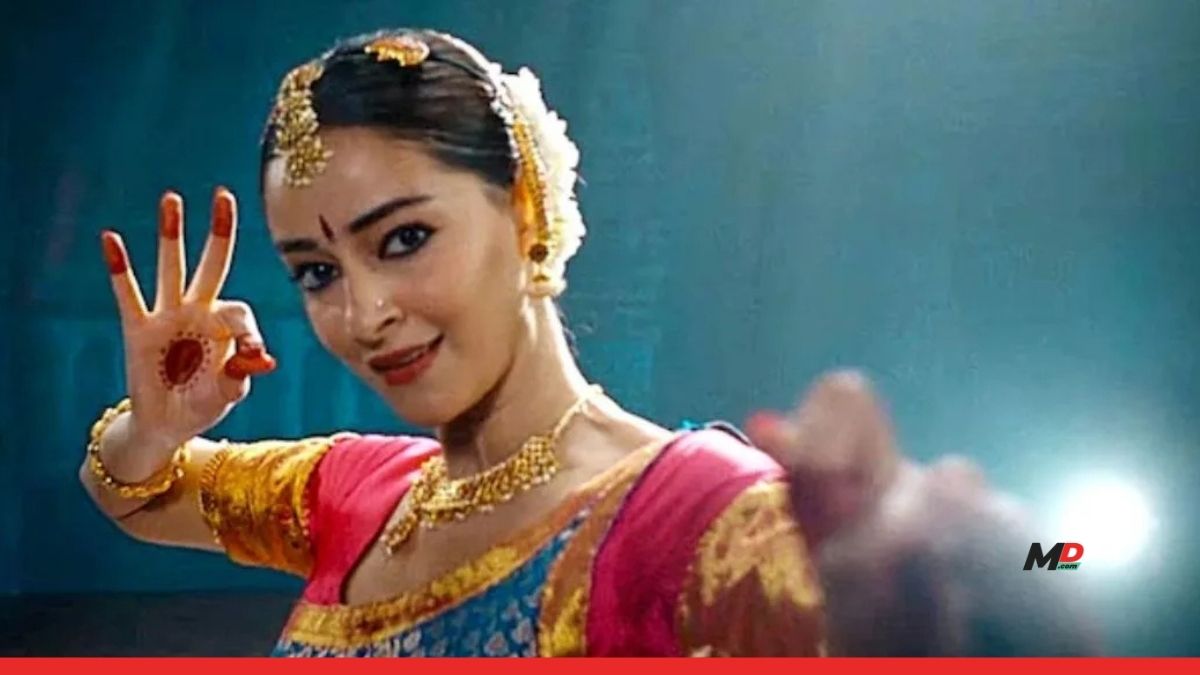
Which is why the backlash around Ananya Panday’s dance sequence in Chand Mera Dil feels larger than the internet’s usual weekly outrage cycle.
A surface view of the situation shows that it is a pretty simple situation; a dance sequence resembling Bharatanatyam is released, and the audience does not like how it was performed, horror ensues via social media, and support for the actress came from fellow industry members. However, the level of outrage also speaks to an insufficiency of actual talent from the stars being created in today’s Bollywood cinema, and the response does speak to the larger picture; not only is there a backlash towards Ananya Panday, but there is also a growing dissatisfaction with the lack of all-rounders (stars) within Bollywood.
For decades, Hindi films created their star systems based on preparing themselves and creating characters to the best of their abilities. Waheeda Rehman was trained through Bharatanatyam before stepping into cinema; Hema Malini’s classical dance background was an integral part of who she was as an actress; Sridevi had the uncanny ability to move seamlessly between comedy, drama, and extremely technical dance routines; and Madhuri Dixit did not just perform choreography but became rhythm itself when dancing. Even those not classically trained came in with established levels of rehearsal, body language control, and discipline to make dance sequences appear effortless.
The level of ‘effortlessness’ was an indirect result of all their hard work.
Today’s generation of stars grows up in a different environment altogether. Our modern-day celebrity system emphasises being seen rather than displaying versatility in different types of performance. In addition, actors must be able to stay relevant through numerous airport appearances, Instagram endorsements, brand endorsements, and interactions with paparazzi long before developing the skills necessary to master the conventions of performance. Stardom is often built simultaneously with craft rather than after it. And social media has made the gap impossible to hide.
In the 1990s, a dance sequence was experienced by viewers only when they watched the movie, and then it was forgotten. In 2026, as soon as that dance sequence is released, it is viewed over and over by many different people who break it down frame by frame using X, Instagram, and Reddit. Instead of having an emotional experience with a performance, the audience now has an analytical experience. Each movement of every dancer becomes a meme template. Each mistake is slowed down, cut out, and compared to archive videos of better dancers from the past.
That is precisely what happened with Chand Mera Dil. Shortly after the release of this Bollywood film, the chatter around it immediately turned to people comparing the performance of Ananya Panday to other popular actresses such as Madhuri Dixit, Sridevi, and Sai Pallavi; their performance being less than or equal to what people currently view as an actress being competent enough to be in the mainstream.
The subtext was unmistakable: how did the industry lower its standards so dramatically?
That question may seem unfair to younger performers, but it speaks to how this reduction of standards represents a structural change within Bollywood. In the previous generations, actors were trained in systems that treated dance and acting as critical aspects of becoming a star. When they were cast for a role, directors would have the performers rehearse for long periods of time before shooting each scene. When a choreographer was brought onto a film set, they were generally considered to be the same as a hard-nosed performance coach. Finally, when a singer was hired to portray the music of their actor’s character, it was done so that the actor to be featured within this script would have to be considered credible by the audience.
Now, image frequently outruns skill.
This is not entirely the fault of actors. Present-day fame promotes speediness as an expectation of public life for young stars who are thrown into this world very quickly, so that they will be expected to be an ongoing visible presence, despite still exploring who they are as artists, in a fully public way. The stars of previous generations had time after being cast in film and television to go through an anonymous training process before their persona was developed/curated for the public. Present-day actors do not even have time to get comfortable in their screen identity(s) before going through a public dissection of their every detail, which is why solely discussing nepotism misses the point; the reason the public is reacting to the Chand Mera Dil backlash as another “anti-nepo” moment is actually due to something much larger than nepotism: the growing disconnect between Bollywood’s scale and the preparation visible on screen.
Because viewers still remember what true screen command looks like. Sridevi was able to take a very stylized choreography and have it come off as an instinctual movement, Madhuri Dixit’s ability to paint an emotional transition within an entire beat via facial expressions, and Waheeda Rahman’s ability to bring a sense of informal restraint, traditionally reserved for classical performances, into mainstream films without it appearing to be an act. These actresses represented a generation for which applicable technical skill was non-negotiable.
As of now, modern-day professionals, performers in film have sufficient opportunities & resources available to help them succeed through all avenues that they may have chosen to pursue, like access to amazing choreographers, state-of-the-art fitness facilities, dance studios with wonderful instructors, acting schools, & millions of visual examples available on the net. Yet audiences often perceive less finesse, not more. Perhaps because Bollywood itself no longer demands mastery before stardom arrives.
And maybe that is the real reason this controversy struck such a nerve. The internet did not suddenly become harsher. Audiences did not wake up one morning expecting perfection. They are simply responding to an industry that increasingly markets stars as complete packages before they are fully formed, performers.
While the judgment has already been made against her performance on the Chand Mera Dil sequence, each critic will continue to form their own opinion regarding the future of Bollywood after viewing the performance because of the many memes and examples within this case.
Maybe the audience is no longer upset with an individual performer. Perhaps they are mourning the potential loss of the professional standard of performance quality as it has been established in the past.