

Entertainment
“Humanity has changed”: Imtiaz Ali on why love stories struggle in today’s violent cinema space

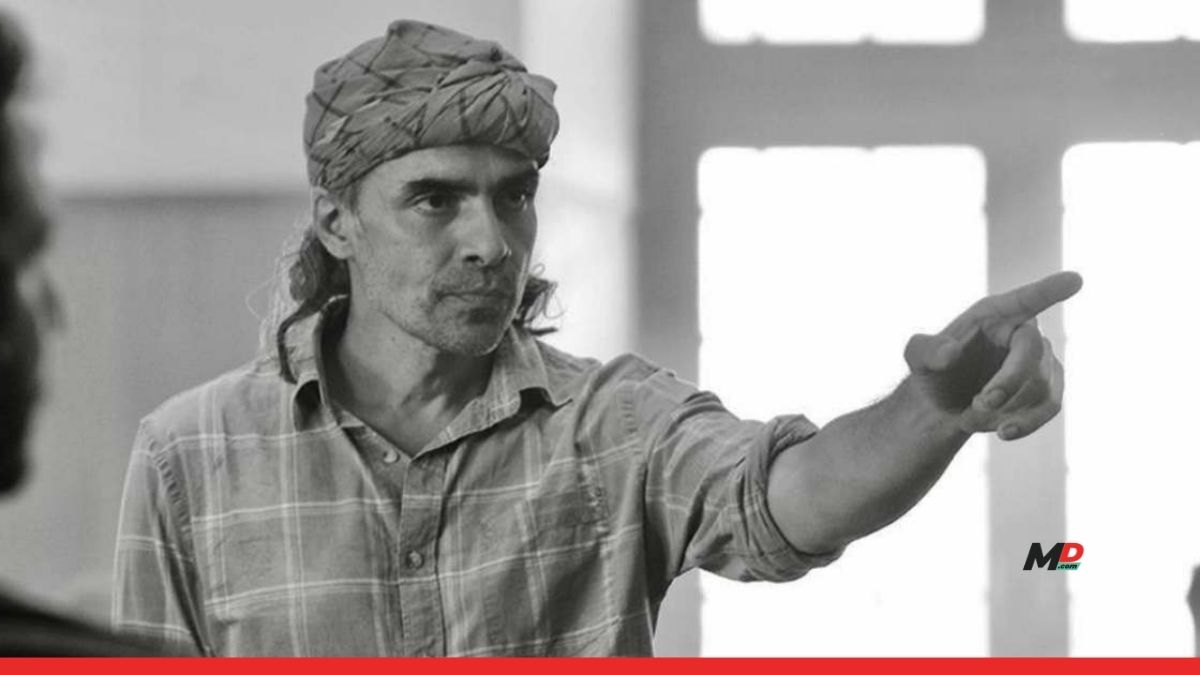
For many years, Imtiaz Ali has been a director whose films have struck a chord with many people who want to see something personal and emotional and rawly human. His films, whether it be Rockstar, Highway, Tamasha, or Love Aaj Kal, have consistently created a sense of emotional restlessness that underlies the romantic stories that he tells. With his latest film, Main Vaapas Aaunga, Imtiaz appears to be moving into an even deeper, more intimate level of storytelling that is focused on memories and migration and the aspects of Partition that have left deep emotional scars across generations.
Main Vaapas Aaunga features an exciting ensemble cast: Diljit Dosanjh, Naseeruddin Shah, Sharvari, Vedang Raina, and Sanjay Suri. The film is set against the backdrop of the partition of India while also spanning multiple timelines.
Recently, when Imtiaz Ali sat down for a group interview with Marksmen Daily, he shared that though he doesn’t have a personal link to the Partition experience, he feels that he has developed a very strong emotional association with it due to the stories that he has heard from survivors of that traumatic chapter in their lives.
“Because I have seen the pain of people who witnessed Partition. My connection to the Partition is second-hand. I have not seen it myself, but I have spoken to many people who went through Partition, people who suffered loss of life and property, people who went through terrible tragedies,” he said.
The filmmaker shared that he travelled across Punjab and other parts of North India to meet survivors and listen to their stories personally instead of depending only on historical material online or in books. “I personally met many such people by visiting their homes in Patiala, Bulandshahr, and different places. Before shooting in Punjab, I travelled there for research. We did two kinds of research. One was through books, photographs, and the internet, but that is never 100% authentic because even the person writing it has a bias.”
One particular story stayed with him deeply, a horrifying memory narrated by a man in his 90s who had survived Partition as a child. “The boy said to his father, ‘But I’m not even a girl, why are you trying to kill me?’ His father replied, ‘Because they will turn you into a servant. They will make you live a life of humiliation. It is better that you die.’”
Imtiaz recalled how the boy escaped and survived, but even decades later, the trauma had not left him. “Even in his 90s, while narrating the story, you could still see that fear and instinct to run in him.”
The filmmaker clarified that Main Vaapas Aaunga is not based on one person’s story, but instead draws from multiple real-life experiences. “So these are all true stories. The film is not based on one person’s life. It is made from the stories of many people I have met and known.” In fact, he added, “Almost every sequence is based on somebody’s true story.”
Apart from the Partition backdrop, Imtiaz also reflected on how audiences and cinema itself have changed over the years, especially after the pandemic. According to him, modern storytelling has increasingly leaned towards violence and spectacle because audiences today require instant attention-grabbing moments.
“I don’t think the industry has changed. Humanity has changed. During COVID, we started consuming content differently. By the time theatres reopened, the audience mentality had changed. Attention spans had changed.”
He further explained why making an emotionally driven love story today feels more challenging than before. “Now filmmakers feel the need to immediately grab attention so audiences come to theatres. The easiest ways to do that are violence, horror, or loud comedy. So naturally, more films of that kind started getting made and succeeding.”
“For directors like me, the challenge became – how do I make a love story that still grabs attention? Because I don’t naturally gravitate towards horrific violence. That doesn’t come from within me.”
With Main Vaapas Aaunga, Imtiaz believes he may have found a new balance between emotional storytelling and cinematic engagement. “So with Main Vaapas Aaunga, my challenge was how to keep the essence of a love story while still immediately engaging audiences. This film is my attempt at making a ‘love at first sight’ movie for audiences.”
The title itself, interestingly, was not inspired by the famous song many people associate it with. Instead, Imtiaz revealed that it came from Alfred Noyes’ poem The Highwayman. “In the poem, there’s a line: ‘I will come to thee by the moonlight, though hell should bar the way.’ It has the same emotion as the line in the song ‘Main Vaapas Aaunga’, that even if I die, I will return. That feeling became the inspiration for the title.”
Music, as always in an Imtiaz Ali film, plays a major role in shaping the world of the story. Reuniting with A.R. Rahman and lyricist Irshad Kamil once again, the filmmaker revealed that the soundtrack of Main Vaapas Aaunga blends Punjabi folk with vintage Western jazz influences from the 1940s. “The 1940s were a very exciting time musically. Western music and jazz were hugely popular in India because it was still British India. The upper class listened to artists like Frank Sinatra, while grassroots singers like Tufail Niazi were also hugely popular. Our film’s music combines both worlds, old folk sounds and vintage Western music.”
Imtiaz also shared that actor Vedang Raina has lent his voice to a song in the film. “A.R. Rahman, sir, is always very welcoming if an actor wants to sing. Alia also sang in Highway. I knew Vedang could sing, so I encouraged him too.”
When asked about casting, Imtiaz once again reiterated that he has never approached filmmaking from a “star-first” perspective. “I don’t think in terms of stars first. I always begin with the story and characters. Then I think about which actor fits those characters. That has always been my process.”
He also opened up about Naseeruddin Shah’s complex role in the film, revealing that the veteran actor plays a man suffering from Alzheimer’s disease. “Sometimes his character speaks factually, sometimes completely fictionally. He says strange things like people from Mars are arriving or football matches are happening underwater. Diljit’s character is constantly trying to decode what he actually means.” Calling it one of the film’s most difficult roles, Imtiaz added, “There could not have been a better actor than Naseer sir for it.”
Towards the end of the conversation, the filmmaker spoke emotionally about why the timing of the film’s release matters so much to him. “This film is based on people who are still alive today and who saw Partition with their own eyes. Most of them are now in their 80s or 90s. Very few people from that generation are left.”
He continued, “I wanted to release this film while they are still with us because this film is dedicated to them.”
For a filmmaker known for romance and emotional longing, Main Vaapas Aaunga appears to be one of Imtiaz Ali’s most personal and politically emotional films yet, not just a love story, but also a remembrance of voices that history slowly risks losing. The film is all set to release in theatres on June 12, 2026.