
Viral
Navratri 2026: How brands are turning nine nights of festivity into creative opportunities

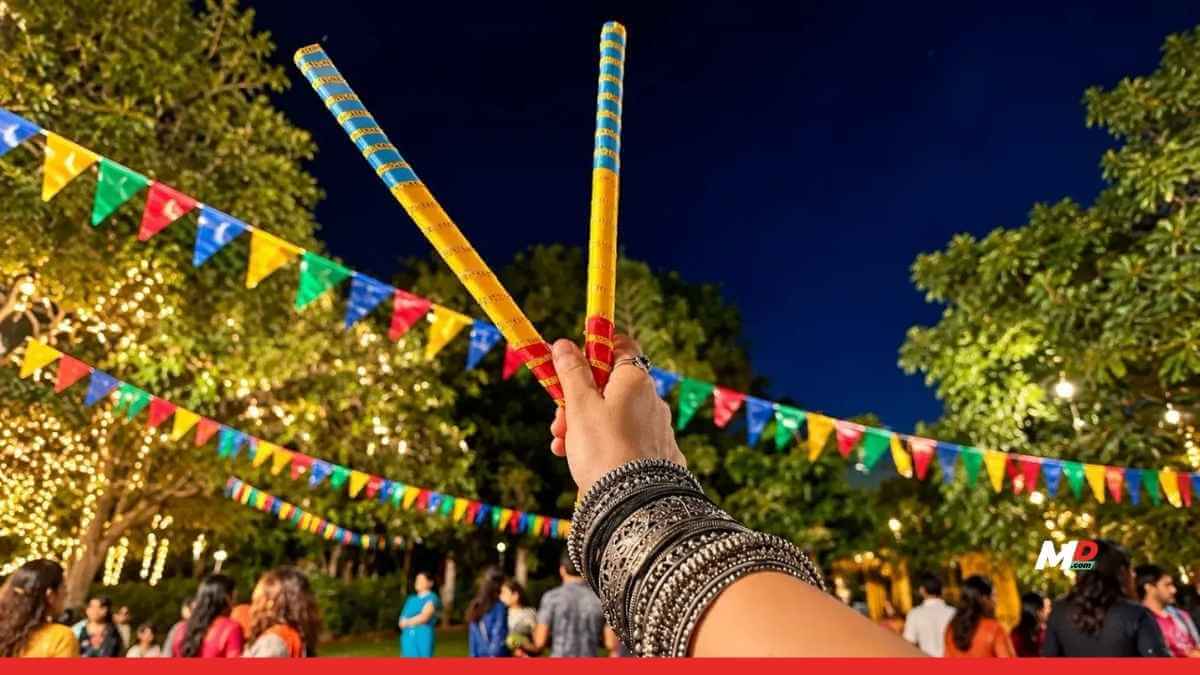
Navratri offers brands a distinctive creative canvas. Nine nights of colour, music, dance, devotion, and community give marketers a wealth of cultural cues to work with. In 2026, brands across categories are using these familiar elements to find fresh ways to enter the festive conversation.
The approaches range from playful food advertising to visual interpretations of traditional symbols. The common thread is an attempt to make the festival relevant to what each brand sells, giving consumers a reason to engage beyond the usual greetings and seasonal wishes.
Here are seven ways brands are bringing Navratri into their communication this year.
1. Baskin-Robbins turns Garba into an ice cream moment
For Baskin-Robbins, the inspiration comes from the circular movement of Garba and the joy of taking a break between dance sessions.
The brand’s creative depicts two dancers from an aerial perspective, with their swirling lehengas formed from scoops of ice cream. Dandiya sticks complete the festive imagery, while the line, “Dance till you drop. Scoop when you stop!”, gives the visual a playful payoff.
The idea works because it connects the product to a recognisable consumer occasion. After hours of dancing, an ice cream break becomes a natural extension of the celebration.
2. Dulux paints Navratri in nine nights of colour
For paint brands, Navratri’s colour palette offers an obvious starting point. Dulux India builds on this connection with a visual of a dancer mid-twirl, holding dandiya sticks, whose traditional ghagra transitions into paint swatch cards.
The campaign carries the line, “Clocking 9 nights in full colour,” linking the vibrancy of festive attire with the brand’s own world of colour.
The creative gives a familiar product category a seasonal context. It also makes colour itself the bridge between the festival and the brand, allowing the communication to feel relevant without requiring a conventional product demonstration.
3. Asian Paints brings the colour palette to the dance floor
Asian Paints takes a related but distinct route, placing Garba dancers across an aerial, illuminated shade card. Its line, “When the whole colour palette hits the floor,” brings together the visual language of paint shades and the swirling energy of Garba.
The idea turns a product asset – the shade card – into the centrepiece of a festive scene.
Together, the Dulux and Asian Paints creatives illustrate how brands in the same category can draw from the same cultural moment while using different visual treatments to establish their identities.
4. Polycab connects Navratri with electrical safety
Not every campaign needs to rely on colour and dance. Polycab India takes a more symbolic approach, using the shadow of Maa Durga with a trishul cast against a wall to connect the festival’s theme of protection with electrical safety.
The accompanying line, “Strength Lies in Safe Connections,” brings the brand’s functional proposition into the festive conversation.
It is a category-specific interpretation of Navratri. Rather than treating the festival purely as an occasion for celebration, Polycab uses its symbolism to reinforce a message that remains relevant to its business.
5. Philips Lighting makes the festivities glow
Philips Lighting India reimagines a familiar element of Garba by replacing traditional dandiya sticks with warm, glowing light strips. Set against an illuminated festive mandala, the visual gives the brand a natural role in the celebration.
Its message, “Let every night of Navratri glow a little brighter,” connects the atmosphere of the festival with the brand’s lighting solutions.
The execution demonstrates how a brand can adapt a traditional motif to showcase its product category. Light is both an integral part of the festive setting and the central element of the brand’s offering.
6. Happydent finds a reason to smile
Happydent India uses the movement of a twirling dancer to build a visual metaphor around its core proposition. The glowing hem of a deep-blue skirt forms the curve of a smile, bringing the energy of the dance together with the idea of a sparkling smile.
The line, “Navratri ke 9 din, smile hogi chamking,” adds a conversational, festive touch.
The approach gives the brand a simple way to participate in the occasion while keeping its product association visible. The visual does much of the storytelling, with the copy reinforcing the connection.
7. Havmor, Parle Hide & Seek, and Wai Wai tap into festive indulgence
Food brands have a natural role to play during a festival built around gatherings, long evenings, and shared experiences.
Havmor Ice Creams brings Garba and ice cream together with the line, “Garba ho ya Havmor, ek aur round toh banta hai!” Its accompanying message plays on the idea that neither dance rounds nor ice cream scoops need to be counted during the festivities.
Parle Hide & Seek and Wai Wai Noodles, meanwhile, draw on the appeal of crunchy textures, flavours, and snacking occasions to connect their products with festive moods and late-night energy.
The approaches differ in execution, but the underlying opportunity is similar: food and beverage brands can make themselves part of the moments surrounding the main event, whether that means a post-Garba treat, a quick snack, or a late-night gathering with friends.
The larger lesson for brands
Navratri’s appeal for marketers lies in its combination of strong visual codes and everyday consumer occasions. Colours, traditional attire, dance, light, food, and devotional symbolism give brands a common cultural vocabulary. The challenge is to use that vocabulary in ways that remain distinctive to each business.
The examples this year offer a useful range of approaches. Some brands use visual wordplay to make their products part of the festival. Others connect traditional symbols to functional benefits. Still others focus on the small pleasures that accompany the celebrations.
The strongest ideas give audiences a recognisable festive moment and a clear reason to associate it with the brand. As the festive season gathers momentum, that ability to connect cultural relevance with a credible product proposition is likely to remain an important part of effective marketing.