
Business
What does Musk becoming a trillionaire mean for the world?

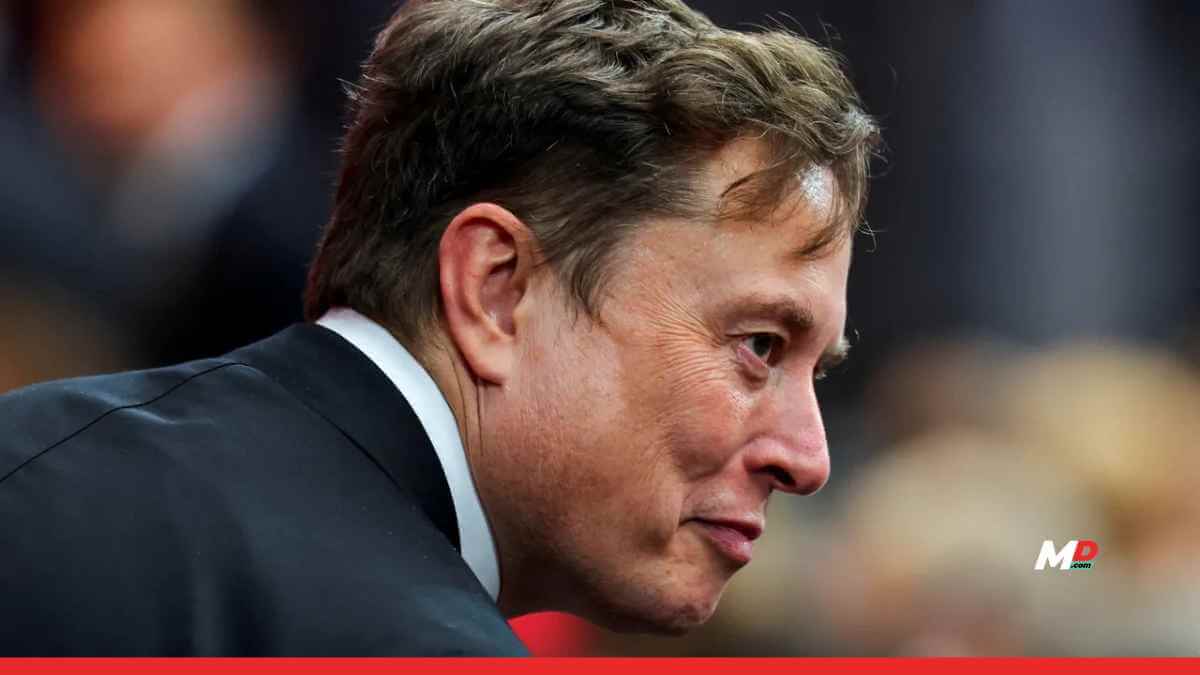
There is a scene that keeps repeating itself across the arc of Elon Musk’s career: the moment the number stops sounding real.
A billion dollars once seemed an appropriate ceiling for the ambitions of one man. Then came ten billion, then a hundred, and the world shrugged and adjusted. On Friday, with SpaceX’s shares beginning to trade on the back of a record-shattering $75 billion IPO, the ceiling dissolved entirely. Musk’s net worth is now expected to exceed $1.1 trillion, making him not just the world’s richest person, but the first human being in recorded history to cross the trillion-dollar threshold. The number is so large it requires a new vocabulary. And perhaps a new kind of reckoning.
Also read: Tech IPO Supercycle Could Reshape Global Markets
To understand what this means, it helps to understand what a trillion dollars actually is. If you spent a million dollars every single day, it would take you roughly 2,700 years to spend a trillion. It is more than the GDP of approximately 180 countries worldwide, and enough to place its owner in the top 20 to 25 largest economies globally. Wealth at that scale becomes something of a parallel economy, pulling institutions, markets, and governments into its orbit and bending them to its will.
Musk holds nearly 42 per cent of SpaceX’s common stock, translating to nearly 80 per cent voting control over the company through a dual-class share structure. Add his stakes in Tesla, X, xAI, and Neuralink, and what you have is an empire with its own logic, its own ambitions, and its own foreign policy.
That last point is not a stretch of the imagination. Over 70 per cent of the agencies targeted by the Department of Government Efficiency under Musk’s leadership presented conflicts of interest for his businesses, with reporting revealing that lucrative contracts were steered toward his companies, including SpaceX. The man who helped reshape the US federal government also happened to be its largest private contractor.
The man who controls the dominant global satellite internet network (Starlink, if you’ve been living under a rock) also shapes the information architecture of modern warfare, diplomacy, and disaster relief. He spent over $290 million in contributions to Republican federal candidates and allied organisations during the 2024 elections and is reportedly spending big again ahead of the 2026 midterms. At a trillion dollars, these are less donations and more investments with structured returns.
Oxfam has called Musk’s ascent “a new pinnacle of oligarchy and a dark day for democracy,” pointing to what it describes as the corrosive downstream effects of wealth at this concentration. Critics have drawn a direct line from DOGE’s dismantling of foreign aid programmes, warning that, as a result, a child under five could die every 40 seconds by 2030.
Defenders of Musk counter that SpaceX has revolutionised access to space, reduced the cost of rocket launches by orders of magnitude, and that Starlink has provided internet connectivity to some of the world’s most remote communities. Both things are true. And that is precisely what makes this moment so difficult to read cleanly.
Few business leaders have been as deeply embedded in popular culture while simultaneously concentrating this degree of structural power. Musk is not a Rockefeller operating in a pre-regulatory gilded age. He is a man who owns the pipes through which an increasing share of human communication, commerce, and imagination flows. And increasingly, he has demonstrated a willingness to use them.
SpaceX’s IPO also stands to enrich a web of politically connected insiders including Donald Trump Jr., current NASA Administrator Jared Isaacman, Peter Thiel, and Marc Andreessen, the largest donor for the 2026 US midterm elections to date. This accumulation of wealth, then, is not just in Musk’s hands. It is concentrating among a cabal of individuals whose interests are legally inseparable from the functioning of the American state.
The question for the rest of the world is not whether Musk is a visionary or a villain. The real question is this: what kind of world will we live in when a single individual wields more financial power than most sovereign governments? History suggests the answer is rarely comfortable. What it looks like for the human race depends, in large part, on whether the rest of the world’s institutions are willing to find out the hard way, or act before they do.