

Business
New Delhi’s Infrastructure Renaissance: How New Connectivity Projects Are Reshaping South Delhi’s Urban Landscape

By Amar Sarin, Managing Director & CEO, TARC Limited
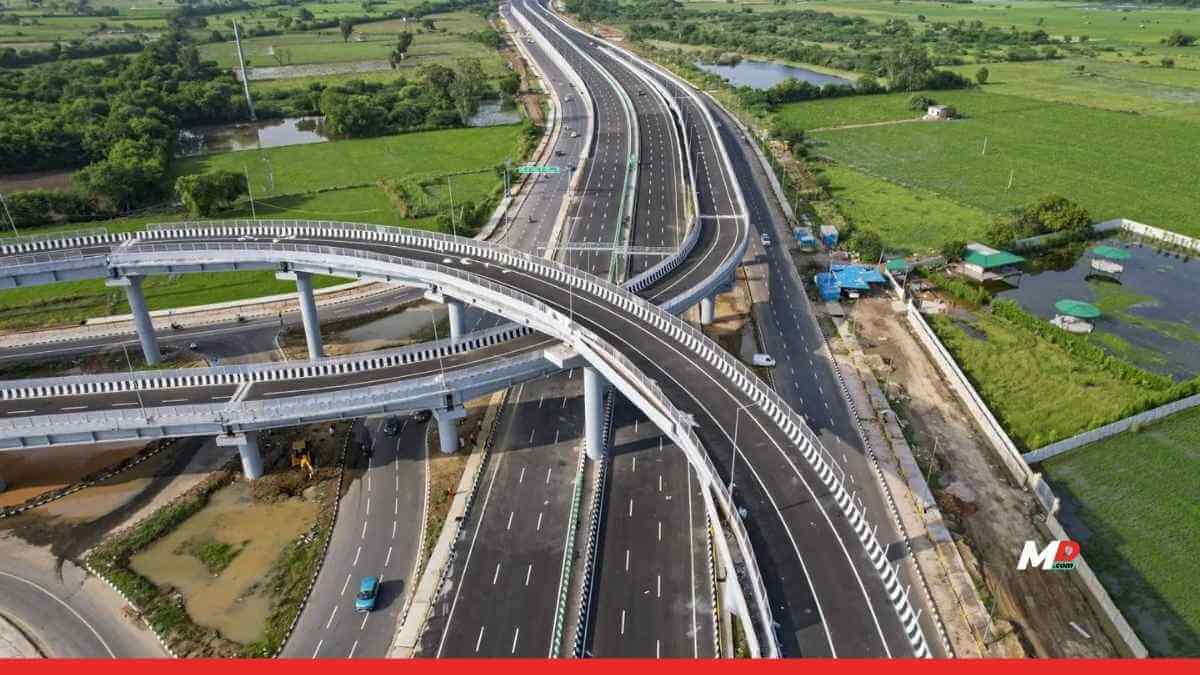
New Delhi stands at the cusp of a transportation revolution. With the recent inauguration of transformative infrastructure projects by the Hon’ble Prime Minister Shri Narendra Modi Ji, including key segments of the Urban Extension Road-II (UER-II) and strategic connectivity corridors, the capital is witnessing its most significant mobility upgrade in decades. This infrastructure renaissance is reimagining how New Delhi connects internally and thrives as a modern metropolis.
The Strategic Significance of UER-II: New Delhi’s Third Ring Road
The 75.71-kilometre Urban Extension Road-II represents a paradigm shift in New Delhi’s connectivity matrix. Designed as the capital’s third ring road, this ambitious project connects NH-44 in the north with NH-48 in the south, creating a high-speed corridor that strategically bypasses central Delhi while dramatically improving intra-city mobility.
For South and West Delhi, the implications are transformative. The UER-II creates unprecedented connectivity between Southwest Delhi neighbourhoods and the city’s diverse business districts. This 75-kilometre expressway won’t just reduce congestion, it will fundamentally redefine how residents navigate the capital, making cross-city travel faster and more efficient.
The project’s strategic positioning offers multiple benefits: it draws traffic away from New Delhi’s congested core, provides high-speed access to IGI Airport, and creates seamless connectivity across the city’s quadrants. With 27 flyovers and multiple interchanges ensuring signal-free travel, the UER-II establishes one of India’s most sophisticated urban road networks.
Targeted Infrastructure Solutions for South Delhi
South Delhi has long been synonymous with premium living, but a series of targeted infrastructure projects are elevating its connectivity advantages to unprecedented levels. The region is benefiting from multiple simultaneous developments that address specific traffic bottlenecks and enhance mobility.
The game-changing Vasant Kunj tunnel project exemplifies this focused approach. This new 5-kilometer tunnel, currently under construction from Shiv Murti to Vasant Kunj, will create New Delhi’s longest underground vehicular corridor. Once completed, it will provide signal-free connectivity between key South Delhi areas and major arterial roads, dramatically reducing travel times for residents commuting across the city.
Equally significant is the recently sanctioned elevated corridor between AIIMS and Mahipalpur Bypass. This project addresses one of South Delhi’s most persistent traffic challenges, providing grade-separated connectivity that will ease congestion around the medical district while improving access to the airport corridor. For South Delhi residents, this translates into smoother commutes and reduced travel anxiety during peak hours.
West Delhi’s Connectivity Boost
West Delhi is experiencing its own infrastructure renaissance with projects specifically designed to enhance cross-city connectivity. The Punjabi Bagh flyover, a six-lane corridor that opened earlier this year, has already transformed connectivity between West and South Delhi. This strategic infrastructure eliminates a major bottleneck, providing smooth, uninterrupted travel that benefits thousands of daily commuters.
The flyover’s impact extends beyond mere traffic flow. It has created new possibilities for West Delhi residents to access South Delhi’s commercial and recreational hubs more efficiently, while simultaneously improving reverse connectivity for business and social activities.
Easing Traffic Congestion: A Systematic Approach
New Delhi’s infrastructure strategy addresses traffic congestion through a multi-pronged approach that targets specific problem areas while creating alternative route options. The combination of tunnels, elevated corridors and expressways provides residents with multiple pathways for cross-city travel, significantly reducing dependency on traditionally congested routes.
The UER-II, in particular, serves as a traffic distribution mechanism, drawing vehicles away from central Delhi’s overburdened roads. For South and West Delhi residents, this means more predictable commute times and reduced stress associated with navigating through the city’s busy commercial centres.
Similarly, the Vasant Kunj tunnel will eliminate surface-level traffic conflicts, creating a dedicated high-speed corridor that bypasses multiple traffic signals and congested intersections. This underground solution preserves Delhi’s urban landscape while providing superior connectivity.
Future-Ready Connectivity: The RRTS Vision
Looking ahead, the proposed Delhi-Gurugram-Alwar Regional Rapid Transit System (RRTS) represents the next evolution in Delhi’s connectivity matrix. While primarily focused on regional connectivity, this rapid transit system will provide South and West Delhi residents with enhanced access to employment and commercial centres beyond the capital, creating new possibilities for work-life balance.
The RRTS integration demonstrates Delhi’s commitment to multimodal connectivity, where road infrastructure improvements complement public transit expansion to create a comprehensive mobility ecosystem.
Real Estate Implications and Quality of Life
These infrastructure developments are fundamentally enhancing the livability quotient of South and West Delhi. Areas that were previously considered peripheral due to connectivity challenges are now emerging as highly desirable residential destinations. The improved infrastructure creates a multiplier effect. Better connectivity leads to increased commercial activity, which in turn attracts more residential interest.
For existing residents, these projects represent significant value addition to their properties and lifestyle choices. Reduced commute times translate into more family time, lower transportation costs and improved work-life balance. The infrastructure improvements also enhance access to New Delhi’s cultural and recreational facilities, making South and West Delhi even more attractive for families and professionals.
Commercial Growth and Employment Opportunities
The enhanced connectivity is catalysing commercial development across South and West Delhi. Improved access is attracting businesses to establish offices in these areas, creating local employment opportunities and reducing the need for cross-city commuting. This distributed growth pattern contributes to a more balanced urban development model.
Areas around major infrastructure nodes are witnessing increased commercial activity, from retail establishments to professional services, creating vibrant local economies that serve residents’ daily needs more efficiently.
A Connected Capital
New Delhi’s infrastructure renaissance represents a comprehensive reimagining of urban mobility. The strategic focus on South and West Delhi through targeted projects like the Vasant Kunj tunnel, AIIMS-Mahipalpur elevated corridor, and Punjabi Bagh flyover demonstrates a nuanced understanding of the capital’s traffic patterns and connectivity needs.
Under the BJP-led state government, this transformation is being driven with a vision to not just decongest the city but to create a modern capital that rivals global metropolitan benchmarks. Initiatives are being planned and executed with a long-term focus on efficiency, sustainability and liveability showcasing governance that prioritises both customers daily commute and Delhi’s broader growth story.
As these projects reach completion over the next two years, New Delhi will emerge as one of India’s most efficiently connected metropolitan cities. The strategic emphasis on creating multiple route options ensures that residents can choose pathways that best suit their travel patterns, whether prioritising speed, convenience, or specific destinations within the capital.
The infrastructure revolution currently underway will define Delhi’s urban landscape for decades to come. For residents of South and West Delhi, these developments offer unprecedented advantages in terms of mobility, convenience, and quality of life, reinforcing these areas’ position as premier residential destinations within the capital.
The author is a real estate industry expert with extensive experience in Delhi-NCR’s luxury residential market.