

Politics
India hikes fuel prices for a second time in a week, signalling more pain ahead

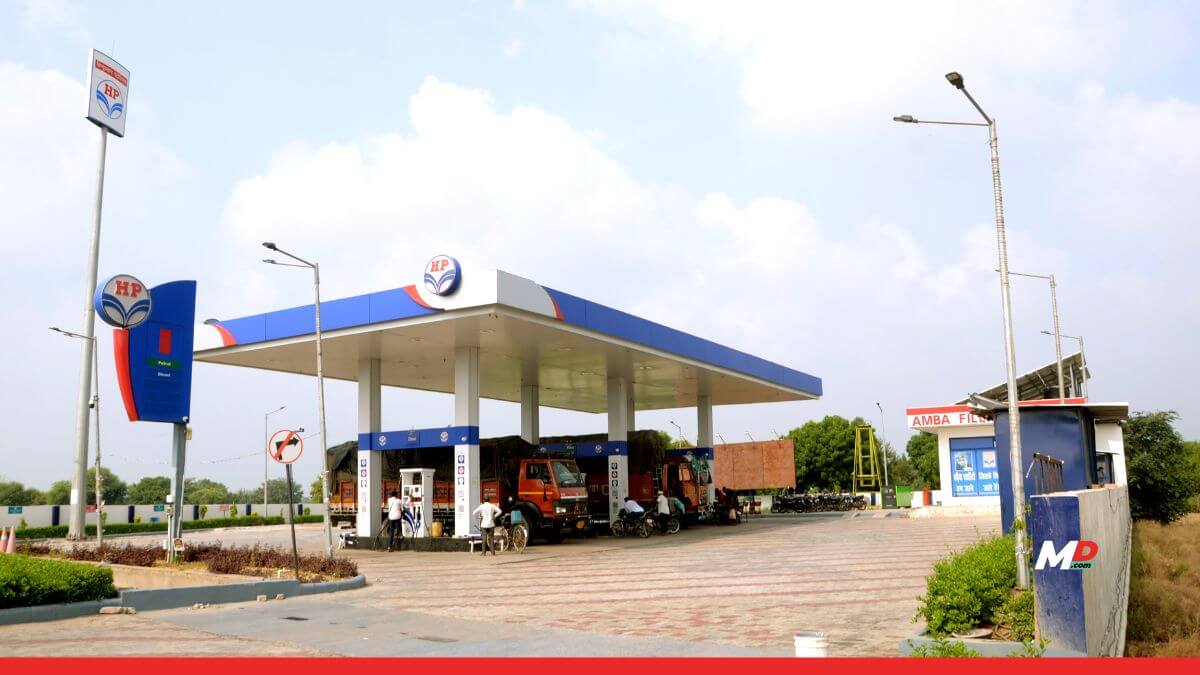
The queue at the petrol pump has become something of a barometer for India’s geopolitical anxieties. On Tuesday, it got a little longer.
For the second time in less than a week, state-run oil marketing companies raised petrol and diesel prices across India by an average of 90 paise per litre. In Delhi, petrol now costs Rs 98.64 per litre, while diesel has climbed to Rs 91.58. In Kolkata, petrol has crossed Rs 109. Mumbai and Chennai are not far behind. The cumulative increase over four days stands at roughly Rs 4 per litre, and analysts warn that the worst may still be ahead.
Also read: Fuel prices rise by Rs 3 as global pressures mount
The proximate cause is the Iran war and the partial closure of the Strait of Hormuz, a narrow channel through which roughly half of India’s usual crude imports once flowed. Since the US-Israel military campaign on Iran began, global oil has traded well above $100 a barrel, import costs have surged, and the rupee has fallen to historic lows against the dollar. India, the world’s third-largest oil importer, imports nearly 90 percent of the crude it consumes. It is, structurally, among the most exposed major economies in the world to a disruption of this kind.
The first hike, of Rs 3 per litre on May 15, was the country’s first retail fuel price revision in four years. The government had held back as long as it politically could. India’s wholesale inflation had already jumped to 8.3 percent in April, up sharply from 3.88 percent a year earlier. Gasoline wholesale prices rose 32.4 percent in April alone. The pressure on the three state-owned oil marketing companies, which had been absorbing losses to keep pump prices artificially low, had become unsustainable.
Dhaval Popat, Energy Analyst at Choice Institutional Equities, has been blunt about the arithmetic. He estimates that oil marketing companies are running annualised industry-wide losses of nearly Rs 1 lakh crore per month. The current round of hikes, he says, offsets only a fraction of that erosion. A total increase of Rs 10 per litre from the pre-hike baseline may ultimately be required to restore viability, provided global crude prices do not fall substantially in the interim.
The political fallout has been immediate. Congress wasted little time in branding Prime Minister Narendra Modi as the ‘Inflation Man’, arguing that successive hikes represent a deliberate post-election burden transfer onto ordinary citizens. The party pointed to a familiar pattern: prices held steady through election cycles, then revised sharply once ballots are counted. The government has not publicly responded to the specific charge, though officials have pointed to the external origin of the price shock as justification for revisions.
The macroeconomic implications extend well beyond fuel. Diesel is the lifeblood of freight transport, agriculture, and small-scale manufacturing. A sustained increase in diesel prices feeds into the cost of vegetables, consumer goods, and basic logistics. For India’s 300-odd million households that sit just above the poverty line, this is not an abstraction. It is a calculation made at every grocery run and every school commute.
India has also been quietly reconfiguring its crude import mix. Russian oil, which surged as a discount alternative after Western sanctions following Ukraine, now accounts for a record share of imports. Yet even this diversification has its limits in a world where the Strait of Hormuz remains constrained and global freight costs continue to climb.
What happens next depends on two variables that New Delhi cannot control: the trajectory of the Iran conflict and the direction of global crude prices. If the Strait remains under pressure, the Rs 10 per litre ceiling cited by analysts may prove optimistic. If geopolitics shift, there is room to breathe. For now, the pump is telling a story that the government would prefer to tell differently, and the country is listening.