
Technology
“India needs to back innovation with long-term patience”


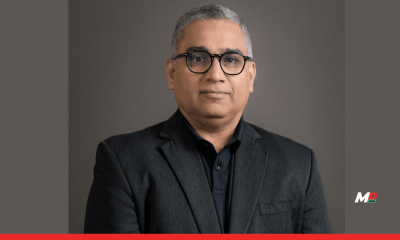
Twenty-five years in technology, two companies, and offices across four countries — and Srinivas Shekar is still asking the same question: what happens when the encryption the world relies on stops working? As Founder and CEO of Pantherun Technologies, he has built his answer into the product itself. This National Technology Day, he tells us what that journey looks like from Bangalore.
National Technology Day celebrates India’s capacity to innovate against the odds. As someone who built a deep tech cybersecurity company right here in Bangalore, what does this day mean to you personally, and where do you think India stands in the global technology story today?
National Technology Day, for me, is a reminder of how far India has come by building with constraints rather than waiting for ideal conditions. A lot of what we’ve achieved as a country has come from solving real problems with limited resources. That mindset stays with you when you build a deep tech company here.
India today is no longer just a services hub. There is a visible shift toward building original technology, especially in areas like cybersecurity, AI, and infrastructure. We are still early when it comes to global product leadership, but the intent has changed. More founders are thinking globally from day one, and that is a meaningful shift in India’s position in the technology landscape.
Pantherun’s encryption technology is designed to make data breaches ten times harder, with no key exchange, no format change, and quantum resistance built in. How do you explain what that actually means to a layman when describing what that means for their daily life and the safety of their data?
At a simple level, it means your data becomes significantly harder to break into, even if someone manages to access the system where it is stored.
Most traditional encryption depends on keys being exchanged or managed somewhere, which creates points of vulnerability. What we have built removes that dependency. So there is no key sitting somewhere that can be stolen or misused.
For a user, this means that whether it is your banking information, personal messages, or health records, the protection is built in at a deeper level. Even with future technologies like quantum computing, which can potentially break current encryption methods, the data remains secure.
As technologies evolve, the conversation around long-term data security is becoming increasingly important, especially with advancements in quantum computing and concerns around encrypted data being stored today and targeted for future decryption. That is why organisations today are beginning to think beyond conventional encryption and focus on building more future-ready security systems. For users, the experience remains seamless, but the level of protection behind the scenes becomes significantly stronger.
You founded Atech Solutions in 2014 and built a 125-member global team before starting Pantherun in 2019. What did that first venture teach you about building technology companies that you could not have learned any other way?
The biggest learning was that building a company is less about the technology and more about clarity of problem and consistency in execution.
At Atech, scaling across geographies taught me how different markets respond to technology and how important it is to build teams that can operate independently with shared intent. It also showed me that services can give you scale, but product companies require a very different level of patience and conviction.
When we started Pantherun, that experience helped in being more focused about what we wanted to build and what we were willing to say no to. It also helped in building a team that understands long-term value rather than short-term wins.
Cybersecurity is a space where the threat landscape evolves almost daily. With quantum computing now a real and near horizon, how prepared do you think the world’s critical infrastructure actually is, and what keeps you up at night?
If we are being realistic, most of the world’s critical infrastructure is not prepared for what quantum computing could mean for cybersecurity.
A large part of today’s systems still relies on encryption methods that could become vulnerable once quantum capabilities mature. The challenge is that infrastructure upgrades at that scale take time, and the transition has not fully started in many sectors.
What is concerning is the gap between awareness and action. Organisations know the risks, but the shift to more resilient and future-ready security systems is slow. What keeps me thinking is how to make that transition simpler and faster, because the threat is not theoretical anymore, it is just a matter of time.
India has enormous ambitions in semiconductors, deep tech, and digital infrastructure. As a founder who has built across Bangalore, Germany, Taiwan, and the US, what is the one thing India must urgently get right to truly become a global technology powerhouse?
India needs to back original product innovation with long-term patience.
We have strong talent and a growing ecosystem, but we still tend to optimise for speed and short-term outcomes. Deep tech does not work that way. It requires sustained investment, policy support, and the willingness to build for global markets over longer cycles.
If we can create an environment where founders are encouraged to build core technology, including core deep tech infrastructure, and are supported through that journey, India can move from being a strong participant to a true leader in the global technology landscape.