Entertainment
The Devil Wears Prada 2 review: A stylish return of iconic characters, sharp chaos, and nostalgic charm

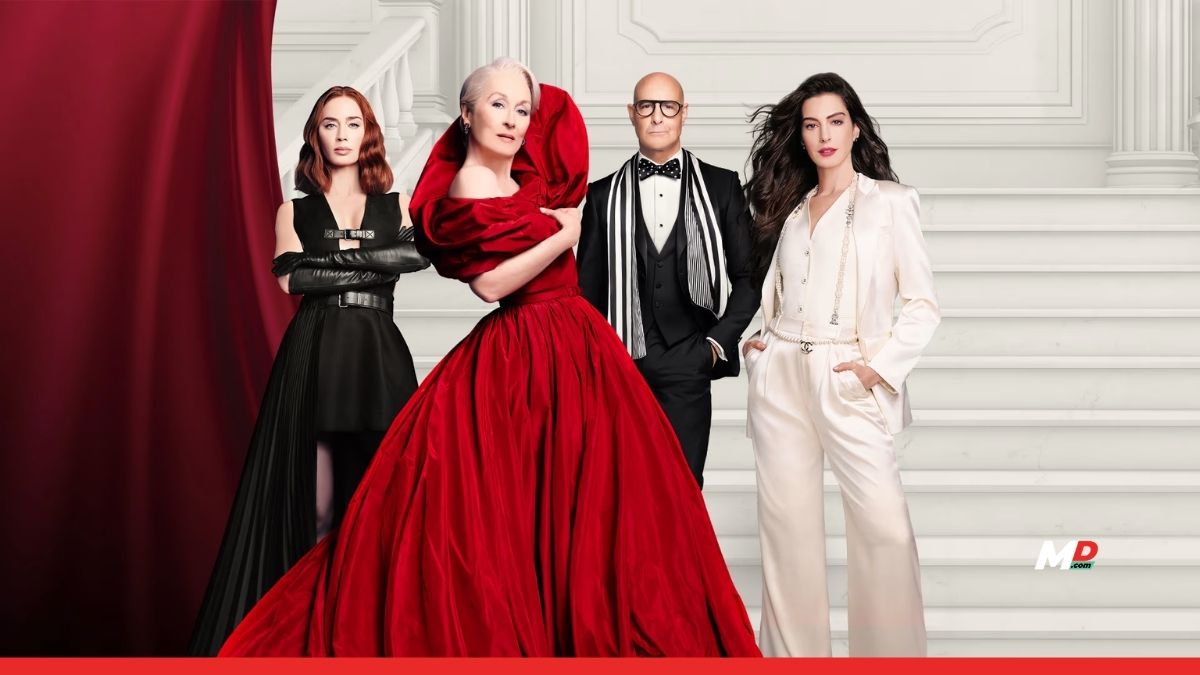
There are sequels that feel unnecessary, and then there are sequels like The Devil Wears Prada 2 that walk in wearing heels so sharp you forget to question why they exist in the first place. Instead of redesigning the “Runway” world, it re-enters it, which happens to be the exact reason that this works.
The story picks up years later in what is, at best, an unrecognizable media landscape. Print journalism is on life support, magazines are fighting for their place in the world, and the glossy glamour of the world of fashion journalism is now required to coexist with AI-based content, Gen-Z creators, and a digital attention market that is constantly changing. The film cleverly uses this shift as its backbone, asking a simple but uncomfortable question: “What happens to power when the medium that created that power is dying?”
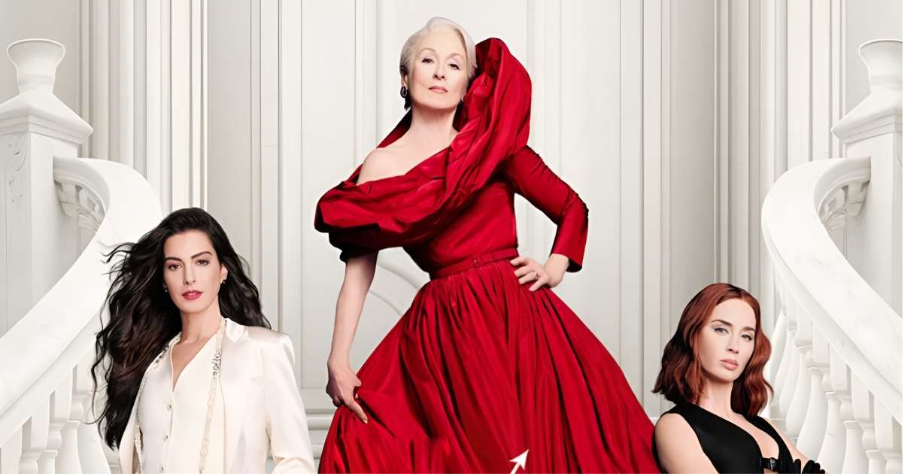
At the centre of it all is the return of the iconic trio, each slipping back into their roles like no time has passed, yet clearly shaped by everything that came after. Meryl Streep plays the part of Miranda Priestly, who has lost some of the power and control that she originally held. In the role of an editor-in-chief who has had to learn how to deal with a world in which she no longer has the absolute authority to tell everyone what to do, Streep is, unsurprisingly, magnetic.
Anne Hathaway’s character displays many of her original traits, such as ambition and self-doubt, but this time around, her control and self-confidence are much more restrained and grounded than they were previously. Because Hathaway has established herself as an actress capable of delivering an honest and genuine performance, but is not attempting to overscript her performances. It’s a performance that doesn’t try too hard to impress, which is exactly why it works.
And then there’s Emily Blunt, who returns to the role of Emily – the most unpredictable character of the three, and who has maintained both her humour and her chaotic behaviour. Blunt’s performance has once again been extremely entertaining, funny, slightly crazy (in a good way); it is difficult not to be reminded of why she became such a fan favourite in the first place.
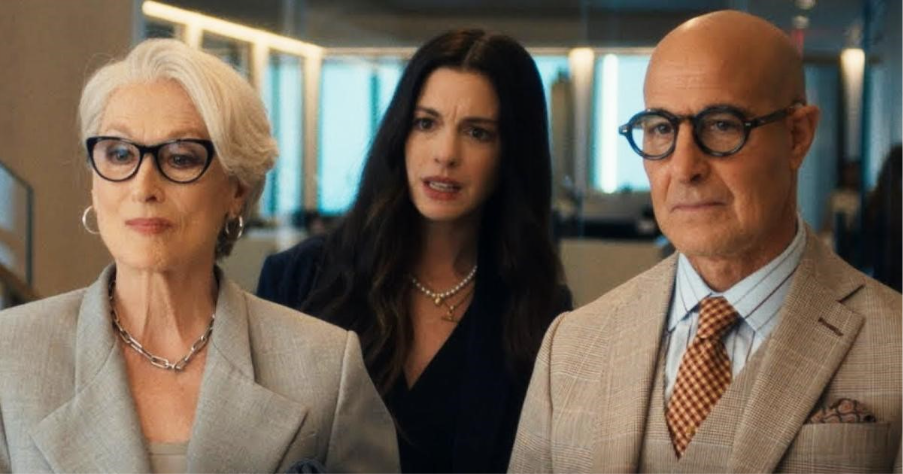
Stanley Tucci as Nigel is pure scene-stealing elegance, effortlessly witty, emotionally grounded, and still the sharpest dresser in any room he walks into.
One of the nicest surprises is the new assistant to Miranda, Simone Ashley. She’s a fresh face who stands out rather than hiding in the shadows. She infuses Runway with a fresh energy, representing the voice of a new generation in a space that is still heavily influenced by traditional authority. There is no forced bonding between the two, but rather a bridge between two eras of media culture.
Lady Gaga appears in a blink-and-you-miss-it cameo, but she leaves behind a spark of pure star power that momentarily shifts the film’s energy.
However, this film goes beyond being a trip down memory lane by showing contemporary anxieties as part of the narrative as well. The act of creating content through AI-generated tools is taking away from the intuitive judgment that editors have historically had when creating content. Viral trends are threatening the existence of long-form storytelling. Journalism, in general, feels as though it is being rewritten as it happens. The filmmakers do not over-explain the nuances involved in these issues; their presence in the movie is like a weight resting upon everyone’s shoulders, and no one wants to admit how it affects their creative process.
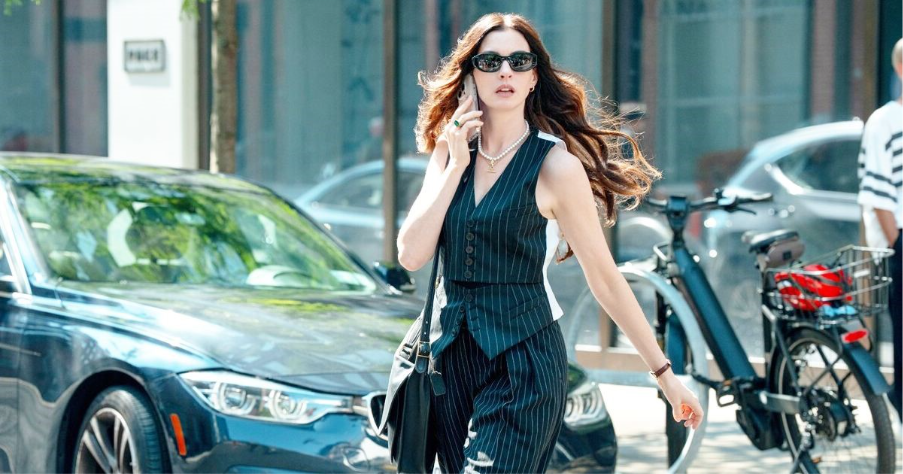
Visually, the film is a feast. The costumes are captivating; each piece, from sharp, well-fitted clothing to avant-garde costume designs, appears to have been thoughtfully designed. More importantly, no single outfit violates the overwhelming of costume; rather, they serve as a medium to convey narrative. The costumes illustrate shifts in power, the evolution of identity, and generational disparity without requiring words to convey those themes. It’s easily one of the strongest visual highlights of the film, and clearly something the makers have handled with care and taste.
Direction-wise, the film stays confident and controlled. David Frankel understood what people are here for and didn’t let it become fan service; he developed a clear rhythm to the way he built and edited scenes, both fast and slow, to create pacing and style throughout the movie, while still managing to create a strong feeling of ongoing familiarity with the subject matter.
What makes this film work, however, is the fact that the characters have all come back together. That alone is exciting enough. Everything else present in the film, such as the commentary on media, the evolution of ambition, and the contrasting values of “old” vs “new” media are simply an additional layer to what is still an incredibly joyful experience.
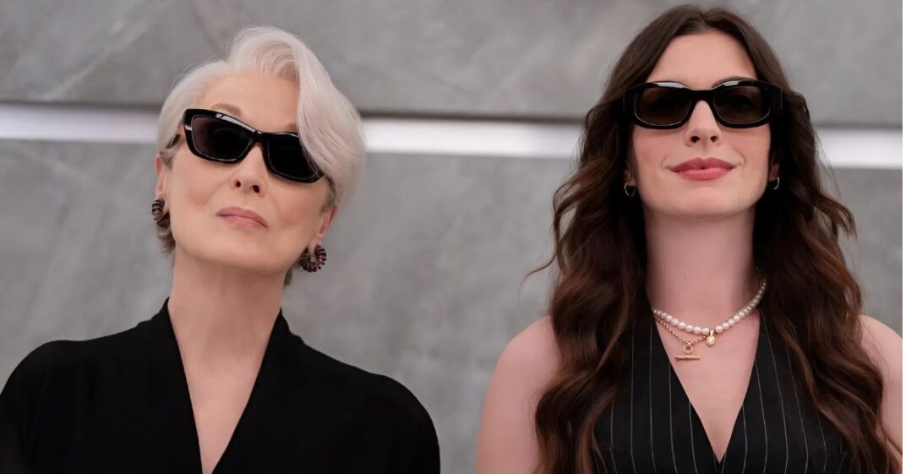
As someone who was a huge fan of the first film, it felt like a real treat to see how much the world had expanded beyond the first film, but wasn’t trying to one-up it in any way; that’s enough for me. I didn’t walk in expecting to be surprised as much as I was expecting to enjoy it, and I ended up enjoying it more than I thought I would.
In a nutshell, The Devil Wears Prada 2 is an extremely stylish, unique, and surprisingly relevant sequel that knows exactly what it is—and embraces it with clear confidence.
Rating: 4/5