
Entertainment
Saif Ali Khan’s Kartavya gets these 5 things absolutely right about duty, guilt and power

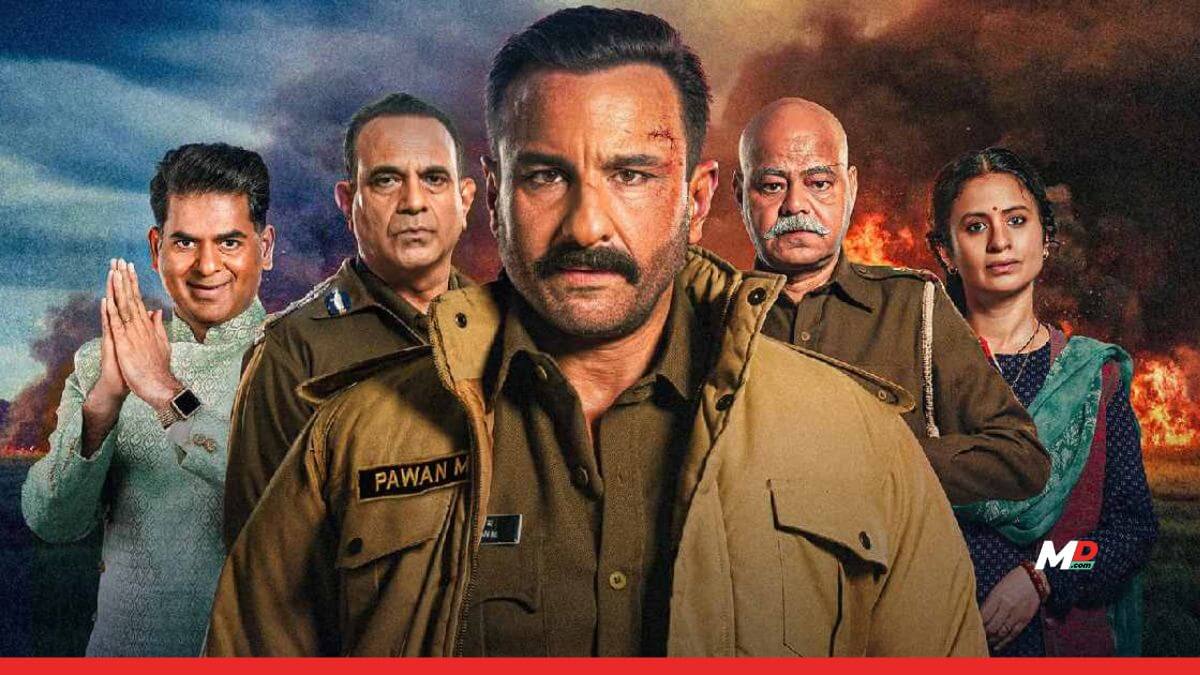
Since Kartavya started streaming on Netflix on 15 May, the conversations about this film among its audiences have varied. Some found the screenplay to be inconsistent, while others were invested in the dark and morally weighty universe of Kartavya. However, most agree that Saif Ali Khan offers one of the most restrained and captivating performances of his career.
Directed by Pulkit, the film is not a loud or ‘massy’ cop thriller; rather, it is a thoughtful look at morality, caste, fear, guilt, and institutional power through the lens of a police officer caught between doing his job and facing the consequences of that job. Despite its flaws, Kartavya also presents many of the core themes and issues absolutely right.
- It understands that duty is rarely heroic
The film depicts duty as a hard and lonely burden. In contrast to many conventional Bollywood cop films where the main character’s virtue turns him into a superhero, Kartavya shows Pawan Malik (Saif Ali Khan) as a guy who is always troubled by the terrible choices he must make.
- Saif Ali Khan’s performance carries emotional weight
Saif is a master of playing the part of a character torn between right and wrong; whether it was in his previous roles, such as Omkara, Sacred Games, or Vikram Vedha, all of which were rooted in conflict. However, in Kartavya, the role challenges him to keep it quieter and more subtle and not to resort to aggression or elaborate speeches as an outlet for his performance; rather, Saif finds a way to express his emotions through restraint. He fits so well into the film’s rural location and tension, even while the action is slowing down. You can feel Saif’s fear, his anger, and most importantly, you can feel his guilt. You feel such a sense of hopelessness, and the film leaves you with the conviction that there is no hope. The film creates the essence of vulnerability, and that is how the film hooks you emotionally.
- The film treats power as something dirty and complicated
Maybe one of the cleverest things about Kartavya was that it avoided simplifying power structures. The villains were not evil masterminds, but comprised many forms of exerting power, such as through silencing others, caste privilege, the influence of religion, and fear, among others. The film’s story deals with honour killings, social hierarchy, and corruption, and is very realistic in its presentation. Hence, although the outcome may be anticipated, the continuing discomfort of the subject matter causes the viewer to care about it emotionally.
- Its small-town atmosphere feels authentic
Kartavya’s world is sweaty, tense, and perpetually uncomfortable. There are no over-the-top action sequences or stylised hero intro scenes; instead, the cinematography emphasises grounded visuals and uses a slow-burn method to create tension. This reality creates a natural progression of emotion throughout the movie, which helps to elevate the emotional stakes.
- It chooses moral ambiguity over easy answers
One of the great assets of the film is that it does not easily delineate between good and bad decisions; nearly every character in the film carries a measure of compromise, fear, or regret. Even the decisions made by Pawan seem to be more about moral ambiguity than success in the end. And that is what lingers after the credits roll.
Kartavya may not be a flawless thriller, but it is an interesting one, elevated significantly by Saif Ali Khan’s mature, deeply human performance. With so many loud and overt crime shows dominating the OTT market, Kartavya is an interesting entry that has attempted to bring a thoughtful approach to the genre through an exploration of how much the system has defined what our responsibilities ought to be.