

Politics
Dharmendra Pradhan resigns as Union Education Minister as CJP-led protests continue

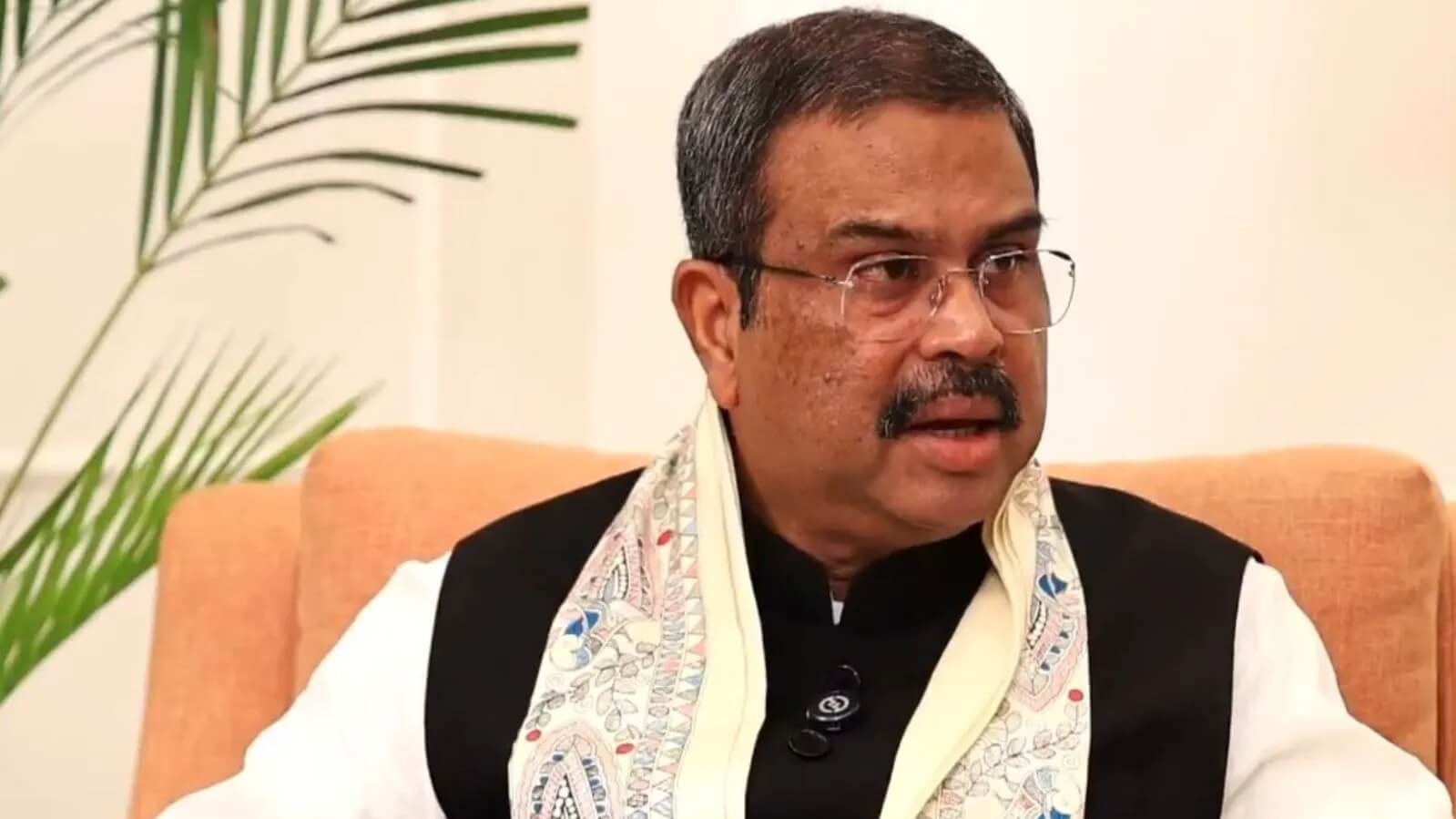
Union Education Minister Dharmendra Pradhan has resigned, submitting his resignation letter to Prime Minister Narendra Modi, as weeks of protests led by the Cockroach Janata Party (CJP) and several student organisations over alleged irregularities in the NEET-UG examination reached a boiling point.
The protests, centred at Delhi’s Jantar Mantar, had drawn national attention after activist Sonam Wangchuk began a hunger strike demanding accountability over the NEET-UG paper leak. Student groups had been demanding the scrapping of the National Testing Agency and Pradhan’s resignation for weeks, alleging that lapses in the conduct of the examination had gone unaddressed for too long.
In a two-page public letter addressed to the country’s youth, Pradhan said his decision to step down was not about protecting his own reputation, but about protecting students. He appealed to India’s young people not to let anti-national forces exploit the situation, and said their future should not become entangled in prolonged legal and political battles.
“Children should spend their time studying and focus on building a career. Keeping this in mind, I have sent my resignation to the Honourable Prime Minister,” Pradhan wrote in his post on X.
Reflecting on four decades of association with education as a student, teacher and policy advocate, Pradhan said he had always believed that a strong, inclusive and transparent education system is the foundation of a strong nation. He thanked the Prime Minister, his Cabinet colleagues and ministry officials, reiterated his faith in democracy, and described young Indians as the architects of a developed India. He added that national service would remain his highest priority going forward.
The resignation comes against the backdrop of growing pressure over alleged question paper leaks and irregularities in competitive examinations, which triggered nationwide protests and a wave of legal challenges. The CJP had also called for institutional reform, greater transparency in the National Testing Agency’s functioning, and accountability from senior officials.
Controversy rumbles on
The controversy is not new. Allegations around the NEET-UG examination process first surfaced in mid-2024, when reports of question paper leaks prompted investigations across several states and demands for the exam’s cancellation. Student unions, including the JNU Students’ Union, held sit-ins at Jantar Mantar over the following months, and opposition parties repeatedly raised the issue in Parliament. What changed this time was the scale and persistence of the mobilisation under the CJP banner, combined with Wangchuk’s hunger strike, which kept the story in the headlines and put sustained pressure on the ministry to respond.
Shortly after Pradhan’s resignation was confirmed, the CJP posted an update on X outlining the status of its demands. The first, Pradhan’s resignation, was marked as fulfilled. Two more remain pending: a compensation of one crore rupees for the families of students who died by suicide, and an assurance that no action will be taken against student protesters.
The government has previously maintained that corrective measures were already underway, including investigations by central agencies and reforms aimed at strengthening examination security. Opposition parties, meanwhile, have used the controversy to renew criticism of the Union’s handling of the examination system.
For now, attention turns to who will take charge of the Education Ministry at a moment when public trust in the examination process is under real strain, and to whether the CJP’s remaining demands find any traction with the government in the days ahead.
