
Auto
Tesla’s new Roadster is finally here, and it can…do a kickflip?

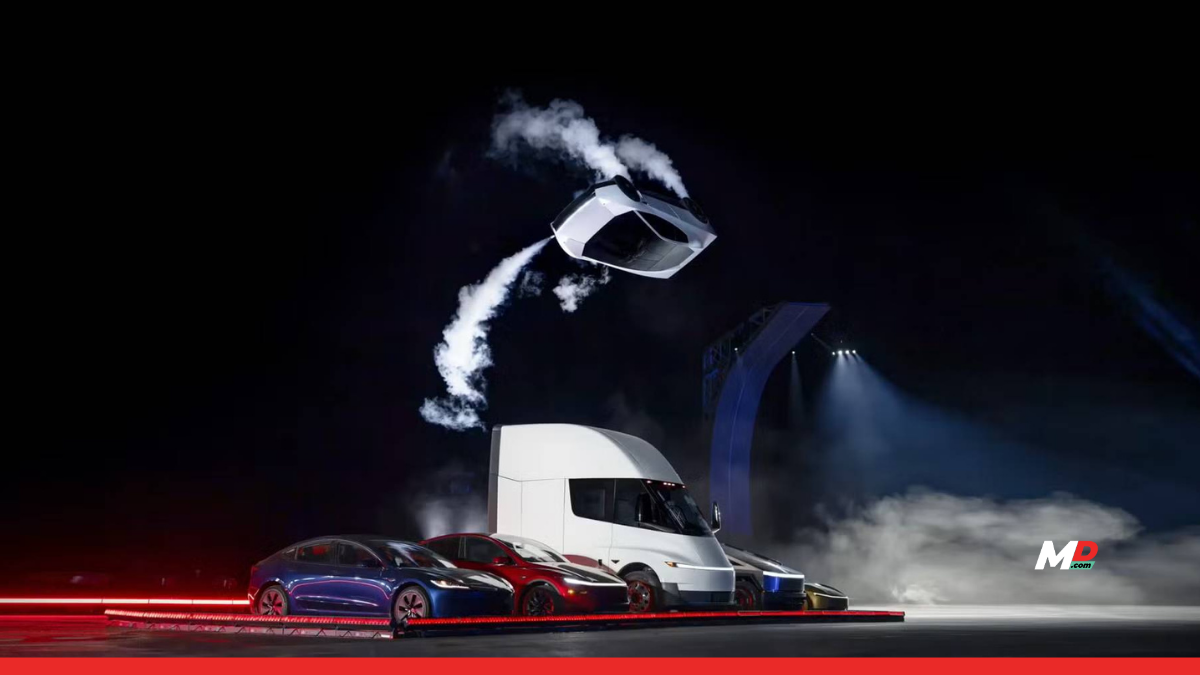
Imagine a supercar charging up a ramp, turning upside down, then using rocket-like thrusters to flip through the air and land on its wheels. It sounds like a scene from a science-fiction film, or perhaps a particularly ambitious Grand Theft Auto mission. Tesla, however, wants to make it a feature of its next-generation Roadster.
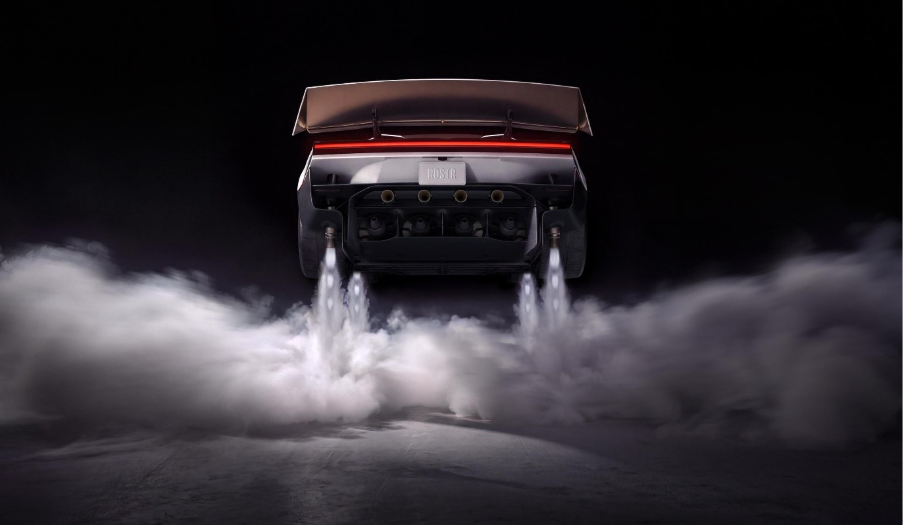
Unveiled in Texas on October 15, 2026, the long-delayed electric sports car has returned with a remarkable addition: SpaceX-inspired cold-gas thrusters that can propel it into the air and control its orientation mid-flight. During the demonstration, the Roadster performed what Tesla executives called a “kickflip”, sailing over a lineup of the company’s vehicles.
The spectacle is extraordinary. The strategic question is more interesting: why does a road car need rocket thrusters in the first place?
The science behind the kickflip
The Roadster’s thrusters are more than theatrical exhaust pipes. They are part of a propulsion system developed through collaboration between Tesla and SpaceX, Elon Musk’s aerospace company.
According to Tesla engineering vice-president Lars Moravy, the system uses 10 nozzles connected to high-pressure compressed-air storage, with two tanks holding a combined 600 litres. The stored air is released through the nozzles to generate thrust. Unlike conventional rocket engines, these cold-gas thrusters do not burn fuel to produce their immediate propulsion.
The crucial detail is how the thrusters are arranged. Rear-mounted units provide forward thrust, while additional thrusters positioned around the vehicle can control its attitude, or orientation. By directing thrust in different directions, the system can rotate the car in the air, enabling manoeuvres that conventional cars, dependent on their tyres remaining in contact with the road, cannot perform.
Tesla demonstrated precisely this capability when the Roadster launched over the company’s vehicle lineup and rotated in mid-air. The result resembled a skateboarder’s kickflip, except the skateboard had two seats, an electric powertrain, and a substantial amount of aerospace engineering.
The company has also claimed a 0-60 mph time of 0.81 seconds during the demonstration. Its more extreme Rocket configuration is advertised with an acceleration target below 0.59 seconds, although these are manufacturer claims that will require independent verification.
The technology is not simply about making the Roadster fly. It offers a way to apply force beyond the limits imposed by tyre grip, potentially helping the car accelerate harder than a conventional performance vehicle can manage.
Why add rockets to a car?
The idea is hardly new. Musk first discussed a SpaceX thruster package for the Roadster in 2018, suggesting that it could improve acceleration, braking, and cornering, and perhaps even allow the car to fly.
The underlying engineering argument is straightforward. Conventional cars transmit their driving force through tyres, which have finite grip. Electric motors can deliver immense torque almost instantaneously, but that power becomes less useful when the tyres cannot transfer it to the road.
Thrusters offer another way to apply force. Tesla claims its system can generate several times the force that the tyres alone can handle, potentially overcoming one of the fundamental constraints on acceleration.
The other part of the equation is the Roadster’s fan-based suction system. By pulling air from beneath the car, the system generates additional downforce, pressing the vehicle towards the surface. Tesla says it can produce enough suction to hold the car upside down, as demonstrated during the reveal.
On a racetrack, the practical objective is greater grip, stronger acceleration, and higher cornering speeds. The thrusters and suction system address different sides of the same challenge: helping the car generate forces beyond what conventional tyre-and-aerodynamic setups can deliver.
The kickflip is the eye-catching demonstration of that engineering ambition. It is also the least necessary feature for ordinary road driving.
A halo car for a company that needs theatre
Tesla’s Roadster has been almost a decade in the making. First revealed in 2017, it was originally expected to enter production in 2020. Repeated delays followed as the company concentrated on higher-volume vehicles, including the Model 3 and Model Y, and subsequently the Cybertruck.
The new reveal therefore has a purpose beyond introducing another electric sports car. It gives Tesla an opportunity to demonstrate technological ambition at a time when electric performance is no longer its exclusive territory.
Rivals have made substantial advances in acceleration, battery technology, and handling. The Rimac Nevera and other high-performance EVs have shown that astonishing straight-line speed is increasingly achievable without rocket technology.
Tesla needs a reason for the Roadster to stand apart. The thrusters provide one that is difficult to ignore.
Musk has acknowledged that the car is unlikely to make a substantial difference to Tesla’s finances. Its importance is symbolic: it is a halo product designed to showcase engineering capabilities, generate attention, and reinforce the relationship between Tesla’s automotive ambitions and SpaceX’s aerospace expertise.
The three announced configurations reflect that distinction. The Performance version focuses on road use, the Thrust adds rear-mounted cold-gas thrusters, and the single-seat Rocket version adds thrusters around the vehicle for more extensive aerial manoeuvres. Tesla has said production is targeted for 2028, although pricing and final specifications remain uncertain.
There are obvious caveats. A car that performs aerial flips raises serious questions about occupant safety, certification, reliability, and where such technology could legally be used. Tesla has also acknowledged that the most extreme version is not approved for public-road use.
The future, with a few qualifications
The Roadster’s kickflip is a compelling demonstration of what happens when automotive engineering borrows from aerospace. It also shows how a halo car can turn a complex technical proposition into something instantly understandable.
Yet the commercial test will be whether the technology can deliver meaningful performance gains outside a controlled demonstration, without making the vehicle prohibitively expensive or impractical.
For now, the Roadster is a statement of intent. Tesla wants to build a car that does more than accelerate quickly. It wants to challenge the physical and cultural boundaries of the supercar.
Whether owners will ever perform a kickflip on demand is another question entirely. But in a market where extraordinary acceleration is becoming commonplace, Tesla has found a new way to make people look twice.