

Business
Bolt CEO fires entire HR team, says ‘problems disappeared’

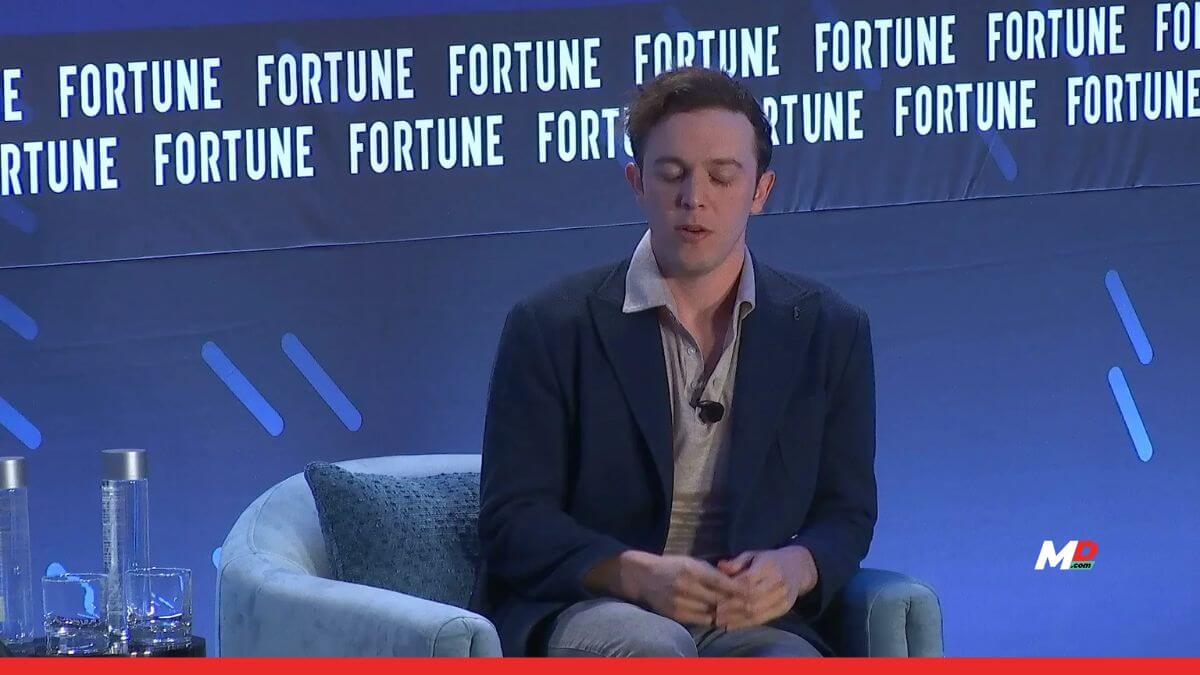
There is a certain kind of founder who looks at a burning building and concludes that the fire alarm is the real problem. Ryan Breslow, CEO of fintech company Bolt, may have found his fire alarm. It was called Human Resources.
Speaking at a Fortune Summit, Breslow announced, with what can only be described as the confidence of a man who has never once been called into a meeting about his own conduct, that firing Bolt’s entire HR department caused unnecessary problems to go away. The issues that HR had been managing, he suggested, were issues that HR itself had created. A clean solution to a circular problem.
Some context may be useful here. Bolt, the one-click checkout startup that was once valued at $11 billion, has had what analysts generously call a difficult few years. Its valuation has since collapsed to somewhere around $300 million, a number that constitutes either a dramatic correction or a very expensive lesson in startup exuberance, depending on your portfolio exposure. Breslow himself was previously ousted as CEO, returned, and has been in a vigorous public campaign to rebrand the company’s decline as a startup resurgence story.
Eliminating the HR team was part of what he calls returning Bolt to startup mode, a phrase that has historically meant different things to different people but which, in this instance, appears to mean a workplace where the department responsible for handling complaints, ensuring compliance, and protecting employees no longer exists. Whether this constitutes startup energy or simply a reduced ability to document grievances formally is, depending on your perspective, a philosophical question.
Breslow’s core argument, stripped of its optimism, is that HR professionals manufacture complexity. That the act of mediating workplace conflict causes more conflict. That the presence of a system for raising concerns encourages people to raise concerns they would not otherwise have had. This is a theory of institutional behavior that has some surface appeal and can be a source for mirth until you ask what happens to the concerns that remain, unlogged, unanswered, and quietly absorbed by the people who had them.
To be fair, bloated HR bureaucracy is a real phenomenon. There are organisations where the people function has grown defensive, territorial, and more focused on protecting process than people. That critique is not without basis. But the solution Breslow chose is not reform; it is removal. The difference matters, because what he has described is more about eliminating record-keeping than fixing HR or the organisation.
There is also something worth examining in the framing that problems disappeared. In workplace culture, problems rarely disappear magically. They migrate. They move from formal channels to hallway conversations, from documented complaints to quiet resignations, from HR tickets to Glassdoor reviews filed from someone’s personal laptop at 11pm. The problems that vanish from a company’s internal systems have a curious habit of reappearing in its reputation, its attrition rates, and occasionally its legal correspondence.
Breslow is not the first tech CEO to treat the function of institutional accountability as an obstacle to velocity. He is, however, one of the few willing to say so out loud at a summit designed for the people who run the world’s largest companies. Whether that qualifies as radical honesty or a case study in what not to announce publicly will likely be determined by how the next 18 months at Bolt unfold.
For now, the HR department is gone. The problems, the CEO assures us, are gone with them. It is a remarkably tidy outcome. One can only hope the employees feel equally unburdened.