Sports
Millions of Indians may not be able to watch the FIFA World Cup. Here’s why.

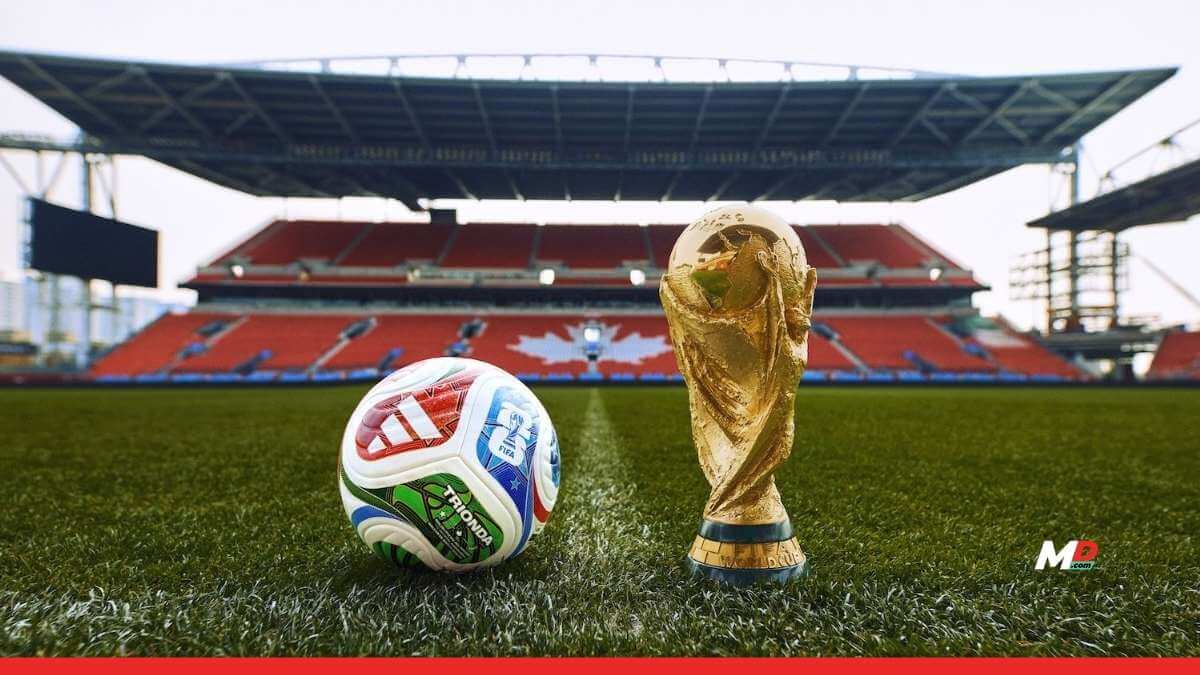
FIFA’s broadcast rights standoff with India and China is unprecedented. And the clock is running out.
The 2026 FIFA World Cup is arguably the most ambitious footballing spectacle ever assembled. Forty-eight teams across three host nations. A tournament expanded in scale, reach, and commercial ambition. And yet, as the June 11 kickoff in Los Angeles looms just weeks away, football’s global governing body finds itself in an extraordinary and deeply uncomfortable position: it has not secured broadcast rights deals with either India or China, the world’s two most populous nations, and together among the most significant audiences the sport has ever commanded.
This is not a minor administrative wrinkle. It is, by any reasonable measure, a crisis. And the fact that it has arrived at this stage of the calendar, with barely five weeks to go, has left broadcasters, advertisers, and football administrators scrambling for answers that FIFA appears reluctant to provide.
To understand the scale of what is at stake, consider the numbers from Qatar 2022. China accounted for 17.7% of global linear television reach during that tournament, while India contributed another 2.9%. Together, the two nations were responsible for nearly a quarter of the World Cup’s total global digital streaming reach. By FIFA’s own accounting, China alone made up 49.8% of all hours viewed on digital and social platforms worldwide. These are not peripheral markets. They are, in a very literal sense, where the audience lives.
In India, the situation has descended into a stalemate that speaks volumes about the shifting dynamics of sports media rights. FIFA reportedly opened negotiations seeking $100 million for the combined 2026 and 2030 World Cup broadcast package. Reliance-Disney, the joint venture formed by Mukesh Ambani’s Reliance Industries and The Walt Disney Company that now dominates India’s media and streaming landscape, has reportedly countered with just $20 million for the 2026 edition alone. FIFA has reportedly lowered its ask from the original figure, but has found the Reliance-Disney offer unacceptable. Sony, the other major potential buyer with an established television and digital footprint in India, evaluated the rights and walked away, concluding the economics simply did not add up.
The reasoning from the Indian broadcasters is blunt and, arguably, hard to argue with. Football, for all its global stature, remains a niche sport in the Indian market. Cricket occupies a commercial orbit of its own in the subcontinent, one that media companies have spent billions competing for.
The 2026 tournament compounds this with a structural scheduling problem: hosted across the United States, Canada, and Mexico, the bulk of matches will kick off well past midnight in India. Viewership numbers, the broadcasters argue, will reflect that. An advertising market already dealing with the economic overhang of the Iran conflict adds another reason for caution.
When Reliance’s then-standalone media arm secured India’s 2022 World Cup rights, it paid approximately $60 million, a deal confirmed roughly 14 months before the Qatar tournament. The rights secured over 110 million digital viewers. That the same company is now offering a third of that figure is a statement, and not a subtle one, about how it values the 2026 edition.
The China situation carries its own set of complications. In every prior World Cup cycle, China Central Television had locked in rights well in advance, running promotional campaigns and sponsor-integrated advertising in the weeks before the tournament. That rhythmic, predictable process has not occurred this time. No announcement has been made, and neither CCTV nor FIFA have offered public explanations for the delay. China has an estimated 200 million football fans, more than any other country in the world, and a passionate, commercially significant audience. The absence of a deal there is, if anything, even more puzzling than the India standoff.
What makes the situation particularly unusual is its timing. Broadcast deals of this scale are not just about slapping a logo on a channel. They require months of infrastructure setup, advertisement inventory planning, commentary production, and promotional build-up. The closer to the tournament date without a deal, the more each passing day costs in organisational capacity. At this stage, even if agreements were signed tomorrow, the machinery to deliver a quality broadcast would be under enormous strain.
It seems that FIFA and broadcasters are facing something of a Mexican standoff, and something has to give soon as the clock ticks down. The margin for manoeuvring is almost gone, and someone will surely blink first soon, either FIFA or the broadcasters.
The deeper question this standoff raises is about the structural assumptions underpinning how FIFA values its product in non-traditional football markets. The organisation has long treated Asia as a high-growth frontier, pointing to viewing figures as evidence of that potential. But viewing figures and broadcast revenues are not the same thing, particularly in markets where advertising rates are lower, football sponsorship ecosystems are thinner, and cricket or domestic sports command the real commercial premium.
A deal may yet materialise. Last-minute negotiations are not unusual in the world of sports rights. But the possibility that the World Cup begins without confirmed broadcast arrangements in two markets that together account for a fifth of humanity is not a hypothetical worst-case scenario. It is, right now, a live and unresolved problem. All we can do is play on until the final whistle.