

Politics
MSEDCL Financial Restructuring: Maharashtra Government to Take Over ₹32,679 Crore Debt Liability; Repayment Slated Over Next 11 Years

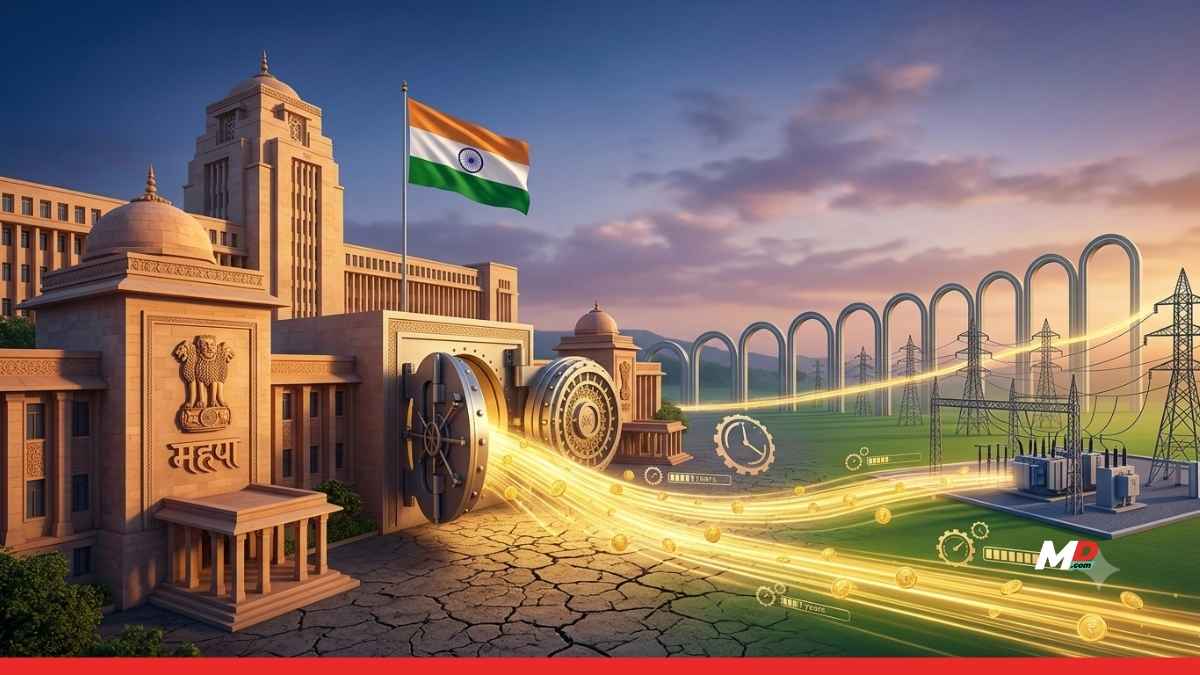
MUMBAI: In a major move aimed at financially strengthening and restructuring the Maharashtra State Electricity Distribution Company Limited (MSEDCL), the state government has decided to take over state-guaranteed debt liabilities worth ₹32,679 crore. The government will clear this entire debt over the next 11 years (by FY 2036–37), according to an official corrigendum issued by the Energy Department.
Modifying its earlier Government Resolution dated April 21, 2026, the government has withdrawn the proposal to issue long-term Government Securities. Instead, the principal and interest repayments to the respective financial institutions will be serviced directly through budgetary allocations. This measure will release the state government guarantees and default escrow accounts previously pledged by MSEDCL as security collateral.
Furthermore, the state has approved the proposal for the demerger of MSEDCL’s agricultural distribution business (Agri Demerger) and the subsequent stock market listing of its non-agricultural entity.
Under the notified repayment schedule, the state will service ₹22,580 crore in outstanding principal (as of June 2026) along with an estimated ₹9,695 crore in interest. In addition, the government will reimburse a lump sum of ₹12,808 crore to MSEDCL for debt servicing previously carried out from the utility’s own funds during FY 2025–26. In exchange for the takeover of these liabilities, MSEDCL must transfer an equivalent amount of outstanding agricultural electricity bill receivables to the state government. MSEDCL has also been directed to actively follow up with financial institutions to lower interest rates to 7.5% per annum, aligning them with the state’s preferential borrowing rates to reduce the fiscal burden on the state treasury.