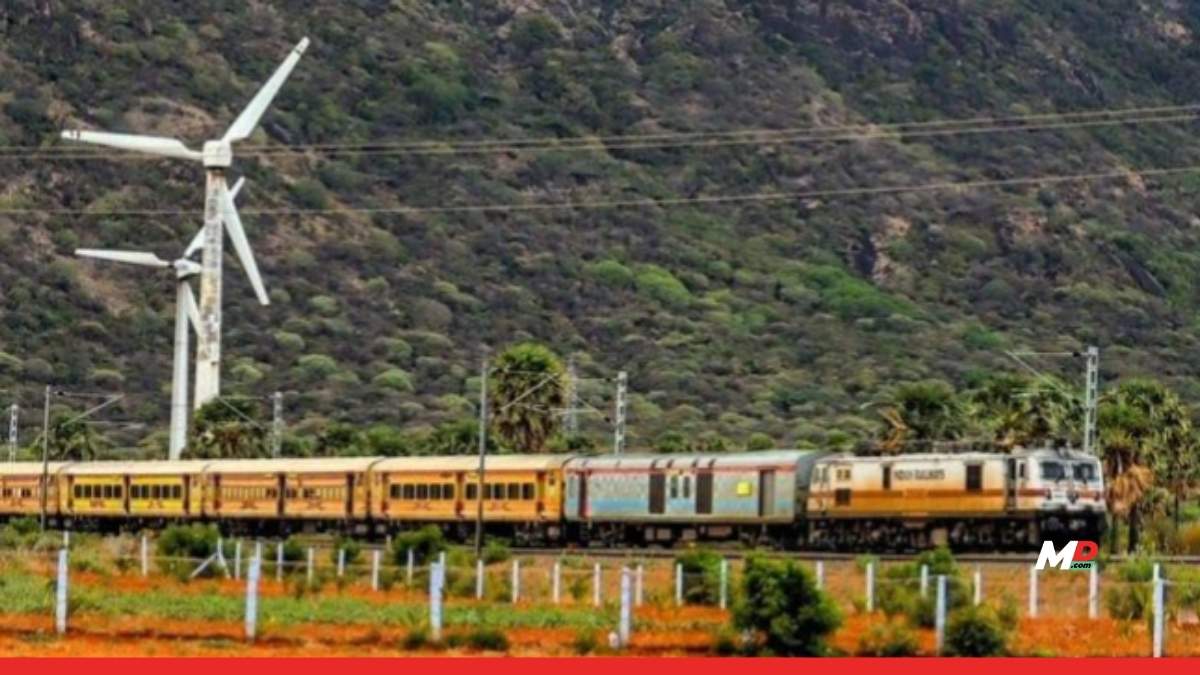
There was a time when the image of India’s railways was tied to diesel fumes, littered tracks, and endless stretches of barren land flanking the lines. Today, that picture is steadily changing. Across the vast network of Indian Railways, a quieter transformation is underway—one that is turning steel corridors into green lifelines.
In the financial year 2025–26 alone, more than 81.59 lakh trees have been planted along railway tracks and premises. This isn’t just an exercise in beautification. These plantations are acting as natural barriers against soil erosion, stabilising embankments, and reducing dust pollution. For passengers, it means a journey that feels cleaner, calmer, and visibly greener.
But the story goes deeper than trees.
Reinventing Infrastructure with Nature in Mind
Railways, often seen as a heavy industrial system, are now embracing ecological thinking in their everyday operations. From harvesting rainwater to recycling it for reuse, stations are being reimagined as sustainable hubs. Over 8,300 rainwater harvesting structures are now quietly capturing monsoon runoff, reducing dependence on external water sources and strengthening conservation efforts.
At the same time, water recycling is gaining momentum. With 26 new recycling plants added in just the past year—and 185 commissioned since 2015–16—the system is ensuring that water used in cleaning coaches and stations doesn’t go to waste.
Even neglected railway land is being brought back to life. Across the country, 109 ponds, tanks, and wetlands have been restored, helping recharge groundwater and create pockets of biodiversity. These spaces are not just ecological assets; they are becoming shared environmental resources for nearby communities.
Cleaner Travel, One Coach at a Time
Perhaps the most visible change for passengers has been inside the trains themselves. Since 2014, Indian Railways has installed over 3.66 lakh bio-toilets, a move that has dramatically reduced direct discharge onto tracks. The impact is significant—cleaner railway lines, improved sanitation, and better protection of soil and groundwater.
For millions of daily commuters, this translates into a more hygienic travel experience—something that was once considered a distant goal.
Powering the Shift to Green Energy
The transformation is also being driven by energy. With 99.6% of the broad-gauge network now electrified, Indian Railways has sharply reduced its dependence on diesel. This shift is not just about efficiency—it’s about resilience, especially in a world where geopolitical tensions, such as those in West Asia, can disrupt fuel supplies.
Renewable energy is playing a central role. The railways have already commissioned 909 MW of solar power and 103 MW of wind energy, with an additional 3,300 MW tied up for future use. This push is steadily moving the network toward energy self-reliance.
A Silent Revolution on the Move
Unlike high-profile infrastructure projects, this transformation rarely grabs headlines. There are no grand inaugurations for every plantation drive or water recycling unit. Yet, taken together, these initiatives represent a sweeping change in how one of the world’s largest railway systems operates.
The vision aligns with a broader philosophy—“Our Power, Our Planet”—where sustainability is not a side project but a core operating principle.
For passengers, the change may be subtle: greener views outside the window, cleaner coaches, and better-maintained stations. But for the environment—and for future generations—the impact is profound.
India’s railways are no longer just moving people and goods. They are quietly moving the country toward a more sustainable future.