
Business
Michael Burry wants Wall Street to think twice before letting AI go public


Michael Burry has seen a bubble from the inside before. Now, the investor made famous by correctly betting against the US housing market ahead of the 2008 financial crisis is warning that Wall Street may be preparing to make another enormous mistake. His target this time: artificial intelligence.
Burry has called for markets to “tank hard” if that is what it takes to prevent OpenAI and Anthropic from going public, arguing that such an outcome would be “for the benefit of humanity”. In a subsequent exchange, he warned that the two companies could absorb and ultimately destroy trillions of dollars of capital, adding that the financial damage would be the least of the damage they could cause.
It is an extraordinary claim. It is also worth remembering that Burry is an outspoken AI bear, and his warnings of a bubble should be viewed as an investment thesis rather than an established fact.
Yet the numbers behind the AI race make it harder to dismiss the argument altogether.
Anthropic’s confidential IPO filing reportedly reveals at least $417 billion in long-term hosting and computing commitments, while Reuters reported that its broader future cloud, computing, and infrastructure commitments could reach about $518 billion. The company generated $4.6 billion in revenue in 2025, but recorded more than $8 billion in operating losses. It is reportedly seeking a valuation above $2 trillion.
Those figures capture the extraordinary economics of frontier AI. Building increasingly capable models requires enormous quantities of computing power, data-centre capacity, energy, chips, and talent. The industry is effectively making gigantic bets today on the assumption that tomorrow’s AI applications will generate revenues on an even more gigantic scale.
That assumption may prove correct. It may also prove wildly optimistic.
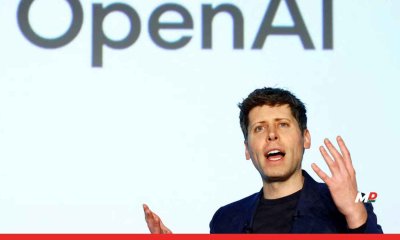
OpenAI presents a similarly fascinating case. The company confidentially filed for an IPO in June, but CEO Sam Altman has said that going public in 2026 would be “ill-advised”, with the company now looking towards 2027. OpenAI is also pursuing a reported $30 billion funding round at a valuation of roughly $1.4 trillion.
The public-market question, therefore, is bigger than whether ChatGPT or Claude are useful products. It is whether the enormous economic value being assigned to AI companies can eventually translate into sustainable profits and returns on capital.
That is where Burry’s warning becomes particularly relevant. Private investors can tolerate long periods of uncertainty, enormous spending, and changing valuations. Public-market investors eventually demand quarterly evidence. Once billions of ordinary investors, pension funds, mutual funds, and institutions own AI stocks, a disappointment in growth or margins would have consequences far beyond Silicon Valley.
There is another uncomfortable possibility. The AI boom could be economically transformative while still producing terrible investments. The internet transformed the global economy. Many dot-com companies did not survive.
That is perhaps the most important lesson from Burry’s warning. A technology can change the world and still destroy enormous amounts of invested capital.
Whether Burry is right about OpenAI and Anthropic remains to be seen. But before Wall Street turns the AI revolution into its next trillion-dollar public-market story, investors would do well to ask a deceptively simple question: how much economic value will all this AI actually have to create to justify the capital being poured into it? The answer, it would seem, is enormous. Much like the risk Burry is quick to flag.