Entertainment
Raghu Rai passes away at 83: The man who captured India, unflinchingly

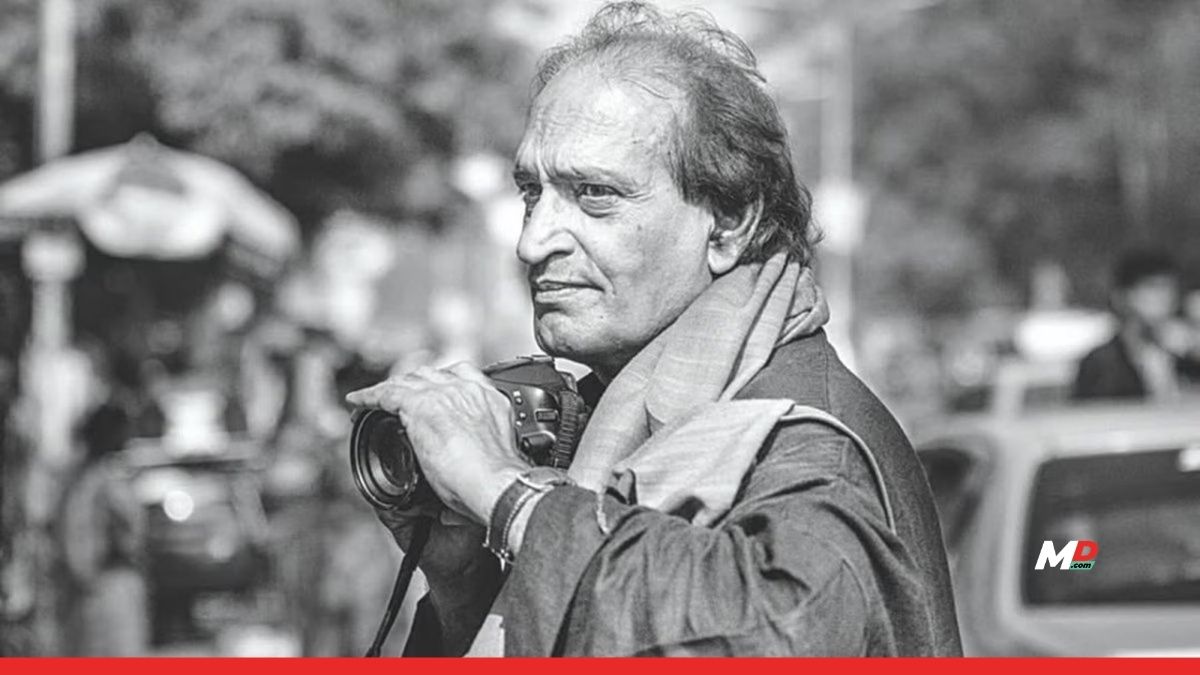
Raghu Rai has been a huge force throughout his life; he never merely took photographs, he listened to moments, waited for them to breathe, and then preserved them. With his passing at 83, India hasn’t just lost a photographer; it has lost a way of seeing itself.
There have been voluminous tributes from all over India and even beyond – politicians, artists, journalists, and common people all have come forward with many reminiscences on how his images captured moments that allowed them to understand India a little bit better. Prime Minister Narendra Modi, among many other people, has added to the scope of how much we all miss Raghu Rai.
The accidental photographer who became India’s visual historian
Born in Pakistan in 1942, he was not born to be a photographer; he became one by picking up a camera at the age of 22, without any formal training. His first love was Civil Engineering; however, he was in the right place at the right time to take and become a phenomenal photographer. By 1966, he was already working at The Statesman Newspaper and had begun to establish himself as an astute observer both in everyday life and in extraordinary experiences.
What set Rai apart early on wasn’t technical flair, but empathy. His photographs didn’t just hover over their subjects, but they stood among them. And this quality attracted the attention of Henri Cartier-Bresson, considered to be one of the greatest photographers of the 20th century, who nominated Rai for membership in the prestigious Magnum Photos in 1977, an accomplishment that placed Rai on the international map as a photojournalist.
Chronicler of a nation in motion
Over the span of his fifty years as a working photographer, Rai documented Indian society as the country worked to redefine itself on a continuous basis. He documented the war in Bangladesh, political upheavals, spirituality, and the quotidian poetry of existence, but Rai’s photography will be forever etched into our consciousness as a result of his ability to capture moments of tragedy in time.
His photographs of the Bhopal disaster of 1984, and in particular his image of a father grieving over the body of his son, are arguably the most powerful records of human suffering ever created. At the time of the Bhopal disaster, Rai was among the first photojournalists to arrive on the scene and captured the horror and destruction of the event without self-aggrandizing, and the grief of the families of the victims without intruding into the grief. In addition to being informative, Rai’s photographs were troubling, compelling attention from the viewer, and lingered long after the headlines faded.
Beyond the headline moment
Rai’s work is often documented through historic events, but many times his lens was equally drawn to quieter truths. Rai did not just photograph Indira Gandhi’s leadership but rather the essence of her being as a human. Mother Teresa with intimacy rather than iconography.
From bustling streets to silent rituals, his work revealed a layered India, chaotic, tender, contradictory. His work is published by many periodicals and magazines (Time, Life, The New York Times), carrying India’s stories far beyond its borders.
During his 10-year period as director of photography with India Today, Rai had a significant impact on the development of visual journalism in India and mentored a generation of photographers that would follow his instinct-driven approach.
A philosophy of closeness
Rai often said, “If you’re not close enough, your photo is not good enough.” It wasn’t just advice about physical distance; it was a way of working. He believed in immersion, in dissolving the barrier between observer and subject.
The legacy he leaves behind
Over a career that lasted nearly six decades, Rai didn’t just document India; he shaped how India remembers itself. His archive shows us a different reality, one of light, darkness, and no words or written history. His images still exist beyond his lifetime, and they will continue to exist, generate thought, and offer some sense of peace to those they touch. This body of work reminds us that while history is often in written form, it is also lived and sometimes, captured forever by a camera’s lens.
Raghu Rai understood that better than most. And through his lens, so did we.