Leadership
A leaky pipeline: why India’s working women vanish before the top


India’s female workforce participation is stuck at the starting line
India has long prided itself on producing world-class talent. Yet when it comes to women in the workplace, much of that talent quietly disappears before it ever reaches the top floor.
New data from LinkedIn, released ahead of International Women’s Day, offers a precise measure of the problem. Women made up 28% of India’s workforce in 2025, positioning the country among the bottom 10% globally. This compares poorly against a global median of 44%. At the senior end, the picture dims further: women held just 18% of top leadership roles last year, far below both their overall workforce share and the global median of 31%.
The numbers have not moved much. Female workforce participation held steady from 2024 to 2025. But the comparison with a decade ago is less bleak: women made up just 24% of India’s workforce in 2015, and only 16% of its founders. Both figures have since crept upward; the founder share reached 22% in 2025, suggesting slow but real progress in some corners.
Plugging the pipeline
The deeper problem is not the door in; it is the stairs up. Women enter India’s corporate world in reasonable numbers. At entry level, they account for 36% of the workforce, which is not parity, but a creditable start. By the time the C-suite comes into view, that share has collapsed to 15%.
“The issue is not a lack of talent, but a loss of talent along the way,” says Vineeta Singh, chief executive of SUGAR Cosmetics. Two bottlenecks are particularly severe: the move from individual contributor to manager, and the jump from vice-president to the C-suite. These are not merely rungs on a ladder; they are, for many women, points of no return.
The reasons are multiple and mutually reinforcing. Paroma Chatterjee, chief executive of Revolut India, points to what she calls a “double burden”: the simultaneous expectation that women will advance professionally and shoulder the bulk of caregiving at home. “In the absence of widespread, affordable childcare infrastructure and a cultural shift in domestic responsibilities, many highly qualified women opt out of the workforce or pause their careers,” she says. The pause, in corporate life, often becomes permanent.
There is also the subtler problem of access. Naiyya Saggi, Founder and CEO of EDT, argues that while talent is evenly distributed, capital is not. Access to funding and networks are crucial capital, which determines scale. The result is a kind of invisible tax on representation. Fixing this will see the data fix itself, she argues.
Redefining a high-performance culture
Over time, it has been equally fascinating to see how the definition of a high-performance culture has undergone a significant transformation, especially as more women take on leadership roles in major enterprises.
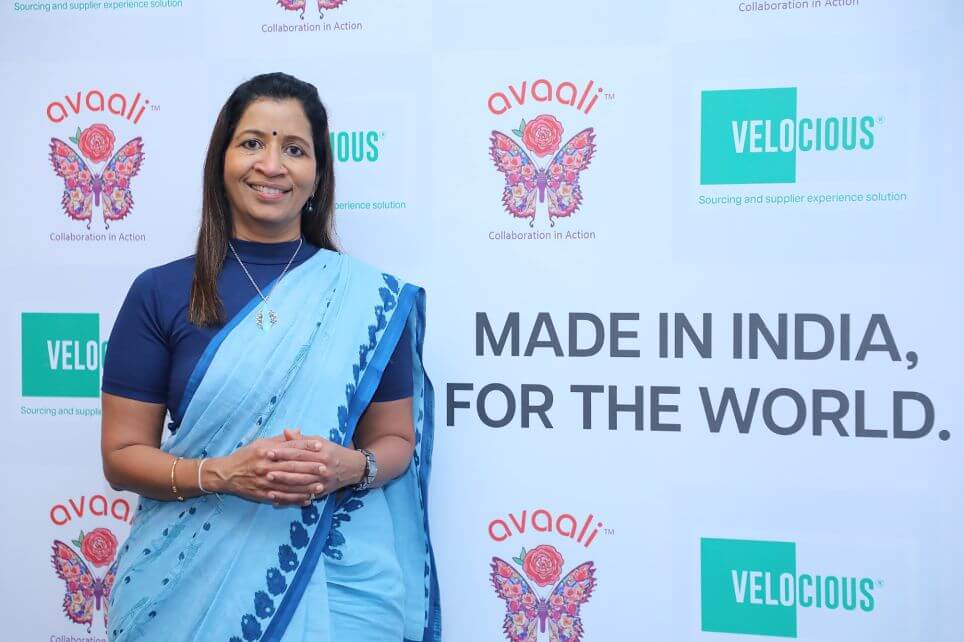
Avaali Solutions’ Founder and CEO, Srividya Kannan, outlines this for us. “Traditionally, high-performance cultures were often associated with metrics-driven, hierarchical, and sometimes rigid structures. However, with women at the helm, there is a noticeable shift towards fostering inclusivity, empathy, and collaboration as core tenets of high performance.
Women leaders bring a unique perspective that emphasizes the importance of emotional intelligence, work-life balance, and creating environments where diverse voices are not only heard but celebrated. This evolution is not just about achieving business outcomes but also about building sustainable, people-centric organizations that thrive on innovation and adaptability.
At Avaali, we’ve seen firsthand how a culture that values diversity and inclusivity can drive exceptional results. High performance today is about empowering teams, encouraging continuous learning, and fostering a sense of purpose that aligns individual aspirations with organizational goals. As more women lead, the narrative of high performance is being redefined to include resilience, collaboration, and a commitment to holistic growth.”

Trevor Kuna, Chief Marketing Officer, QNET Ltd., concurs. “It’s no longer just about hierarchy and hitting short-term numbers. Today, real performance is about “how” you get results, not just the results themselves. It’s about collaboration, building something that lasts, and creating value for people and communities along the way.
This isn’t about comparing how men and women lead. It’s about what actually drives lasting success. At QNET, roughly 40% of our independent entrepreneurs are women, and they show us every day what modern performance looks like: building networks based on trust, mentoring new entrepreneurs, and growing in ways that lift their communities, not just their own bottom line. In India especially, where entrepreneurship is so closely tied to family and community, that kind of performance isn’t a nice-to-have. That’s the whole point.”

In the age of “hustle culture”, it becomes all too easy to miss the forest for the trees. It used to always be about who was always on, always available, always pushing. But as Shradha Agarwal, Co-founder and Global CEO of Grapes Worldwide explains, things are changing on this front. “As more women step into leadership, the conversation becomes more about direction than noise. About choosing the right battles. About building teams that can sustain output instead of sprinting endlessly. The bar does not drop, but the approach becomes more deliberate. Performance is no longer theatre. It is steady, focused progress that compounds over time.”

Sini Magon, Chief Operating Officer (COO) and Global Partner, Grapes Worldwide, concurs. “High performance inside organisations has become more thoughtful. It is less about how intense things look from the outside and more about whether the work is actually moving the business forward. As more women step into leadership, there is often a stronger push towards clarity on what really matters and what can be deprioritised. Teams are encouraged to focus, not just hustle. The expectations remain demanding, but the energy is directed with more care. Over time, that creates consistency rather than cycles of exhaustion.”
The shift in evaluating high-performance culture is imperceptible, but gradual. Today, clarity of goals, showing empathy towards colleagues, and building a more collaborative work environment with diverse opinions on the table is what matters, as Chhavi Dang, Host, Zero to Scale podcast outlines. “Leaders of today should be willing to unlearn older work patterns and adopt more modern ideas and techniques. The focus is on creating an environment where employees feel heard, valued, and trusted to deliver their best while working towards the organisation’s goals.
There is a growing shift towards building companies where both the organisation and its people grow together. Flexibility at work enables individuals to stay engaged and perform better in their roles, which ultimately strengthens the organisation as a whole.
Qualities such as curiosity, attention to detail, and resilience traits often associated with women leaders have also helped them navigate complex situations and lead effectively.”
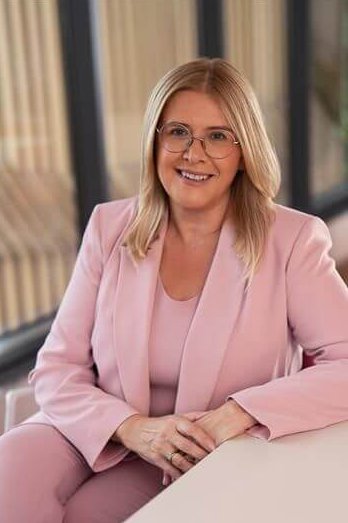
These values of trust, adaptability, and increased empathy are increasingly coming to the fore as women rise to the helm, as Edyta Kurek, Senior Vice President and Head, Oriflame India and Indonesia elucidates. “A high-performance culture today is built on trust, adaptability and empowered people. As more women step into leadership roles, the definition of high performance has evolved from being purely results-driven to one that values empathy, collaboration and long-term resilience. Success today is measured not only by outcomes, but by how effectively organizations create inclusive environments where people feel motivated to contribute and grow.
At Oriflame, this philosophy is reflected across our entire ecosystem. Women represent 59% of our global workforce and 50% of our Global Leadership Team, and the same spirit of empowerment extends to our entrepreneurial community, where over 80% of our brand partners in India are women.
Women leaders often bring a balanced approach, combining strategic clarity with people-centric decision-making, which strengthens teams and helps organizations navigate change more effectively. Within our social selling model, many of these women are building their own teams, stepping into leadership roles and mentoring others along the way.
This strong network of women has helped us build a culture rooted in collaboration, trust and shared growth, strengthening our ability to create resilient, high-performing teams across the organization.”

Offering her perspective on how performance is increasingly about people and purpose, Manisha Bhalla, Co-Founder & Chief People Officer, Cosentus, weighed in with her thoughts. “A truly high-performing workplace is one that places the wellbeing and growth of its people at the centre, while continuously investing in skilling and capability-building so employees can thrive in a world where human insight and digital technology must work hand in hand.
Success is no longer about siloed results, but about how effectively people, purpose, and disciplined execution come together. This is not about women changing performance culture, it is about redefining what performance truly means. At Cosentus, this philosophy is visible in our culture: our first employee continues with us, over 80% of our founding team remains, and we have earned Great Place to Work certification for four consecutive years with employee approval ratings significantly above the national average.”
Sponsorship, not just sympathy
Mentorship has been the go-to corporate response for years, and it has not been enough. Ms Chatterjee argues that what is needed now is something harder to manufacture: intentional sponsorship. A mentor offers advice; a sponsor uses their own capital to open doors. The distinction matters. Women who are well-mentored but under-sponsored accumulate wisdom without opportunity.
Ms Singh’s prescription is broader still. “Leadership representation will improve only when organisations adopt inclusive performance management practices, actively celebrate role models, and domestic responsibilities are equitably shared.” That last clause is the difficult one. Corporate policy can set targets and restructure reviews; it cannot easily change what happens when the office closes.
The other upside of having women at the helm of an organisation is that thet ask questions that others don’t, as Rahul Garg, Founder and CEO, Moglix tells us. “Gender-diverse leadership changes how organisations see risk, and that alone has enormous financial consequences. Women leaders tend to ask the questions that don’t get asked in homogenous rooms. They push for clarity, flag assumptions early, and think longer term. That instinct is not soft. It is exactly what protects a company’s bottom line.
When women lead, organisations build systems that are more transparent, more collaborative, and more resilient under pressure. Those are not just good values. They are competitive advantages.
Diversity is not a correction. It is an upgrade. When women lead, organisations build systems that are more transparent, more collaborative, and more resilient under pressure. Those are not just good values. They are competitive advantages. At Moglix, we see this every day in the women who shape our thinking, challenge our assumptions, and raise the bar for everyone around them. Diversity is not a correction. It is an upgrade.”
Achieving gender parity is perhaps one of the foremost ways to eliminate blind spots, as Rupal Sinha, CEO and Chief Operating Officer, BVG India tells us. “The most significant blind spot eliminated through gender parity at the board level is homogeneous thinking. Without diversity, organizations risk operating within echo chambers, overlooking critical consumer insights and workforce realities. Gender-balanced boards introduce cognitive diversity, challenge assumptions, and encourage more holistic risk evaluation. This leads to stronger governance, sharper strategy, and ethical clarity. True parity is not symbolic—it ensures decisions reflect broader societal perspectives, strengthening institutional credibility and sustainable growth.”
The women-founder figures offer a strand of optimism. A six-percentage-point rise over a decade is not transformative, but it suggests that, given the right conditions, women will build their own tables when they are not invited to existing ones.
India’s economy needs more of those conditions, and faster. A country that squanders 72% of its female workforce’s leadership potential is not merely being unfair. It is being inefficient.