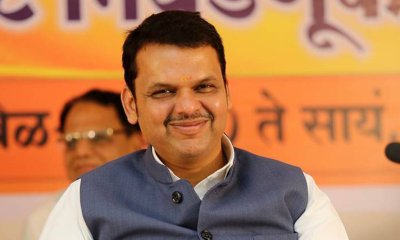
Raigad-Alibag : Calling the ‘Missing Link’ project on the a landmark in infrastructure development, Maharashtra Chief Minister said it is not just a road, but a global example of India’s engineering excellence. He stated that the project will not only save travel time but also act as a major economic multiplier, potentially boosting the state’s economy by ₹70,000 crore.
Speaking after the inauguration, the Chief Minister said the project should be referred to as a “Connecting Link” rather than a “Missing Link,” highlighting its role in improving connectivity, safety, and efficiency.
Deputy Chief Ministers and Sunetra Ajit Pawar, along with several ministers, MPs, senior officials, and representatives from executing agencies, were present on the occasion.
Focus on Safety and Modern Technology
The Chief Minister emphasized that passenger safety has been given top priority. The project includes advanced firefighting systems, water mist technology, and emergency telephones installed every 50 meters. Cross tunnels connecting the two main tunnels have been built every 300 meters to allow safe evacuation in case of emergencies.
The entire route is under 24/7 CCTV surveillance, supported by an Intelligent Traffic Management System (ITMS) to enforce lane discipline. Traffic violations will result in direct e-challans.
Overcoming Major Challenges
The project was completed despite significant challenges, including difficult mountainous terrain, forest areas, heavy rainfall, and complex construction work. The Chief Minister acknowledged the contribution of expert agencies from seven countries, especially for their efforts during the COVID-19 period.
The project, completed at a cost of about ₹7,181 crore, will reduce the distance between Khopoli and Kusgaon by around 6 km, saving 25–30 minutes of travel time. It will also help avoid accident-prone ghat sections, making travel safer.
Fadnavis also referred to the historical importance of the Umbarkhind region, associated with Chhatrapati Shivaji Maharaj.
Addressing concerns about traffic congestion raised by MP Supriya Sule, he assured that commuters will no longer face traffic jams in the ghat section due to this project.
Remarks by Deputy CM Eknath Shinde
Deputy CM Shinde said the project is a result of collective efforts and appreciated the role of all departments and workers involved. He noted that the project was once uncertain but was revived with strong leadership.
He also highlighted the government’s vision of creating an access-controlled road network across Maharashtra to enable travel between any two points in the state within 7–8 hours.
Sunetra Pawar Highlights Achievements
Deputy CM Sunetra Ajit Pawar pointed out that the project includes the world’s widest tunnel, measuring 23.5 meters, which has been recorded in the . She described it as a proud achievement for Maharashtra.
She added that the project will reduce fuel consumption, saving about ₹1 crore daily, while also lowering pollution and improving road safety. It is expected to boost industry, trade, and tourism.
Project Background
The Mumbai–Pune Expressway was opened in phases starting in 2002. However, the 13.30 km “Missing Link” between Khalapur and Kusgaon could not be completed earlier due to technical and financial challenges.
To address traffic congestion and safety issues in the ghat section, the project included:
- Widening the 5.86 km Khalapur–Khopoli stretch from 6 to 8 lanes
- Constructing two tunnels (1.58 km and 8.86 km long)
- Building viaducts and a 650-meter cable-stayed bridge in Tiger Valley
The tunnels, each 23.5 meters wide, were constructed through the Sahyadri mountains using advanced techniques. The longer tunnel runs about 180 meters below the Lonavala lake level.
The cable-stayed bridge in Tiger Valley stands around 125 meters high, supported by 182-meter pylons and 240 cables. Advanced international testing ensured its structural safety.
The project is expected to significantly improve connectivity and contribute to the development of Western Maharashtra, Konkan, and Marathwada regions, strengthening the Mumbai–Pune corridor as a key economic and technological hub.