Business
“Gaining trust is invaluable for a bank”: IDFC first MD & CEO V. Vaidyanathan


Article Summary
- Vaidyanathan Vembu said trust in banking must be built through simpler, more transparent customer experiences.
- IDFC FIRST Bank abolished 36 savings-account fees for customers maintaining ₹10,000 or more, while simplifying charge descriptions.
- He acknowledged that the approach increases the bank’s interest costs, but argued that customer trust has greater long-term value.
- His comments highlight a broader shift towards human-centred banking, where transparency and the removal of dark patterns become competitive advantages.
Trust is one of the most frequently used words in financial services. It is also one of the hardest to earn.
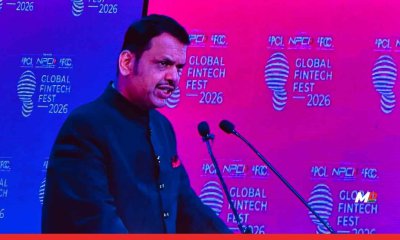
At the Global Fintech Fest, Vaidyanathan Vembu, Managing Director & CEO, IDFC FIRST Bank, offered a refreshingly tangible definition of what trust can mean in banking: fewer fees, simpler language, and no attempts to make customers navigate complexity they should never have had to confront in the first place.
“When we say trust in banking, we noticed 36 fees in saving accounts, and descriptions were complicated. So we abolished it all for customers maintaining ₹10,000 and above. So we simplified all of that and said that normal charges apply for zero balance account with uncomplicated descriptions. No dark patterns and as a result, customers earn more. There is more interest cost for the bank as well, but there’s greater customer trust, and gaining such trust is invaluable for a Bank.”
Vembu’s comments point to an important dimension of the future of banking. Technology may make banking faster, more personalised, and increasingly automated, but the customer’s fundamental expectations remain surprisingly straightforward. They want to understand what they are paying for, know what they are earning, and feel that the institution is working with them rather than against them.
That becomes particularly important as financial services become increasingly digital. Digital banking has removed much of the friction associated with traditional banking, but it has also created new forms of complexity. Long terms and conditions, confusing fee structures, difficult-to-understand product disclosures, and interfaces designed to nudge customers towards particular decisions can undermine confidence even when the underlying technology is excellent.
Vembu’s reference to “dark patterns” is therefore significant. The future of customer-centric banking may increasingly be measured by what financial institutions choose not to do.
There is also a commercial argument behind this philosophy. Eliminating fees and paying customers more can carry a direct cost for a bank. Vembu openly acknowledges that. Yet he argues that the return comes through something less immediately measurable: trust.
That is a particularly relevant proposition at a time when banks face competition not only from other banks, but from fintech platforms, digital wallets, neobanks, and technology companies entering financial services. Products can increasingly be replicated. User interfaces can be copied. AI capabilities will become widely available.
Trust is harder to commoditise. The broader lesson is that human-centred innovation in banking does not necessarily require another breakthrough technology. Sometimes, it means using technology to simplify the relationship between a customer and their money.
As banking becomes more automated, the institutions that win may be those that make customers feel more informed and more in control.
In that sense, trust could become one of banking’s most valuable technologies.