
Viral
Minor driving, major danger: Reckless teens are a fatal menace

The escalating crisis of road fatalities in India, which saw over 1.4 lakh deaths due to overspeeding in 2023, is alarmingly one with far too many minors at the wheel. Be it in Delhi, Pune, Mumbai, Goa, Nagpur, or beyond, there is a disturbing rise in fatal accidents. We need far stricter parental accountability and legal reforms to be enforced.
What began as a casual morning drive in Goa escalated quickly to fatal dimensions when a Thar hired by a group of youngsters crashed into an i20, killing a 65-year-old man. Locals claimed that the Thar was speeding, and that there was an attempt to switch drivers immediately after the crash.
Be that as it may, it is of little solace to the family of the bereaved, as they come to terms with this loss.
In 2023, India’s roads (dangerous as they are) were a landscape of grief, with over 1.73 lakh people losing their lives. According to the National Crime Records Bureau (NCRB), more than 1.4 lakh of these fatalities were the direct result of overspeeding and rash driving. These figures are more than a mere statistic. They must be, if change is to be made. They are, whether we like to admit it or not, the signal of a deep-seated epidemic of negligence that is increasingly being fuelled by a demographic that should not even be behind the wheel: minors.
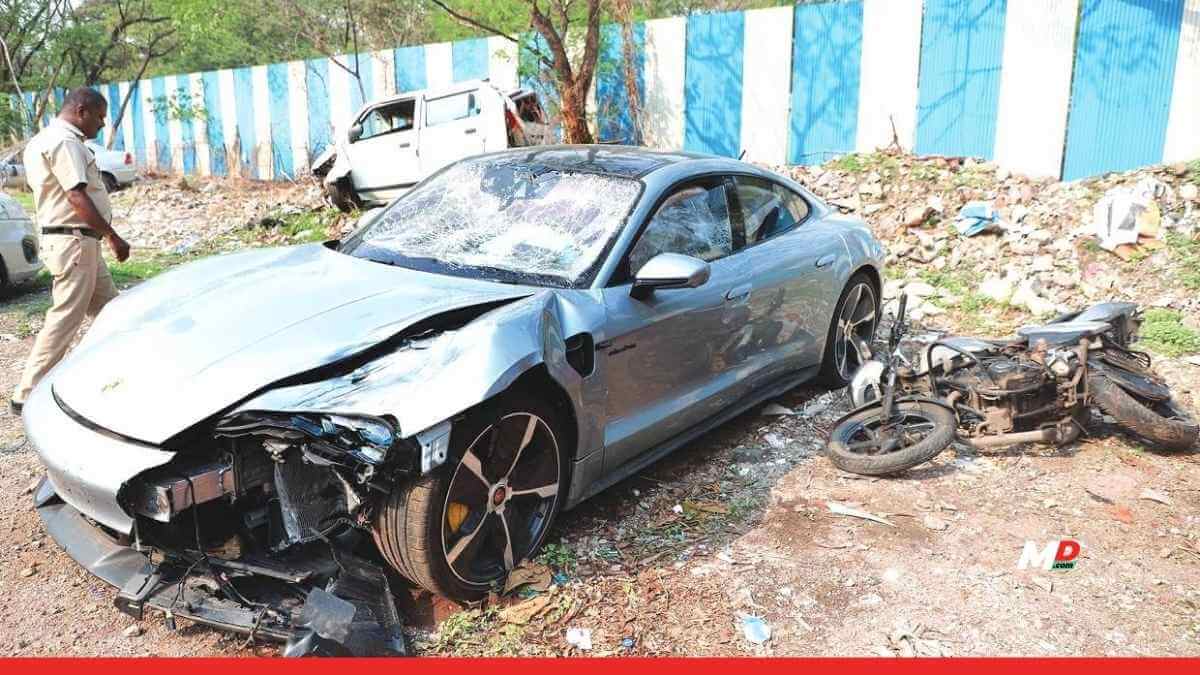
From the high-speed corridors of Pune to the crowded intersections of Nagpur, a pattern of “joyriding” has emerged with lethal consequences. The infamous Pune Porsche incident remains the most glaring example of this crisis. A juvenile, allegedly driving a high-end unregistered Taycan under the influence, mowed down two software professionals. A year later, the legal debate continues over whether he should be tried as an adult, highlighting the friction between existing juvenile protections and the demand for accountability in cases of extreme negligence.
This is not an isolated tragedy. In Mumbai, a teenager took his father’s Kia Seltos for a night-time drive, resulting in a crash that killed a scooter rider. In Delhi, a minor driving a Scorpio hit and killed a young adult, with reports suggesting the teenager and his sister initially blamed the victim for the collision.
Most recently, in Goa, a 65-year-old tourist from Bhopal was killed when a rented Mahindra Thar, allegedly driven by a 19-year-old in a rash manner, rammed into his i20. Eyewitnesses at the scene claimed a woman was initially driving and that the group attempted to switch seats to shield her from accountability. In Nagpur, the trend of using vehicles for social media “clout” turned tragic when a minor in a Wagon R was involved in a fatal incident linked to reckless maneuvers.
The data reveals that overspeeding accounts for roughly 70 percent of fatal road accidents in India. While highways are the primary sites of these fatalities, the nature of the accidents in urban areas is changing. There is a growing “culture of the wheel” where minors are given access to powerful vehicles by indulgent parents or through loosely regulated rental services. These young drivers often lack the emotional maturity and technical skill required to handle high-speed machines, leading to a “minor driver, major damage” scenario.
Legal experts point out that while the Motor Vehicles (Amendment) Act of 2019 introduced stricter penalties—including a ₹25,000 fine for guardians and potential imprisonment—enforcement remains inconsistent. In many cases, the focus shifts to the juvenile’s age rather than the gravity of the act.
Furthermore, the rise of social media has added a dangerous incentive to this behavior. Short-form videos of “stunt” driving and high-speed tests are rampant on platforms like Instagram, encouraging teenagers to prioritize views over safety, as seen in the incident in Delhi with the Scorpio.
To address this, there is an urgent need for a shift from manual enforcement to automated, tech-driven monitoring. Speed cameras and AI-monitored surveillance can act as a deterrent, but the root of the problem lies in parental accountability and fixing a culture of laxity. If a minor is old enough to take the wheel, the legal system must ensure that the consequences are equally significant for those who enabled the access.
India accounts for nearly 11 percent of global road deaths despite having less than 2 percent of the world’s vehicles. This disproportionate toll is a reflection of a system that often treats road safety as an afterthought. Until there is a zero-tolerance policy toward underage driving and a cultural shift that views a vehicle as a responsibility rather than a toy, the list of innocent victims will only continue to grow.