

Environment
Meet Bolivia’s Tilcayo, a tiny cat species that is the first new one in 100+ years

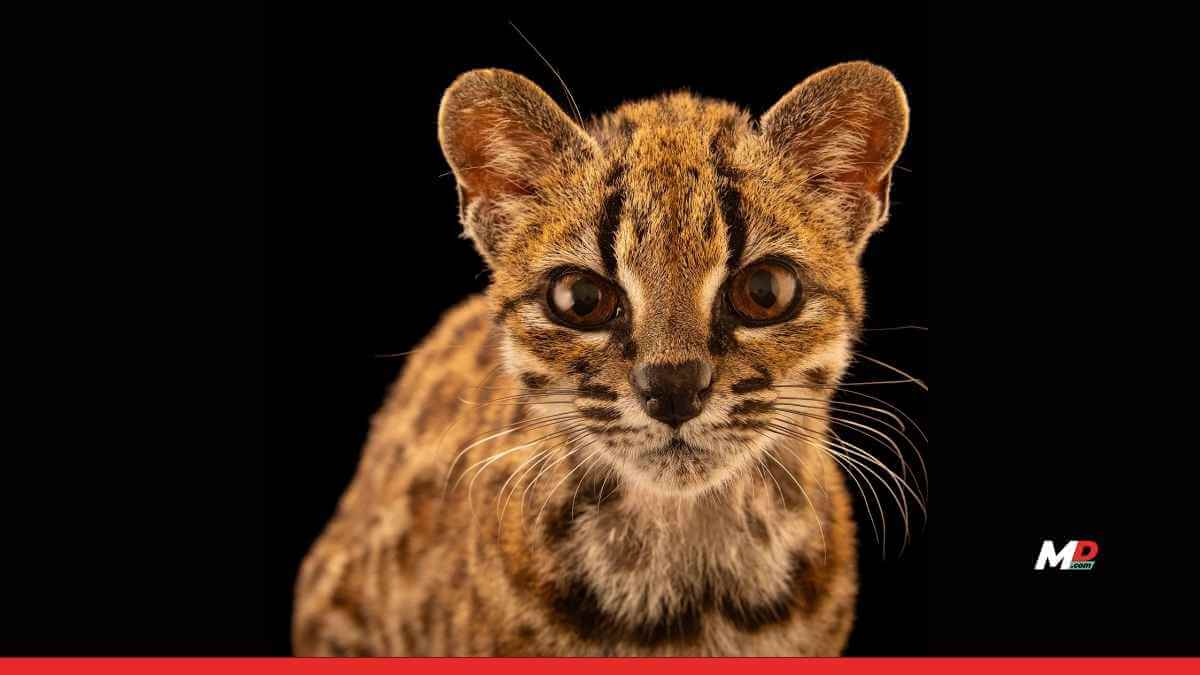
For years, one particular cat in Bolivia seemed to be something of a mystery. It was small, spotted, and clearly wild, yet it did not quite resemble the tiger cats that scientists thought lived in the region.
Now, that mystery has been resolved. Researchers have formally identified the animal as a new species, Leopardus tilcayo, marking the first time in more than a century that a new living cat species has been scientifically described.
Known locally as the Tilcayo, the animal lives in Bolivia’s lush Yungas cloud forests, a mountainous ecosystem on the eastern slopes of the Andes. At around 46cm long and weighing approximately 1.4kg, it is smaller than the average domestic cat. Its light-brown coat is covered with irregular dark rosettes, giving it the appearance of a miniature leopard.
The discovery began with an animal that had initially been mistaken for a domestic cat. A local family had taken the animal in after finding it as a kitten near a forest. It eventually arrived at the Senda Verde wildlife sanctuary, where biologist and National Geographic Explorer Paola Nogales-Ascarrunz noticed that its physical characteristics did not quite match existing descriptions of South American tiger cats.
That observation led researchers to a much bigger question: what tiger cat actually lived in Bolivia?
The answer emerged through genetics. Researchers analysed DNA from 38 cats collected across several South American countries, including eight museum specimens. Their study, published in Current Biology, found that tiger cats previously treated as a single species actually comprise five genetically distinct species.
The Tilcayo lineage appears to have separated from its closest relatives roughly 1.4 million years ago. Yet its distinct identity remained unrecognised because tiger cats are considered “cryptic species”, animals that can be extremely difficult to distinguish based on appearance alone.
Scientists are still learning the basics of the Tilcayo’s life. Evidence from scat suggests that small rodents may form part of its diet, while camera traps indicate it could be primarily nocturnal. Researchers currently have information from only two live individuals and a limited number of camera-trap observations.
The study also identified a new tiger cat subspecies in Peru’s Yungas, Leopardus tigrinus antisuyo. Together, the findings suggest that South America’s small wild cats contain considerably more evolutionary diversity than previously recognised.
That discovery comes with an uncomfortable complication. The Yungas forests are under pressure from deforestation, agricultural expansion, fires, and mining. Researchers have already shared their findings with the International Union for Conservation of Nature, which is expected to assess the five tiger-cat lineages separately. The Tilcayo could ultimately receive a more serious conservation classification once its individual population and threats are better understood.
The significance of the discovery therefore extends beyond adding another name to the catalogue of Earth’s wildlife. The Tilcayo shows how species can remain hidden in ecosystems that scientists have studied for decades, and how genetic tools can reveal biological distinctions that the human eye misses.
It also carries a warning. There may be species living in forests around the world that science has yet to recognise. Some could disappear before researchers ever get the chance.
As evolutionary biologist Eduardo Eizirik, a senior author of the study, noted, the discovery of a new cat species is a reminder that “there are many undiscovered species out there in the world”, some of which may already be at risk of extinction.