

Business
New York still rules, but Asia is seeing a surge in Billionaires: 2026 Billionaire Census

The Billionaire map is being redrawn, but it is alarming to see 29 billionaires control 27% of all billionaire wealth
New York remains the undisputed capital of extreme wealth, but the bigger story in Altrata’s latest Billionaire Census is how the forces behind billionaire wealth are reshaping the cities that sit behind it.
The world’s billionaire population reached a record 3,795 in 2025, up 8.2% in a single year, while their combined wealth jumped 12.8% to $15.1 trillion. That is an extraordinary concentration of wealth, particularly when billionaires account for just 0.07% of people globally with more than $5 million in net worth.
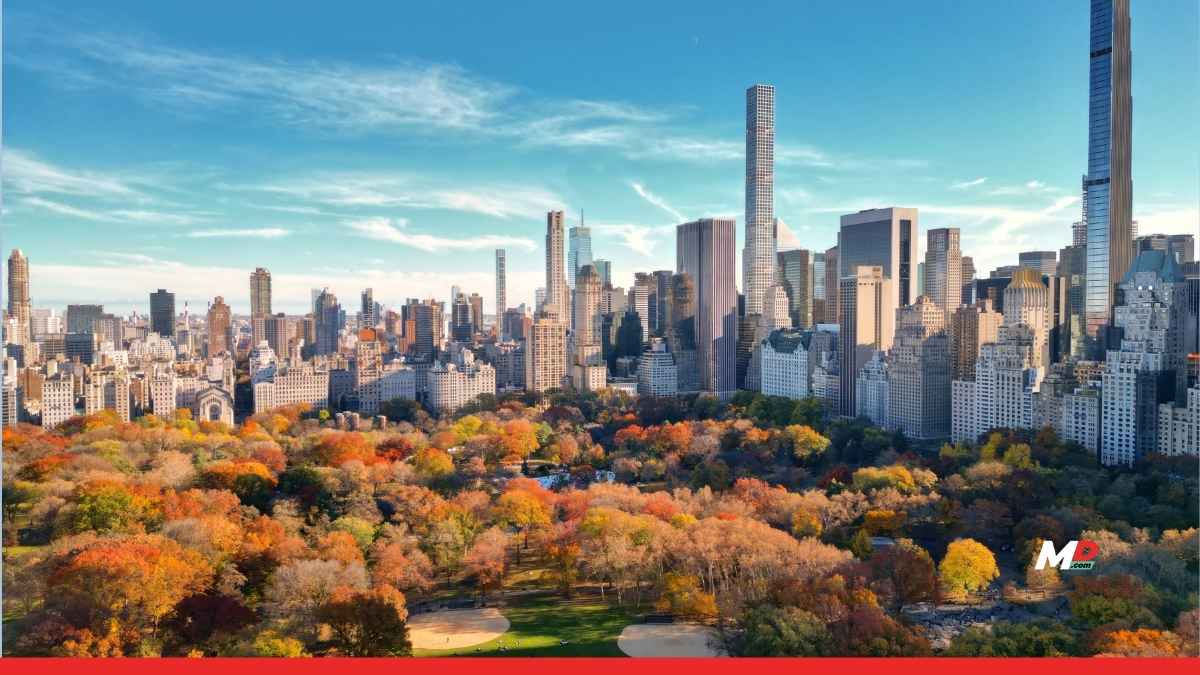
New York sits comfortably at the top of the urban hierarchy, with 164 billionaires, 12 more than a year earlier. Hong Kong follows with 106, although its billionaire population fell by two. San Francisco is third with 99, having added nine.
The ranking is revealing because these cities represent rather different engines of wealth creation.
Billionaires and the Big Apple
New York is the great hybrid: finance, private capital, technology, media, real estate, and a deep ecosystem of family offices and professional services. Altrata says the AI investment boom helped drive activity through the city’s private capital markets and ultra-prime property sector. New York’s advantage is therefore less about one industry than about the density of institutions that allow capital to be created, multiplied, managed, and redeployed.
Enter the Dragon
Hong Kong represents a different model. Its billionaire population slipped despite rising aggregate billionaire wealth, with weakness in real estate and comparatively limited exposure to the AI-driven gains that boosted other markets. Its longer-term proposition remains tied to financial services and its role as a bridge between mainland Chinese capital and global markets.
Tech-fuelled wealth creation
San Francisco, meanwhile, offers perhaps the clearest illustration of how technology has changed the geography of wealth. Its billionaire population rose sharply, and 41% of its billionaire residents are foreign born. The city remains deeply connected to the technology economy, which has become one of the most powerful engines of wealth creation in the world.
That matters because the billionaire story is increasingly an equity story. Around 73% of the average billionaire portfolio is invested in stakes in listed or privately owned companies. The AI boom has amplified that effect. Among the 150 listed companies contributing most to billionaire wealth, those making meaningful investments in AI outperformed their peers by 23% in market-capitalisation growth over 2024-25.
The concentration at the very top is even more striking. Just 29 billionaires with fortunes above $50 billion collectively controlled $4.1 trillion in 2025, or 27% of all billionaire wealth. In 2017, the equivalent group accounted for just 7.2%.
The Asian picture
Asia is increasingly important within this picture, although its rise is uneven. Beijing had 61 billionaires, while Shenzhen and Dubai each had 43, and Altrata highlights Singapore, Beijing, Mumbai, and other Asian centres as increasingly prominent wealth hubs. Six US cities feature in the top 15, while China has two, underlining the continuing strength of America’s wealth infrastructure even as Asian cities gain ground.
There is another useful lesson here. Billionaires increasingly live in cities that provide more than access to markets. They want sophisticated financial infrastructure, entrepreneurial networks, global connectivity, lifestyle services, political and regulatory predictability, and the ability to move capital across borders.
In that sense, the billionaire city ranking is really a map of economic infrastructure.
New York remains first because it has built an ecosystem capable of supporting almost every form of extreme wealth. The competition, however, is becoming more interesting. Technology is creating new fortunes, Asia is building deeper pools of capital, and globally mobile billionaires have more choices about where they live and where they deploy their wealth.
The cities that win the next phase of the billionaire economy will therefore be the ones that can attract both the people who create capital and the systems that allow it to compound. And that is a much bigger contest than counting billionaires.