Royal Challengers Bengaluru have a new set of owners, a record-breaking valuation, and a question that looms over every billion-dollar deal in sport: what happens next?
Twenty-four hours can change everything in sport. On March 24, 2026, two Indian Premier League franchises changed hands within the span of a single news cycle, and the business of cricket was never going to look the same again.
Royal Challengers Bengaluru, one of the most beloved and commercially potent brands in world sport, were sold for $1.78 billion to a consortium comprising the Aditya Birla Group, the Times of India Group, Bolt Ventures, and Blackstone’s perpetual private equity strategy, BXPE. The all-cash deal, announced by United Spirits Limited, the Diageo subsidiary that had held the franchise since Vijay Mallya’s era, drew a line under one chapter and opened another. At INR 16,660 crore, it also rewrote the record books for franchise cricket.
Also read: After 18 Years, RCB Eyes Mega Sale After Championship Win
To understand why this number is so staggering, consider the trajectory. When Mallya’s United Breweries Group paid $111.6 million for RCB at the IPL’s inception in 2008, it was the second-most expensive franchise in the new league’s maiden auction. Nearly two decades later, that figure has multiplied roughly sixteen times over. For context, the single deal outstrips the combined value of the Lucknow and Ahmedabad expansion franchises that the BCCI sold for in 2021.
Timing, as always in sports business, played its part. RCB enter the 2026 season as defending IPL champions, having finally broken an eighteen-year title drought in 2025 to the euphoric celebration of millions. The women’s team won the WPL title the year before. For Diageo, which initiated a strategic review of its investment in November 2025 after concluding that cricket was a non-core business, the championship timing could not have been better scripted. A franchise that had long traded on the currency of passion, loyalty, and Virat Kohli’s electric presence could now add a gold-standard trophy to the pitch.
A consortium built for the long game
The consortium that emerged victorious from a fiercely contested bidding process is itself a story worth telling. At least eight investors had made the initial shortlist, and competing groups included a Ranjan Pai-led consortium backed by KKR and Temasek, as well as a bid from Swedish private equity firm EQT partnered with Premji Invest. The winning group only crystallised late in the process, with Aditya Birla Group and David Blitzer initially casting their eyes towards Rajasthan Royals before pivoting to RCB upon recognising the stronger commercial proposition.
The resulting partnership is deliberately diverse. Kumar Mangalam Birla’s conglomerate brings the institutional heft of one of India’s oldest and most respected business families. The Times of India Group brings India’s largest media network and a strategic interest in building RCB into a content and entertainment powerhouse as much as a cricket franchise. David Blitzer’s Bolt Ventures adds the credibility of an investor who has built ownership positions across Crystal Palace, the Philadelphia 76ers, the New Jersey Devils, the Washington Commanders, the Cleveland Guardians, and Real Salt Lake. Blackstone, the world’s largest alternative asset manager, rounds out a group that understands both local passion and global capital.
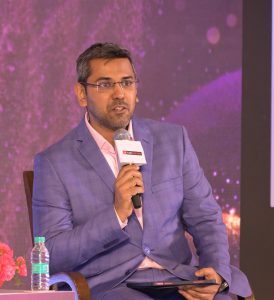
Aryaman Vikram Birla, who played for Madhya Pradesh and was part of Rajasthan Royals’ IPL squad before stepping away from professional cricket in 2019 citing severe anxiety, will chair the franchise. His appointment is notable: a former cricketer with a deep understanding of the game’s pressures, stepping into one of sport’s most scrutinised ownership roles. Satyan Gajwani of the Times of India Group will serve as vice-chairman.
The $150 million question
Earlier on the same day, Rajasthan Royals were acquired by a US-based consortium led by tech entrepreneur Kal Somani, backed by Rob Walton of the Walmart family and the Hamp family of Ford Motor Company, for $1.63 billion. That this deal was itself a landmark transaction was somewhat overshadowed by RCB’s record-setting figure. The gap of $150 million between the two franchises reflects a divergence that goes well beyond recent on-field performance.
RCB’s premium is rooted in brand equity that decades of near-misses, paradoxically, helped build. The franchise cultivated a fanbase defined by unflinching loyalty, a digital footprint that rivals any team in world sport, and a commercial identity shaped profoundly by Virat Kohli’s fifteen-year association with the team. Brand Finance placed RCB as the second most valuable IPL brand in 2025, behind only Mumbai Indians. Rajasthan Royals, though winners of the inaugural IPL title in 2008, have not lifted the trophy since and do not have a Women’s Premier League side, a significant structural difference given that the RCB deal covers both the men’s and women’s franchises.
The back-to-back billion-dollar sales have sent a clear signal to the global sports investment community. The IPL’s overall business value is now estimated at $18.5 billion. The BCCI’s $6.2 billion media rights deal struck in 2022 transformed franchise economics, and the tournament attracted close to one billion viewers across television and digital platforms in 2025. Individual teams are no longer simply cricket clubs; they are global sports brands with diversified revenue streams, content libraries, and international fan communities.
The next play
The deal still requires ratification from the BCCI and the Competition Commission of India before the consortium formally takes charge. The official handover is expected to be finalised after the 2026 IPL season, allowing the current management to oversee the title defence. That transition, from a liquor giant exiting a non-core asset to a consortium of industrialists, media barons, and global sports investors taking the reins of the defending champions, is as significant culturally as it is commercially.
Gajwani captured the new ownership’s ambitions succinctly: building RCB into a global sporting institution while keeping its roots in Bengaluru and its passionate fanbase. Kumar Mangalam Birla framed the acquisition as an extension of his group’s legacy of institution-building into the arena of global sport. These are aspirations calibrated for a franchise that has long promised greatness and now, at last, has the trophy, the valuation, and the ownership structure to deliver on them.
In the business of sport, $1.78 billion is not just a price. It is a statement of belief in what RCB represents, what the IPL has become, and what Indian cricket can still be worth to the world. And this innings is set to run for a long time.