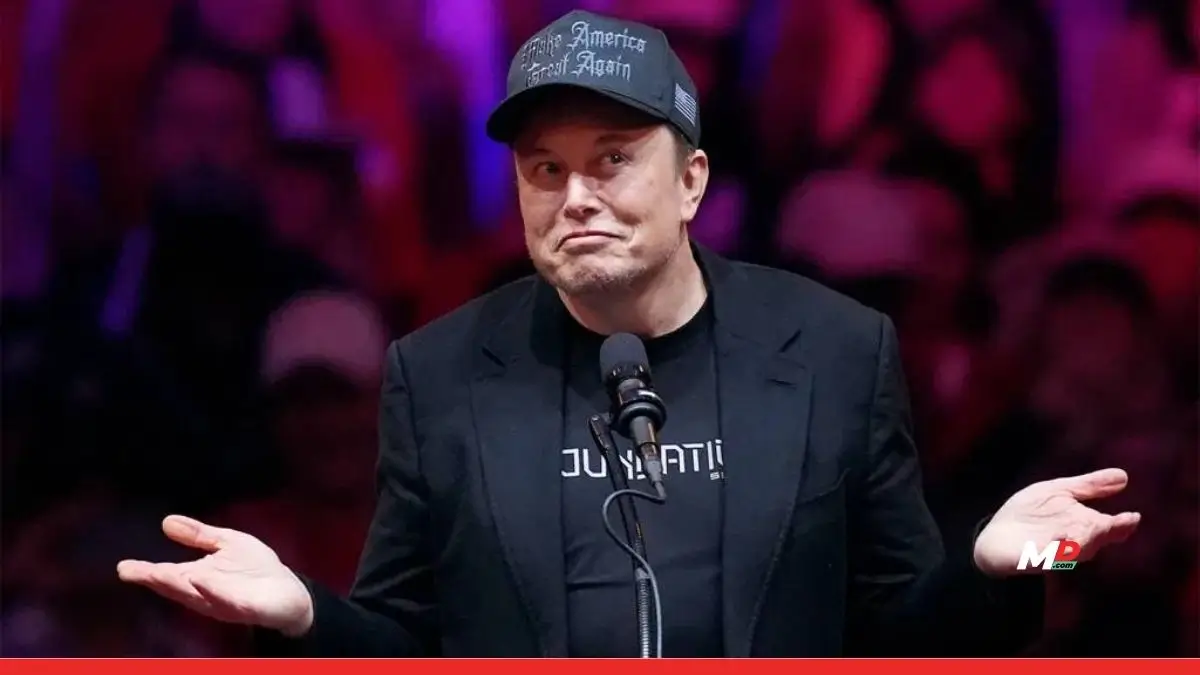
Elon Musk, the world’s richest man and CEO of Tesla and SpaceX, announced over the weekend that he has formed a new political party – the ‘America Party’. Framing it as a movement to “give Americans back their freedom”, Musk positioned this as a direct challenge to what he labelled America’s “one-party system”.
The announcement came shortly after the Trump-Musk feud escalated, with US President Donald Trump signing the sweeping ‘One Big, Beautiful Bill’, which Musk condemned as “debt slavery”, accusing Republicans of hypocrisy for backing record spending despite campaigning on fiscal restraint. In his words, “When it comes to bankrupting our country with waste & graft, we live in a one-party system, not a democracy.”
Musk’s proposal for the America Party is not to compete for the presidency immediately but to focus strategically on two or three Senate seats and eight to ten House districts – enough to wield influence over key legislation. “Given the razor-thin legislative margins, that would be enough to serve as the deciding vote on contentious laws, ensuring that they serve the true will of the people,” he wrote.
The announcement is a culmination of Musk’s recent public fallout with President Trump, whom he heavily backed in 2024 with donations exceeding $280 million. Their relationship soured after Musk’s tenure as head of the Department of Government Efficiency ended and he began criticising Trump’s fiscal policies. Trump, in turn, lashed out, threatening to strip federal funding from Musk’s companies and even hinting at deportation, despite Musk having been a US citizen since 2002.
Musk’s America Party taps into deep public discontent with the two-party system. In his Independence Day poll, 65.4% of respondents supported forming a new party. For decades, Americans have voiced frustration with the polarisation and gridlock of their political landscape. But as history shows, dissatisfaction does not automatically translate into viable political alternatives.
The US electoral system is structurally unfriendly to third parties. Billionaire Ross Perot, who ran as an independent in 1992, captured nearly a fifth of the popular vote but won no states. The Green Party and Libertarian Party have struggled for ballot access, funding, and voter confidence. Experts note that creating a new party is legally arduous, financially intensive, and risks being dismissed as a vanity project or protest vote.
Moreover, while Musk enjoys unprecedented influence in business and technology, political leadership demands a different calculus. Beyond headline declarations, successful parties require robust local organisations, legal registrations, candidate pipelines, campaign machinery, and a coherent policy platform. Musk’s America Party currently offers no detailed agenda beyond fiscal conservatism and opposition to Trump’s spending bill.
Musk’s critics argue that his approach is symptomatic of Silicon Valley’s libertarian hubris – a belief that disrupting entrenched systems is a matter of willpower and capital alone. Yet American politics is a centuries-old institution with deeply embedded guardrails, legal frameworks, and public scepticism towards outsiders who lack grassroots credibility.
That said, Musk’s strategic plan to focus on swing Senate and House seats rather than the presidency demonstrates an understanding of leverage. By targeting a small number of races with significant funding, the America Party could play spoiler or kingmaker, potentially forcing Republicans or Democrats to negotiate on specific bills to avoid losing crucial votes. Even this approach, however, will require building alliances with local party structures and fielding credible candidates.
Musk’s declaration also underlines a global trend of billionaire-led political movements. From Donald Trump to Silvio Berlusconi, tycoon-led parties have gained traction by capitalising on public frustration with establishment politics. Whether Musk will succeed where others failed will depend on his ability to transcend social media bravado and translate digital enthusiasm into votes, ground teams, and institutional legitimacy.
Finally, there remains the question of Musk’s endgame. Is the America Party a genuine effort to reshape US politics, or a pressure tactic to influence policy and protect his business interests from federal retaliation after he exited the Trump administration? Given Musk’s recent feud with Trump over policy disagreements and threats to Tesla and SpaceX, some see this as a gambit to regain leverage against an administration he once supported.
In the short term, Musk’s party is unlikely to dismantle America’s entrenched two-party system. But it signals the continuing erosion of public faith in traditional political institutions, and the rise of personalities over parties. Whether the America Party becomes a footnote or a force will depend not only on Musk’s ambition, but on his willingness to navigate the slow, unglamorous work of building political capital brick by brick.