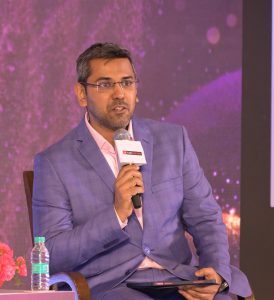
India stands on the precipice of a monumental shift. The domestic market has long provided fertile ground for companies to thrive, but the true test of a brand’s mettle now lies beyond national borders. As new trade corridors open up and the global economy becomes increasingly interconnected, the question is no longer if Indian brands will go global, but how they will manage this complex transition. We caught up with Thomas Barta, Managing Director of the Marketing Leadership Institute, who offered a compelling perspective on what it takes to orchestrate a systemic business transformation of this scale.
Also read: 70% of Marketing Leaders Say Agentic AI Will Be Transformative
The traditional Indian corporate success story often follows a familiar script. A company engineers a solid product, scales production, and relies on a formidable sales force to push it into the market. This product centric approach has built massive domestic empires. Yet, as Barta points out and as we all doubtlessly know, what got you here will not necessarily get you there. When stepping into the global arena, a sales driven mindset is no longer sufficient. To move up the value chain, organizations must fundamentally rewire their DNA to start with the customer.
Barta emphasizes that true marketing is not merely an advertising function but a core philosophy of serving the needs of customers. This shift is notoriously difficult for organizations accustomed to leading with engineering and sales. It requires a catalyst, someone who can champion the market view and lead the inside discussion.
This brings us to the concept of what Barta refers to as the “value creation zone”. In any business, there is a natural tension between what the consumer wants and what the company needs. Consumers typically want premium products at the lowest possible price, while companies aim to maximize their margins. It is a tale as old as time itself.
Successful transformation happens when a leader can negotiate this overlap, creating a space where what customer desires and what commercial realities dictate align perfectly. Barta cites the creation of the legendary Sony PlayStation as a prime example of this dynamic, where persistent internal advocacy eventually aligned a massive consumer need with a highly profitable corporate venture. In fact, as legend has it, Sony executives were famously opposed to launching the PlayStation as they saw it as little more as a toy. Luckily, they finally saw the light and the rest, as they say, is history.
Finding this alignment is the daily job of a strategic marketing leader. It is a continuous process of negotiation, requiring the ability to mobilize peers, convince the C-suite, and unite cross functional teams around a shared, customer focused vision.
Barta uses the PlayStation’s example to pinpoint that the overwhelming majority of a marketing leader’s impact (and indeed, any leader’s impact) comes from their ability to lead upwards and sideways.
In fact, he notes that technical marketing skills account for only a small fraction of a leader’s success. You must be able to make the case in the boardroom and inspire colleagues who do not report to you to execute on a shared vision.
In the context of a sprawling Indian conglomerate, this is a monumental task. A chief marketing officer might envision a revolutionary service model, but the frontline staff executing that vision do not report to them.
Therefore, the leader cannot rely on mandate alone. They must convince, inspire, and mobilize. They must be seen going out into the field, demonstrating the desired changes firsthand, rather than issuing directives from a corporate office. It is about creating a movement within the company, helping every department understand how their specific role contributes to the broader customer focused agenda. This level of internal mobilization is exactly what is needed to crack complex new markets, whether expanding into tier two Indian cities or setting sights on international dominance.
The change leader must step into this fray, acting as the ultimate negotiator, proving that the future they are advocating for is not only necessary but commercially viable. As Indian brands look to establish an international footprint, they must also grapple with their identity. It is not enough to simply replicate the strategies of Western or Asian competitors. If you try to out-Samsung Samsung, you will fail, Barta observes wryly. Instead, Indian companies need to unearth the core essence that makes them unique and translate that into a globally relevant proposition.
We are already witnessing the early stages of this evolution. Legacy entities like Air India are undergoing holistic transformations, attempting to marry higher global standards with their rich, historical heritage. The debate around preserving the royal touch versus adopting a modernized identity highlights the tightrope these brands must walk.
Similarly, hospitality giants like the Oberoi Group have successfully branched out internationally by maintaining a consistent flavour of Indian palace hospitality, adapted seamlessly for global markets. They have found a way to retain their Indian core while meeting exacting international standards.
However, the window of opportunity is not infinite. With global competitors rapidly expanding their footprints, Indian chief executives must accelerate their efforts. Building a global brand requires courage, a willingness to step away from the familiar, and a commitment to understanding diverse consumer ecosystems. The mandate for Indian business leaders is clear. They must cultivate a culture that prioritizes the customer, empower leaders who can navigate the complexities of the value creation zone, and boldly project a uniquely Indian identity onto the global stage.
It is a demanding journey that requires patience, systemic rewiring, and a departure from the comfortable reliance on pure sales execution. Yet, it is the only viable path for Indian companies aspiring to transition from domestic heavyweights to truly influential global brands. The time for copying best practices has passed; it is now time to define the Indian way of global business.
Thomas Barta is the world’s premier expert, author, and speaker on marketing leadership. A “CMO turned McKinsey partner turned organizational psychologist”, Thomas conducts research, including the world’s largest study involving over 68,000 assessments on what
makes for a successful marketer. He has captured some of the wisdom in his latest book, ‘The 12 powers of a Marketing Leader’ which, he insists, is not a marketing book, but a leadership book for marketers.