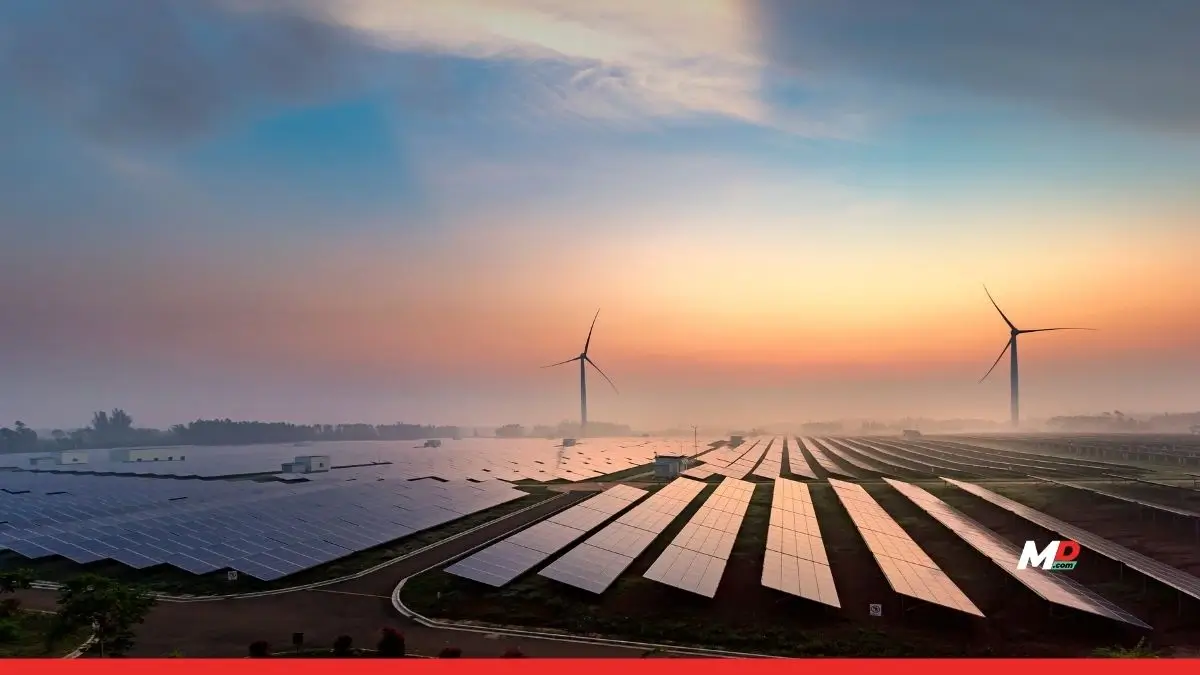
India crossed a landmark in June 2025: its non-fossil fuel sources now account for over half—50.1%—of the country’s total installed power capacity. This achievement, five years ahead of the nation’s Paris Agreement target, positions India as a vanguard of clean energy adoption in the developing world. Yet beneath this milestone lies a core truth: the contribution of non-fossil fuels to actual electricity generation remains closer to 30%. This paradox is both a story of progress and the complex challenge of energy transition.
A Decade of Unprecedented Expansion
Over the past ten years, India’s installed capacity for renewables—solar, wind, hydro, biomass, and nuclear—has grown over fourfold. Policy interventions like PM-KUSUM and the Surya Ghar rooftop solar push, alongside market incentives and a global decline in renewables’ costs, have propelled this surge.
As of June, the numbers paint a compelling picture:
- Non-fossil sources (installed): 242.8 GW — 50.1%
- 185 GW renewables (solar, wind, small hydro, biomass)
- Thermal (mainly coal/gas): 242 GW — 49.9%
Capacity vs. Actual Generation: The Hidden Gap
India’s achievement is, by design, an installed capacity metric—what the grid could generate at peak if all plants ran at full tilt. But renewables, especially solar and wind, are variable; their “load factors” (the percent of time they produce power) are far lower than those of coal and gas.
In practice, despite accounting for half of capacity, non-fossil fuels generate only about 30–33% of India’s electricity. Thermal power, though just half the installed base, still delivers roughly two-thirds of electricity supplied daily. The reason: coal plants run almost continuously, while solar peaks only during daylight and wind varies seasonally; hydro and nuclear remain small, steady contributors[5][6].
Policy Ambition Meets Technical Reality
This disparity has deep roots. India’s industrial and residential demand rises fastest in evenings and hot summer months, when renewables contribute least. The aging grid, limited storage, and slow growth in peaking capacity—like batteries and pumped hydro—also keep coal central to the system’s reliability.
Government strategy has pivoted: non-fossil fuels’ share of installed capacity is an essential target, fueling investment, manufacturing, and international climate credibility. But transitioning generation share upwards will now require the harder work—deep investments in storage, smarter grids, and more flexible demand-side management.
The Global Stakes of India’s Transition
India’s clean energy surge is unmatched among “major emitters,” in both speed and scale. It is now a top-three destination for green energy finance and the largest recipient globally of development funds for renewables in 2024–25, with nearly 83% of power sector investment going into clean energy projects.
With 1.4 billion citizens and an economy growing above 6%, the stakes are planetary. India’s coal emissions trajectory will help determine the world’s climate path.
The Road Ahead: Storage, Flexibility, and Inclusion
Achieving climate leadership now depends less on headline targets, more on operational transformation:
- Massive Storage: Affordable, scalable battery, and pumped hydro technologies to smooth renewables’ output.
- Grid Modernisation: Investment in smarter, interlinked power networks.
- Demand Response: Incentivising industrial and urban loads to adapt to renewables’ output windows.
- Inclusive Growth: Ensuring the rural poor and informal sector share in the clean energy economy.
Beyond the Milestone
India’s 50% capacity milestone is a crucial foundation. Yet, as the country approaches its 2030 target of 500 GW non-fossil capacity and net-zero by 2070, credibility will rest on energy actually produced, not installed. Scaling generation while maintaining reliability—and supporting millions with new energy jobs—is the test that awaits.
No other nation matches this scale of ambition amid developmental challenges. The journey from capacity to generation is now the critical story, and one that the world will watch as India continues to power both its growth and the globe’s climate aspirations.