Business
Reinventing Legacy by Building Tomorrow’s Smart Cities
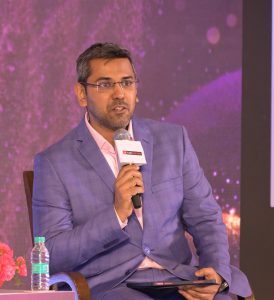


Jamshri Realty’s journey is one of reinvention—transforming a century-old textile mill into Solapur’s first integrated high-street and business district. Under the leadership of Jamshri Realty’s Founder and Managing Director Rajesh Damani, the company champions adaptive reuse, sustainability, and mixed-use ecosystems. By blending heritage with modern infrastructure, Jamshri is shaping Tier 2 cities into future-ready urban landscapes.
Here’s the story of their rise, and a glimpse into their future.
Tell us the story behind Jamshri Realty — how did it all begin?
Jamshri Realty is, at its heart, a story of evolution. Our journey began over a century ago with textiles. But by 2018, as industrial dynamics shifted, I saw that clinging to legacy without reinvention was a disservice to both history and the future. Where others saw a defunct mill, I saw a dormant asset waiting to be reimagined. That led to our pivot from manufacturing to real estate. With deep roots in Solapur, we chose not to abandon the city but invest in it.
Today, the site of the old mill is home to Jam Mills, Solapur’s first integrated high-street retail and business district. This transformation wasn’t just about buildings; it was about breathing new life into a community. We’ve onboarded national brands, created hundreds of jobs, and proven that Tier 2 cities deserve world-class infrastructure. I believe success in real estate isn’t about land, it’s about purpose. Jamshri’s purpose is clear: to build ecosystems where people and businesses thrive together.
Could you share insights into some of your current and upcoming projects?
Absolutely. Our flagship development is a 15-acre integrated commercial and lifestyle district in the heart of Solapur. Phase 1, the Jam Mills high-street, is already home to brands like Westside, Zudio, Star Bazaar, and Mr. DIY. We’re also home to Ileseum Clubs, a premium wellness and sports ecosystem that caters to 500+ families. Adjacent to this is Jamshri Ignite, our purpose-built business park attracting IT and BFSI clients, with Mahindra Group already operating 400+ seats.
Now that we are completing all possible adaptive reuse projects in the ecosystem, our next steps would be greenfield development. We are currently finalizing plans for Phase 2 of our retail and hospitality expansion, complemented by a township that supports and promotes conscious living.
What sets these developments apart isn’t scale, but integration. Workspaces, retail, entertainment, and living, all in one walkable hub. Through it all, we’re committed to adaptive reuse, as seen in the transformation of the 111-year-old mill into Jam Mills. This will hopefully become a symbol of continuity through reinvention.
Are you focused more on residential, commercial, or mixed-use development going forward?
Mixed-use development is the future, and it’s our present. At Jamshri, we’ve consciously moved away from siloed thinking. A project that only sells flats or leases shops is missing the point. Today’s urban consumer demands seamless integration between work, life, wellness, and recreation. Our developments, particularly the Jamshri township in Solapur, are built on this belief. We begin with commercial anchors such as retail, IT offices, hospitality, but layer them with lifestyle infrastructure: clubs, gardens, cafés, smart homes, even urban farms. Residential towers are no longer just places to sleep; they’re places to live well. Similarly, offices aren’t just workplaces, they’re talent magnets that need surrounding amenities. We’ve seen firsthand how our Ileseum Club boosts footfall for retail, how Jam Mills drives lunch-hour sales for cafés, and how Mahindra’s presence attracts more IT/ITES companies. This synergy is even more essential for smart towns like Solapur, to provide the entire ecosystem of workspaces and lifestyle within walking distance. So to answer your question: we’re focused on integration. Because cities don’t function in parts. Neither should real estate.
What role does sustainable design play in your developments?
Sustainability isn’t an afterthought at Jamshri, it’s the foundation. I often say, “We don’t just develop properties; we nurture legacies.” That mindset demands long-term thinking, and at Jamshri, it’s reflected in everything from our solar energy infrastructure and rainwater harvesting systems to waste segregation and adaptive reuse strategies.
Take Jam Mills, for instance — we’ve transformed a 1,20,000 sq. ft. textile mill into a dynamic commercial hub without resorting to the typical demolition-rebuild model. Instead, we’ve chosen to honour the past while building for the future. Our 80-year-old warehouse now houses Swadisht Restaurant and co-working spaces, while 100 year old houses once used by our factory managers have been thoughtfully repurposed into a boutique hotel. These aren’t just cost-saving measures — they’re a testament to our belief in circular development.
Looking ahead, the upcoming phases of our township include residential towers with indoor heated pools, terrace gardens growing organic produce, and intelligent energy management systems. We’re also home to Solapur’s first modern, tech-enabled sports facility — Ileseum Clubs — which welcomed over 500 members in its inaugural year. Cities like Solapur deserve first-rate innovation, not second-tier solutions. At Jamshri, we’re committed to making responsible urbanisation not just a promise, but a practice — where sustainability drives both economic growth and everyday living.
How does Jamshri plan to differentiate the Solapur project in a competitive real estate landscape while preserving the city’s cultural fabric?
Differentiation, to me, comes from doing justice to place while embracing a sustainable, holistic ecosystem approach. We inherited this space, and along with it the responsibility to provide for our community as Solapur evolves from a sleepy textile town to a smart town.
While others replicate metro models, we’ve chosen to build from the inside out. At Jam Mills, we preserved industrial textures, retained century-old structures, and celebrated the city’s heritage through art installations. Even our urban planning respects Solapur’s rhythm walkable corridors, shaded courtyards, and community gathering zones inspired by wada-style layouts. But beyond aesthetics, we’re adding economic depth. We’re not just leasing retail, we’re curating entrepreneurs, mentoring local brands, and attracting IT jobs that keep youth from migrating. Solapur has always been industrious. We’re just updating the canvas of opportunity, rather than letting our next generation migrate to metros. By blending heritage with modern infrastructure—be it the upcoming business hotel, green-certified residences, or digitally enabled office parks—we aim to create not just a project, but a place of pride for the people who call this city home.
Will Jamshri Realty continue to explore Tier 2 and Tier 3 cities for future projects based on the Solapur experience?
Without a doubt. If there’s one thing Solapur has taught us, it’s that India’s growth story is no longer confined to metros. Tier 2 and Tier 3 cities, or smart towns as I’d rather call them, are not “emerging”, they’ve arrived. What they need is quality infrastructure, institutional vision, and patient capital. That’s where Jamshri Realty steps in. Our integrated ecosystem in Solapur, with Jam Mills, Jamshri Ignite, Ileseum Clubs, and the upcoming residential township, is a replicable model. We’ve demonstrated that with the right mix of commercial anchors, hospitality, and housing, even a mid-sized city can support national brands, IT companies, and luxury living. We’re now in active discussions to scale this template in other cities with similar demographics and growth potential. And as always, we’ll adapt each project to local context, not force-fit a cookie-cutter approach. The future of real estate in India lies in unlocking potential where others aren’t yet looking. That’s where we’ve always found our edge, and we intend to keep doing so.
Also read: Blackstone-panchshil-to-build-indias-largest-data-centre