Auto
Tesla Launches Model Y in India, but Has a Long Road Ahead

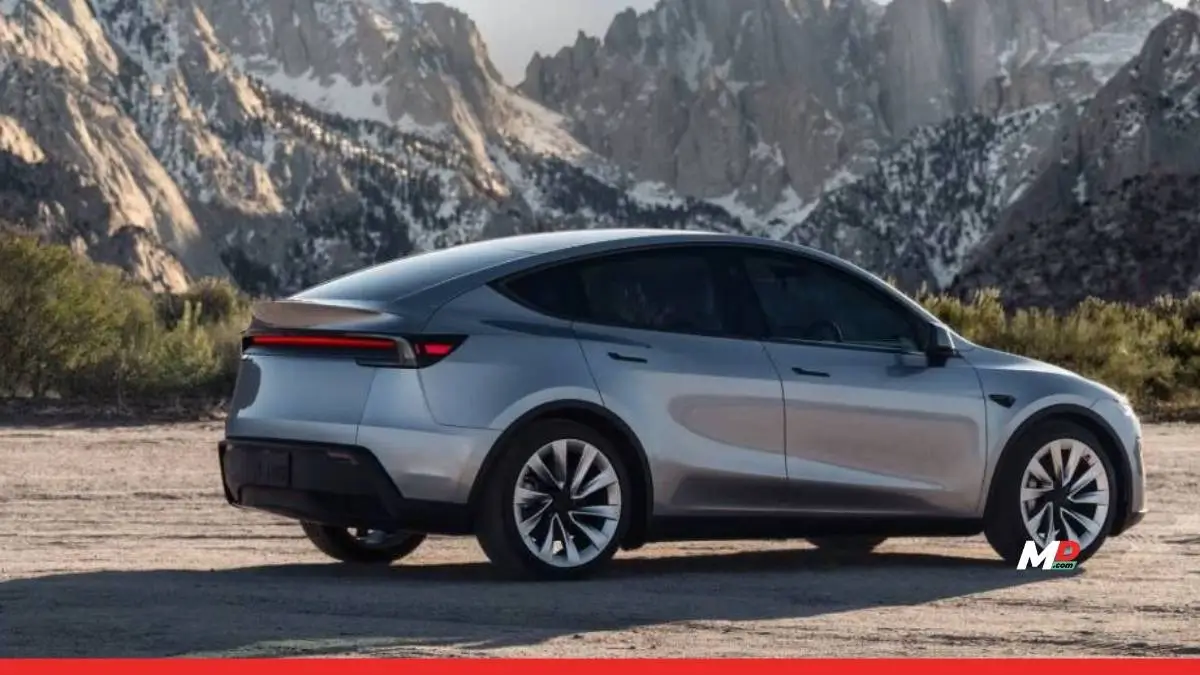
When Tesla finally arrives in India with the Model Y later this year, it will do so without its biggest weapon – its Supercharger network. At launch, two variants will be on offer: the Model Y RWD priced at ₹60 lakh and the Long Range RWD at ₹68 lakh. Factor in the future availability of Full Self Driving (FSD) at an additional ₹6 lakh, and the on-road price of the Long Range variant with FSD breaches ₹75 lakh in Mumbai.
These are prices significantly higher than what customers pay in Tesla’s established markets like the US, China, or Germany. For an automaker that has prided itself on being both aspirational and accessible, India could prove a test of brand strength over practicality.
The Competitive Landscape
Tesla is not entering an empty market. Let’s run through some of the challengers they’ll be up against, with all prices mentioned as being on-road pricing for Mumbai.
Mahindra’s upcoming BE6 and XEV9E, priced at ₹30–34 lakh, promise to bring electric mobility to a wider audience. Then there’s BYD, the Chinese juggernaut whose Seal (₹44–56 lakh) and Sealion (₹52–58 lakh) have established themselves as credible options for EV buyers seeking performance, range, and price rationality.
In the premium segment, Tesla will take aim at BMW’s iX1 LWB, a luxury compact SUV priced around ₹52 lakh, which has enjoyed strong sales thanks to the BMW badge and attractive deals. Hyundai’s Ioniq 5 (₹49 lakh, often discounted) and Kia’s EV6 (₹69 lakh, with deep discounts until recently) are also strong contenders, blending design, range, and a familiarity that Indian buyers value.
Volvo’s EC40 at ₹62 lakh offers Scandinavian restraint and recent discounting to maintain its competitive edge. Mercedes’ EQA and EQB, priced between ₹70–82 lakh, remain options for buyers prioritising brand heritage over cutting-edge battery tech.
All these players have the advantage of dealer networks, aftersales service familiarity, and traditional brand equity, factors Tesla will need to overcome with a direct-to-consumer sales model that is novel for Indian car buyers. Will Tesla be able to take a bit out of their sales? Only time will tell.
Despite these challenges, Tesla’s brand cachet remains potent. Its success in India will depend on capturing buyers moving up the automotive value chain, seeking differentiation through technology and brand identity. But will these buyers look past the stark price premium? The BMW iX1, for instance, undercuts the Model Y by nearly ₹10 lakh. Even BYD’s Seal Performance variant, boasting supercar-like acceleration, is cheaper than the Model Y Long Range. Indian consumers might well pony up the money for a Tesla, but make no mistake, they are value and feature conscious at all price points. Tesla has its work cut out.
FSD: A Promise Unfulfilled
Then there is the small matter of FSD. Marketed for years as the ultimate Tesla differentiator, its deployment remains partial and heavily supervised. In India, its functionality is almost academic and irrelevant. Indian roads are a perfect maelstrom of chaos, teeming with unpredictable pedestrians, stray animals, potholes, and informal traffic patterns, all present ‘edge cases’ that AI systems struggle to process.
Tesla’s FSD setup relies on multiple cameras and ultrasonic sensors. In chaotic urban India, poor lighting, dust, and the absence of clear lane markings or updated maps could confound its systems. Regulatory hurdles further cloud its future. Indian automotive laws do not currently permit fully autonomous vehicles on public roads. While Elon Musk continues to promise full autonomy “next year,” the reality remains that FSD is not the hands-off technology buyers imagine. In Musk’s own words, he is “the boy who cried FSD.”
Supercharger Void
If FSD is Tesla’s aspirational selling point, its Supercharger network has been its practical enabler. The promise of adding 80% charge in just 30 minutes is what gave Tesla owners confidence to drive long distances in the US, Europe, and China.
In India, Tesla enters a market with over 12,000 public EV charging stations, most of which are slow chargers. Fast chargers are rare, and as batteries get larger, this infrastructure gap widens. The Indian government aims for 1.3 million charging stations by 2030 to support an estimated 50 million EVs on the road. But for now, range anxiety remains real. Without its proprietary Supercharger network, Tesla’s Indian buyers will rely on this patchy ecosystem, diminishing the convenience premium Tesla offered globally.
Is Brand Power Enough?
Tesla’s arrival will undoubtedly catalyse the Indian EV market. Its direct-to-consumer sales model, aspirational tech halo, and distinctive design language will attract attention. However, buyers will evaluate Tesla as they do any luxury purchase – on the basis of price, usability, and service support.
In markets like the US, Tesla’s value proposition included FSD, the Supercharger network, and competitive pricing. In India, it will offer FSD as an incomplete feature, no Supercharger network, and prices that rival luxury German brands. The gamble is whether the Tesla badge alone carries enough weight.
If Tesla’s objective is to become a volume player, as it is globally, this approach may fall short. If, however, it positions itself as an exclusive luxury purchase, appealing to early adopters who value brand over practicality, Tesla may well carve out a niche in India’s fast-evolving EV ecosystem.
What Lies Ahead
The coming months will test whether Tesla can replicate its global success without the infrastructural advantages that enabled its rise. Mahindra and BYD will continue to democratise EV ownership, while BMW, Mercedes, Hyundai, and Kia will leverage familiarity and traditional dealer networks.
Tesla’s India debut is more than a car launch. It is a strategic test of whether a brand that disrupted the auto industry with innovation and affordability can thrive in a market where it will be neither the cheapest nor the most practical choice, with Indian buyers being notoriously value-conscious.
If it succeeds, it will be a testament to Tesla’s brand power. If it falters, it will reaffirm that in India, practicality, pricing, and service networks still hold sway over untested promises of an autonomous future.