

Business
Making the India-Middle East-Europe Economic Corridor work

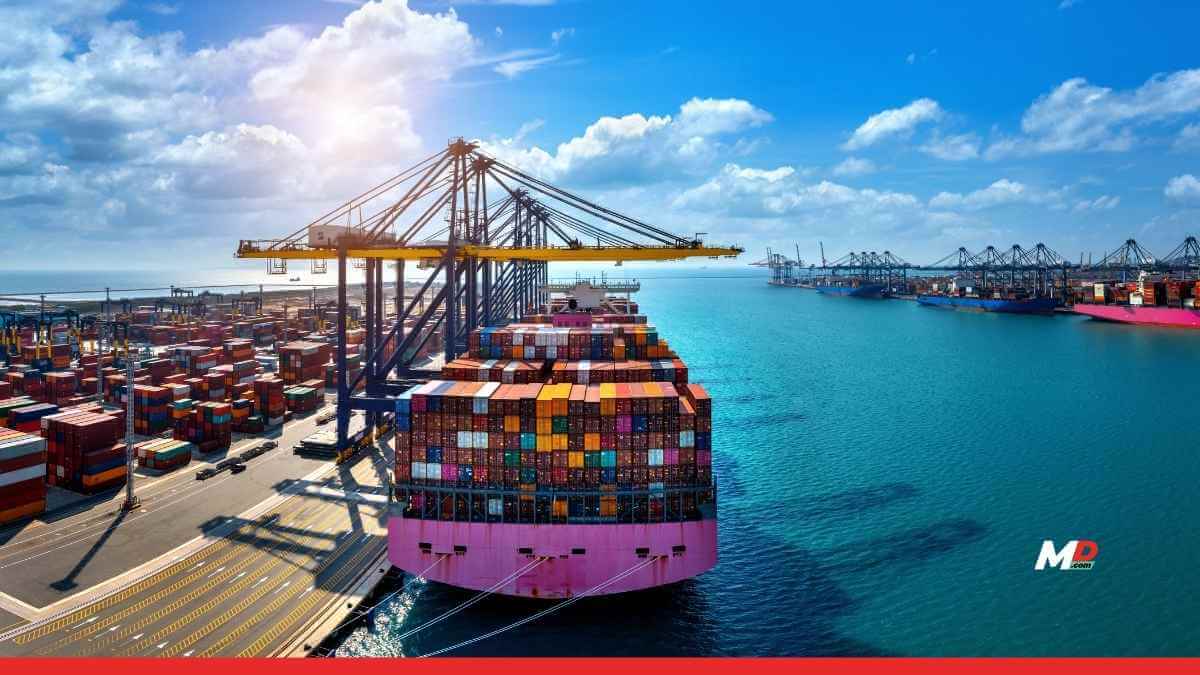
The India-Middle East-Europe Economic Corridor (IMEC) has re-emerged as a significant proposition for global trade, but turning its strategic promise into commercial reality will depend on what happens on the ground. For logistics operators, the challenge lies in coordinating ports, rail, road, terminals, customs and containers into one predictable network. In this conversation, Dhruv Taneja, Founder & Global CEO, MatchLog, explains why reliability, multimodal integration, real-time visibility and smarter container utilisation could determine whether IMEC becomes a genuinely competitive trade route. He also examines the infrastructure and digital capabilities India will need as multimodal trade volumes expand.
IMEC has suddenly returned to the spotlight. From a logistics operator’s perspective, what would need to happen on the ground for it to become a commercially useful trade route rather than simply a strategic proposition?
A corridor becomes commercially relevant when it delivers predictability at the shipment level. For an operator, that means a container moving from origin to destination with port, rail, road, terminal and customs processes coordinated, and every handover working to a defined timeline.
Infrastructure is one half of the equation. The operating layer that connects it is the other. Shippers need visibility across the journey so they can plan inventory, transport capacity and container availability around a reliable transit window.
Container utilisation matters too. A corridor can carry large volumes and still leak efficiency when containers are repositioned empty between loads. The opportunity lies in planning cargo and container movements together, so an import container slips straight into an export cycle wherever demand exists on the network.
For IMEC, commercial value will come from the quality of execution along the route, backed by data, interoperability and higher asset utilisation.
What would make an Indian exporter actually choose IMEC over an existing sea route: lower cost, faster transit, greater reliability, or something else?
An exporter will weigh the economics of the complete journey. Cost and transit time still count, and so does predictability, because it lets businesses plan production, inventory and customer commitments with greater certainty.
A shorter transit window earns commercial value once it is delivered consistently. That puts reliability, visibility and the quality of multimodal handovers on par with freight cost.
Asset utilisation adds another lever. Better alignment between import and export flows keeps containers carrying cargo for longer and repositioning for less time, which improves the economics of the whole movement.
The comparison will finally be between complete logistics outcomes: cost, transit consistency, container availability, visibility and the reliability of every leg.
The corridor will connect shipping and rail across multiple countries. Where do you see the biggest operational challenges in making those different modes work as one network?
The interfaces between modes are the critical points. A port and a rail network can each perform well on their own, yet the journey loses time when the handover between them is poorly coordinated.
IMEC will need common operating processes, dependable schedules, interoperable digital systems and clear coordination among shipping lines, ports, rail operators, terminals, customs and inland logistics providers.
Container availability is another variable. When onward movement is ready but equipment is missing, or a container reaches a terminal with no confirmed next leg, capacity sits idle.
The corridor should run as one connected network, with cargo, containers and transport capacity aligned to a single operating plan. Digital coordination makes a practical difference at that point.
A container can spend a surprising amount of time waiting, repositioning or travelling empty. How important will container utilisation and real-time visibility be to making a corridor like IMEC efficient?
They will be central to the economics. A container earns its keep while carrying cargo, and its productivity depends on the gap between two loaded movements.
The opportunity is to spot an import container that has completed delivery and match it with export demand in the same or a nearby logistics cluster. That creates a productive second movement and removes the need for an empty return to a depot or port.
Triangulation becomes especially useful here. When import demand, export demand, container availability and transport capacity are visible together, the network can make better use of assets already in circulation.
Real-time visibility supplies the information needed to make those calls while they still carry weight. For a multimodal route, the digital layer has to drive execution, and a location ping alone falls short.
India is investing heavily in ports, freight corridors and multimodal logistics. What additional infrastructure or capabilities will Indian businesses need if IMEC is to support significantly larger trade flows?
The next phase calls for stronger integration around infrastructure already under development. Efficient port-rail interfaces, inland container handling, reliable rail connectivity and well-placed logistics nodes will gain importance as multimodal volumes grow.
The processes around these assets deserve equal attention. Customs, documentation, container inspection and handovers need predictable timelines so administration keeps pace with physical movement.
Digital coordination is also becoming a requirement. Businesses will need visibility into container availability, rail schedules, terminal capacity and onward connections across the journey.
As volumes rise, capacity will come from better utilisation as well as new build. More productive cycles from containers, trucks, rail and terminals raise the network’s effective capacity, and physical expansion can then focus where it counts most.
If IMEC develops as envisaged, which parts of India’s logistics ecosystem could see the biggest change: ports, shipping, rail freight, warehousing, or the digital systems connecting them?
The impact will spread across the ecosystem because the route is multimodal. Ports and rail will form the key physical nodes, while warehousing, inland facilities and transport networks adapt to the movement patterns forming around them.
The bigger structural shift could come from how these assets are coordinated. Once a shipment crosses several modes and jurisdictions, managing each leg independently opens gaps in information and execution.
The industry will increasingly manage the container and cargo journey as one connected flow. That means knowing when equipment frees up, where export demand sits, how transport capacity can be allocated and where a handover can close without idle time.
IMEC’s value will therefore rest on infrastructure, network density, asset utilisation and digital coordination working together. The physical corridor creates capacity. Connecting the assets intelligently decides how much of it the trade ecosystem can use.