

Entertainment
Apple builds its first ever live music venue in London

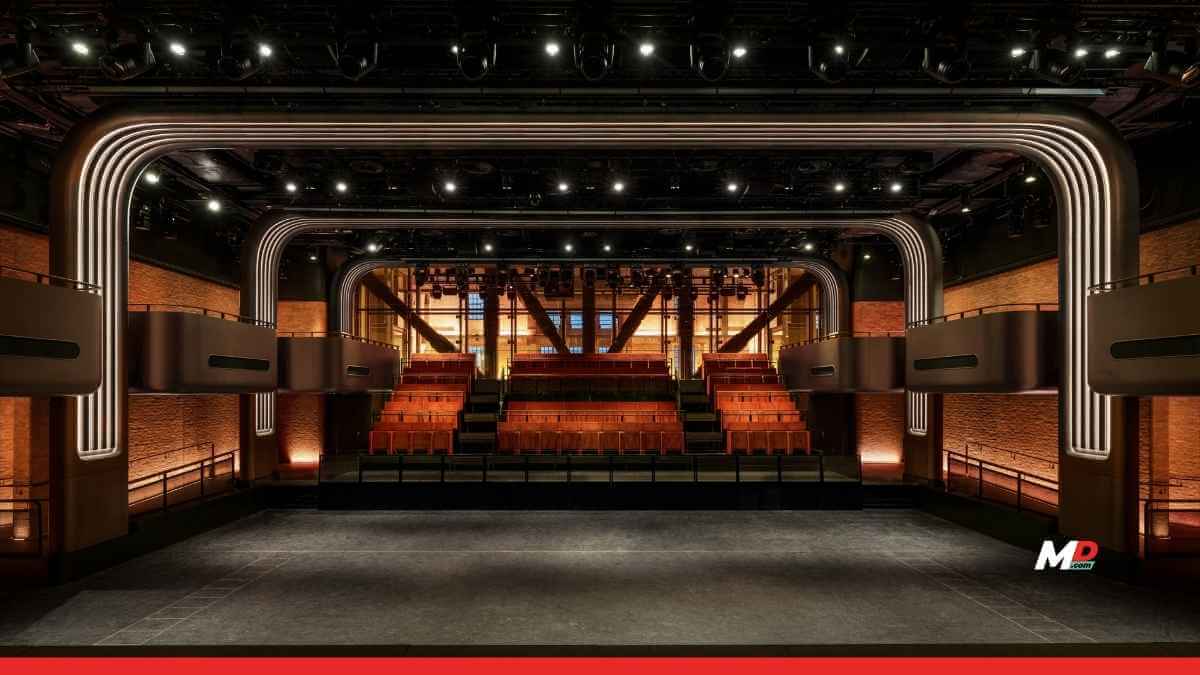
For a company that has spent decades turning technology into an experience, Apple’s latest London project feels like a logical, if unexpected, expansion of the ecosystem. The company has opened Apple Music Hall, its first-ever public-facing music venue, inside the Battersea Power Station complex.
The venue has reportedly been five years in the making and was developed largely under wraps. Located between the shopping area of the redeveloped power station and Apple’s London headquarters, it is designed around intimate performances rather than the scale of a conventional concert arena.
And Apple has approached the project with the same attention to technology that defines its hardware and software. The performance space is built as a soundproofed “box within a box”, suspended inside the historic power station structure. At its centre is a large multi-purpose stage, with a front section that can be lowered and a large screen that can be brought down for film screenings.
The headline feature, however, is sound. Apple Music Hall has a 48-speaker array designed for Spatial Audio performances, allowing artists to perform and have their music captured in an immersive format. The venue also includes dedicated Spatial Audio suites for mixing, alongside recording facilities and broadcast infrastructure.
That makes the venue considerably more than a room in which Apple can host concerts. It effectively brings several stages of music production together under one roof.
Backstage facilities have been designed with major artists in mind, including large dressing rooms, production and guest areas, and office space for band management. Broadcast suites can livestream performances or record them for later release, while additional studios offer recording-studio capabilities.
Apple also intends the venue to play a role in discovering and developing new talent. Writing rooms and recording facilities will be available to emerging artists, giving them a place to work on music immediately behind the performance space.
Then there is Apple Radio. Dedicated studios within the venue will allow artists to appear live with Apple Radio presenters before performances or participate in exclusive interviews. The studios feature LED displays, halo lighting, and robotic cameras integrated into the walls, with iPhone 18 Pro devices being used as part of the production setup.
The significance of Apple Music Hall lies partly in how neatly it connects the physical and digital sides of Apple’s music business. A performance can happen in an intimate London venue, be captured in Spatial Audio, broadcast live, recorded for later viewing, and potentially reach audiences through Apple’s wider music ecosystem.
Apple has yet to turn music venues into a major physical retail-style presence, making the London project particularly notable. Rather than simply selling devices that deliver music, Apple is creating a place where music can be performed, produced, recorded, broadcast, and experienced. And in Battersea Power Station, it has found a suitably theatrical home for that ambition.