
Business
IndiGo-ing nowhere: Corporate greed and regulatory failure has grounded a nation

There was a time when the blue livery of IndiGo was synonymous with clockwork efficiency. Their slogan, “On Time, Every Time,” was not just a marketing tagline but a operational promise that allowed them to capture nearly two-thirds of the Indian aviation market.
That promise has now evaporated.
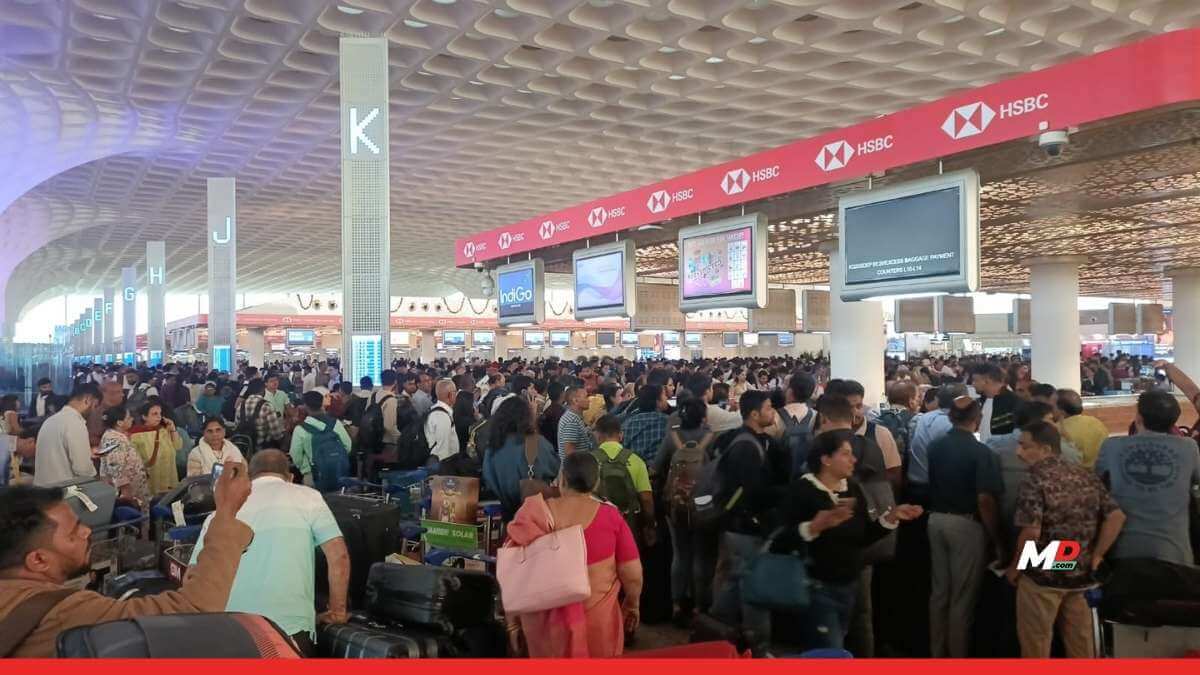
On Wednesday, the airline’s on-time performance plummeted to a shocking 19.7 percent, a figure that signals not just a bad day at the office, but a systemic collapse. The chaos witnessing thousands of stranded passengers, lost luggage, and scenes reminiscent of a refugee camp at major terminals is not an accident. It is the inevitable result of a monopoly that has grown too big to care, aided by a regulator that seems to have forgotten its mandate.
A manufactured crisis?
The narrative being peddled by the airline is one of unforeseen circumstances. They claim that the new Flight Duty Time Limitations (FDTL), mandated to ensure pilots are well-rested and passengers are safe, have caused sudden staffing disconnects.
This is a disingenuous defense. The airline has known about the impending FDTL norms for two years. These regulations were not sprung upon the industry overnight. They were the result of long-standing demands to address pilot fatigue, a critical safety issue that has been ignored for too long in the pursuit of profit.
Instead of using the last twenty-four months to recruit and train the necessary crew to meet these legal requirements, IndiGo chose a different path. They seemingly banked on their market dominance to secure endless exemptions. When the courts finally nudged the Directorate General of Civil Aviation (DGCA) to enforce the rules, the airline was caught flat-footed as their pursuit of profit over planning came unstuck.
However, one must ask if this is truly incompetence or a strategic calculation. By allowing the situation to deteriorate into a nationwide crisis, the airline appears to be arm-twisting the Ministry of Civil Aviation into relaxing rules. The logic seems to be that if they cause enough pain to the traveling public, the government will be forced to roll back the safety norms to get planes back in the air, and it seems that might well happen.
The watchdog sans bite
While IndiGo’s callous indifference to passenger welfare is glaring, the role of the DGCA is equally reprehensible. The regulator is meant to be the guardian of safety and consumer rights, yet it has acted more like a silent partner to the airline’s commercial interests.
Why were no audits conducted to ascertain if the airline’s crew strength was commensurate with its aggressive fleet expansion? The regulator knew the new norms were coming. They knew how many planes IndiGo was adding. The math is simple, yet the oversight was non-existent.
Even now, as the crisis unfolds, the regulator’s response has been weak. Instead of holding the airline accountable for selling tickets it had no capacity to honor, the DGCA has engaged in closed-door meetings that will likely result in concessions, with IndiGo needing a transition period for a change they should have seen coming for months..
As per the latest press notes, the airline has admitted to a “misjudgment” in planning but has sought exemptions from specific pilot rest norms until February 10, 2026. This is not regulation. This is capitulation if it comes to pass. The government will effectively reward the airline for its failure if it allows it to bypass the very safety rules that triggered the mess in the first place.
The dangers of a duopoly
This debacle highlights the extreme fragility of the Indian aviation sector. We have allowed a single entity to control over sixty percent of the market. When IndiGo sneezes, the entire Indian economy catches a cold. A disruption of this magnitude is an economic catastrophe, severing business links and stranding families during the peak winter travel season.
Ideally, no airline should command such a massive share of the market because it creates a “too big to fail” scenario where the operator knows they are indispensable. The government has failed to nurture a competitive environment. High taxes on aviation turbine fuel, expensive import duties on parts, and exorbitant airport charges have created an entry barrier as high as Mount Everest. This policy vacuum allowed IndiGo to thrive not just on merit, but because rivals bled to death. Now, the consumer is paying the price for this lack of competition.
Profitability over pilot welfare
The most alarming aspect of this crisis is the conversation around pilot fatigue. The new FDTL norms were introduced because pilots were overworked, stressed, and fatigued, posing a genuine risk to flight safety. By fighting these norms, and by citing crew shortages as a reason to dilute them, IndiGo is effectively arguing that their schedule is more important than the alertness of the person flying the plane.
Critics and industry insiders have long warned that the airline’s rostering practices left crews exhausted. Yet, the narrative is being spun that these safety measures are the villain causing the delays. It is a dangerous precedent. What’s to stop Air India or Akasa Air or Spice Jet taking the cue and demanding similar concessions? And if they are playing by the same rules as IndiGo, as we believe they are, how have they not been impacted as adversely by these norms?
We are witnessing a race to the bottom where safety regulations are treated as optional guidelines that can be discarded when they threaten profitability.
IndiNoGo
The immediate fallout is visible in the angry crowds at Delhi and Mumbai airports. The airline has announced it will curtail flights from December 8 to “stabilize” operations, a euphemism for cancelling services people have already paid for. But the long-term damage is far greater. We have established that in the Indian aviation sector, corporate power supersedes regulatory authority.
IndiGo’s implosion is a reminder that when power concentrates, fairness evaporates. The airline will likely weather this storm. They will get their exemptions, the news cycle will move on, and the stock price may recover. But for the thousands stranded without food or answers, and for those concerned about the safety of the skies, the message is clear. The system is rigged, the regulator is toothless, and the passengers are on their own. Turbulent skies are ahead.